

Kirjailija
Karl König
Kirjat ja teokset yhdessä paikassa: 45 kirjaa, julkaisuja vuosilta 1939–2025, suosituimpiin kuuluu Byrons English Bards and Scotch Reviewers; Entstehung Und Beziehungen Zur Zeitgenössischen Satire Und Kritik. Vertaile teosten hintoja ja tarkista saatavuus suomalaisista kirjakaupoista.
Nimi esiintyy myös muodoissa: Karl Konig
45 kirjaa
Kirjojen julkaisuvuodet: 1939–2025.
König often gave lectures based around Christian festivals, and the selection in this book were first presented at Easter time. The central theme here is the development of conscience and memory, which raises questions about individual freedom and spirituality, particularly in the context of community building. Running alongside the main theme, König discusses subjects close to his heart including the search for the Grail, Parsifal and St Paul, bringing them together in surprising and challenging ways.

Food quality is an important issue for our modern world. There is an increasing awareness that empty calories and mass-produced food don't offer the quality nutrition that people need, and that smaller amounts of better-quality food could help combat the epidemic of obesity sweeping the western world. Karl König recognised the significance of human nutrition nearly one hundred years ago. In the 1920s he started lecturing on the subject as part of a programme of social help in deprived city areas, and in 1936 gave a course for physicians and educators. This book contains two essays and sixteen lectures ranging from the significance of nutrition in early childhood and during illness, and descriptions of the digestive process and the inner organs from a spiritual point of view, to his ideas about the future development of nourishment. König's work is introduced by three contemporary researchers into nutritional practice, and finishes with König's appreciation of the only mealtime grace given by Rudolf Steiner.
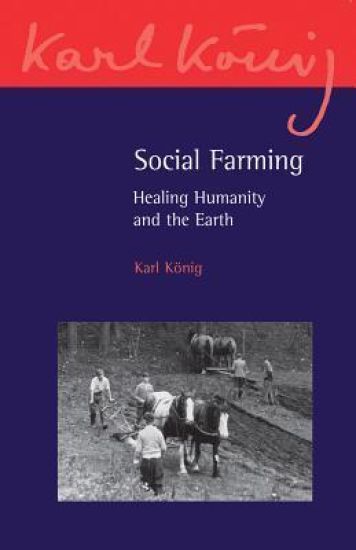
'The task is to create a form of social life by which the soil, the plants, the animals are in harmony with each other.' -- Karl KönigKarl König was deeply concerned for the relationship between the earth and humanity, and how landscape, plants and animals contribute to that relationship. This book presents sixteen lectures and essays by König, which explore the connection between biodynamics, domestic animals, elemental beings and many other aspects of farming and agriculture, all the time looking for how harmony and balance can be achieved in relation to the needs of human beings. This includes a revised edition of material previously published in Earth and Man.

Karl König, the founder of the Camphill movement, had great compassion and empathy for people on the margins of society. He also felt the same brotherly feelings towards the animal world. This remarkable book offers a closer understanding of some specific mammals, fish and birds and, along the way, great insight into human nature as well. König considers the mythological and historical background, and unique characteristics, of elephants, bears, horses, cats and dogs; penguins, seals, dolphins, salmon and eels; and swans and stork, sparrows and doves. Together, the lively sketches form a visionary zoology. First published in English as three separate volumes.

'There can be no doubt that special traits of character and mental make-up are found in children and adults who belong to the different ranks in the order of birth.'In this classic work, Karl König attempts to explain the various characteristics of first-, second- and third-born people, without losing sight of the tremendous individuality of the human being. Just as our environment shapes our language, social behaviour and mannerisms, so our place in the family also determines how we encounter life. This book is a fascinating handbook for parents, teachers and carers. Over the years it has become a definitive reference on the subject of child development. This newest edition in the Karl König Archive series includes a new introduction by series editor Richard Steel; an extended introduction by Karl König; two new essays: 'The Two Sisters', and 'Brother and Sister' ; some of Karl König's lecture notes and transcriptions, and an essay by A. Limbrunner about the significance of König's work on family order for today.

Kaspar Hauser was a young man who appeared on the streets of Nuremberg in Germany in the early nineteenth century. His innocence and mysterious background captured the hearts of many at the time.2012 marks the 200th anniversary of Kaspar Hauser's birth. This timely book draws together Karl König's thoughts on the enigma of Kaspar Hauser, as well as exploring König's deep connection to the young man. The book includes König's essay 'The Story of Kaspar Hauser', as well as essays from Peter Selg on 'König, Wegman and Kaspar Hauser' and Richard Steel on how König spoke of Kaspar Hauser in his diaries, notes and letters.
Umwelt und Gesundheit
Wilhelm Van Eimeren; Theresa Faus-Kessler; Karl König; Rupert Lasser; Gerda Rediske; Hagen Scherb; Johannes Tritschler; Eveline Weigelt; Gerhard Welzl
Springer-Verlag Berlin and Heidelberg GmbH Co. K
2012
nidottu
Untersucht die Aussagekraft epidemiologischer Studien zum Thema "Wirkung vonUmweltfaktoren auf die menschliche Ge- sundheit". Dargestellt wird, welche Zusammenh{nge zwischen Umweltkontaminanten und Gesundheit der Bev|lkerung auf der Basis epidemiologischer Studien gesichert, hinreichend ge- st}zt, m|glich oder nicht belegt erscheinen. Au~erdem wurde herausgearbeitet, wo die Chancen, aber auch Problemzonen epidemiologischer Arbeit zu umweltmedizinischen Fragestel- lungen liegen.

The late nineteenth-century was an era of contrasts. On the one hand, philosophical materialism was increasing its influence over science. On the other, there was a growing social awareness and quest for spiritual values. Karl König explores the personal stories of twenty-nine pioneers whose work and experiences helped shape that era. They include artists and writers, social reformers, philosophers and political activists, and scientists. He considers how they responded as individuals to the challenges of the changing world around them. His insights and conclusions are relevant for us today, as we face our own time of change and upheaval. The biographies include Helen Keller (1880?1968), Samuel Hahnemann (1755?1843), Sigmund Freud (1856?1939), Lou Salomé (1861?1937), Gustav Mahler (1860?1911), Charles Darwin (1809?1882) and Adolf von Hildebrand (1847?1921).
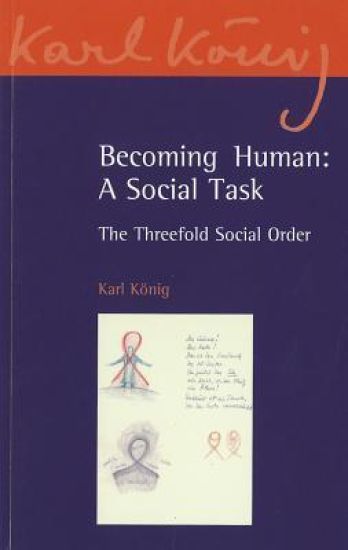
Karl Konig, the founder of the Camphill Movement, was very aware of the need for change in the social order he saw around him. In this revealing collection of imaginative thought and ideas, he shows, however, that true social change must begin in individuals. He goes on to say that renewal is something all human beings can practise themselves, in the midst of their everyday life.

Gegenübertragung und die Persönlichkeit des Psychotherapeuten
Karl König
Brandes + Apsel Verlag Gm
2010
nidottu

Byrons English Bards and Scotch Reviewers; Entstehung Und Beziehungen Zur Zeitgenössischen Satire Und Kritik
Karl Konig
Nabu Press
2010
pokkari

Jeder Mensch empfindet und verhält sich so, wie es seine Charakterstruktur zuläßt. Die narzißtische, schizoide, depressive, zwanghafte, phobische oder hysterische Charakterstruktur sind jeweils Ausdruck eines Grundkonflikts, der früh im Leben ungelöst geblieben ist. Tatsächlich treten diese Charaktertypen bei niemandem in reiner Ausprägung auf; aber der eine oder andere herrscht doch vor und bestimmt das Erleben und Verhalten des Menschen, seine Berufswahl und Einstellung zur Arbeit, die Partnerwahl und Gestaltung der Ehe, das Freizeitverhalten und die Genußfähigkeit. Karl König hat das Buch aus reicher klinischer Erfahrung geschrieben. Ein Buch für alle, die für ihr eigenes Verhalten und das ihrer Mitmenschen ein psychoanalytisches Verständnis suchen.

In these lectures König explores the human being and social life, the individual and community, from an imaginative and often radical perspective. These explorations range majestically from masks and archetypal images, the threefold constitution in man and woman, the karma of vocation, and the fundamental social law, to the place of work, religion and culture within the threefold social organism, and karma and reincarnation. These lectures arose from Karl König's experiences in building up Camphill Communities with extraordinary people with special needs. They are important both for the work in Camphill, as well as more broadly in the field of social therapy and beyond. This is a revised and expanded edition of the Village Conference Lectures of Karl König, previously published as In Need of Special Understanding.

Karl König, the founder of Camphill, was a prolific lecturer and writer on a wide range of subjects from anthroposophy and Christology through social questions and curative education to science and history. The Karl König Archive are working on a programme of publishing these works over the coming years. This is the fourth book to be published in the series. In this remarkable collection of Karl König's letters and essays, König considers and discusses the fundamentals of special needs education. He shows that there are three core aspects to a successful holistic education and healing approach: firstly, a positive social environment, which in the context of Camphill is achieved through small family units of carers and children; secondly, that carers' work is based on an insightful understanding of the nature and potential of each individual child and disability; and thirdly that medical treatment is imbued with courage to keep believing that the impossible is possible.

Ein Schlüsselbegriff der Psychologie wird präzisiert Ein anschauliches, knappes Lehrbuch zu den vielfältigen Abwehrformen in Therapie und Alltag. Psychische Abwehr richtet sich von Beginn des Menschenlebens an gegen alles, was Angst oder Unlust hervorrufen könnte. Daran ist nichts Krankhaftes; jeder Mensch setzt Abwehrmechanismen ein, um sein Wohlbefinden und sein Gefühl der Sicherheit zu stärken. Die Vielzahl bewußter und unbewußter Abwehrmechanismen, die unser Erleben wesentlich bestimmen, fächert Karl König anhand von Beispielsituationen sowohl innerhalb als auch außerhalb der Psychotherapie auf. -In der Therapie weisen spezifische Abwehrformen auf ihre zugrundeliegenden Konflikte, die so erkannt, ins Bewußtsein gehoben und bearbeitet werden können. Die Form der Abwehr erlaubt, wie die der Übertragung, den Blick auf die Genese der Konflikte. -Im alltäglichen Leben eröffnet das Erkennen der eigenen Abwehrmechanismen wie auch der des Gegenübers einen weniger verkrampften Umgang mit neuen oder angstmachenden Situationen.

Ita Wegman, born in 1876 to a Dutch family living in Indonesia, first met Rudolf Steiner in Berlin in 1902 when she was 26 years old. She studied medicine at the University of Zurich and in 1917, following Steiner's indications, developed a treatment for cancer using mistletoe. In 1921 she founded the first anthroposophical medical clinic, in Arlesheim, Switzerland, followed in 1922 by the Sonnenhof home for children with special needs. Karl König first met Wegman in 1927, and she quickly recognized his great potential, as well as his weaknesses. She invited him to work at the Arlesheim clinic as her assistant, and encouraged and advised him in his medical work. This book includes the complete correspondence between König and Wegman.

Gruppenanalyse im Göttinger Modell - theoretische Grundlagen und praktische Hinweise
Karl König
Mattes Verlag
2008
nidottu
Das Göttinger Modell und die Gruppenanalyse von Foulkes sind die zwei verbreitetsten therapeutischen Gruppenverfahren in Deutschland. In diesem Buch stellt Karl König dar, was Gruppenkonzepte zum Verständnis von Therapiegruppen und zu einem sinnvollen therapeutischen Handeln in Gruppen beitragen können.

Karl König: My Task is an inspiring introduction to König's remarkable life and work. This book combines König's autobiographical fragment and an essay by Peter Selg with two selected reminiscences written by König's colleagues Anke Weihs and Hans-Heinrich Engel. Born in 1902 into a Jewish family, Karl König grew up in Vienna in the last years of the Austro-Hungarian Empire. He studied medicine and during this time came across the work of Rudolf Steiner. Soon after graduating he worked with Ita Wegman in Switzerland, where he also met his wife, Tilla. He was a pioneer in the early days of Pilgramshain, a home for children with special needs in Silesia, Germany. However, in 1936 under political pressure he left Germany for Austria. Here he had a large medical practice as well as being the focus of a group of young people interested in Steiner's work. Following the annexation of Austria by the Nazis, König and many of the young people around him came to Britain as refugees. The ideal of working together as a community was put into practice with the founding of Camphill in 1939. König was the driving force behind the expansion of the Camphill movement across the British Isles, into Europe, South Africa and North America. He died in 1966.