Kirjojen hintavertailu – 12 859 818 kirjaa ja 27 kauppaa

Kirjailija

Karl Olav Sandnes

Kirjat ja teokset yhdessä paikassa: 12 kirjaa, julkaisuja vuosilta 2002–2022, suosituimpiin kuuluu Jesus the Epic Hero. Vertaile teosten hintoja ja tarkista saatavuus suomalaisista kirjakaupoista.

12 kirjaa

Kirjojen julkaisuvuodet: 2002–2022.

Jesus the Epic Hero

Jesus the Epic Hero

Karl Olav Sandnes

BLOOMSBURY PUBLISHING PLC
2022
sidottu
The ancient cento-genre was prone to be used on all kinds of subjects. New texts were created out of the classical epics. Empress Eudocia followed this practice and composed the story of Jesus in lines lifted almost verbatim from Homer’s epics. Jesus and his relevance to her audience is thus presented within the confines of style and vocabulary offered by the Iliad and Odyssey. The lines picked to convey her theology are often clustered around key Homeric motifs or type scenes, such as warfare, homecoming, feast, reconciliation, hospitality. Jesus waging war against all evil and Hades in particular runs throughout this Homeric and simultaneously biblical epic. The story starts in the Old Testament which is conceived as a divine counsel on Mt. Olympus where a plan to save sinful humanity is presented. The narrative then follows the biographic lines of the canonical gospels, with John’s Gospel holding pride of place in the way she renders and interprets the Jesus-story. The story told suspends both the geography and time of Jesus. Eudocia preaches the story she tells. She emerges in this poem as one of the most, if not the most prolific female theologian and preacher in the first Christian centuries.
Var Paulus kristen?

Var Paulus kristen?

Karl Olav Sandnes

Efrem Forlag
2021
nidottu
«Martin Luther og reformasjonen elsket Paulus. Kirkene (i hvert fall i vår del av kristenheten) elsker Luthers Paulus. Spørsmålet er dette: Elsker vi Paulus slik han historisk og egentlig var, og slik han tenkte?» Både spørsmålet og bokens tittel vil vise at dette ikke er kun retorikk fra Paulus-forsker Karl Olav Sandnes. Paulus var den første som formulerte hva Kristus-tro er. Det har gitt ham en unik rolle. Han er den som definerer hva kristendom er. Særlig siden reformasjonen har kirken brukt Paulus til å forklare hva kristen tro er. Ofte har dette skjedd ved å peke på det som skiller ham fra jødisk tro og tradisjon - jødedom, kort og godt. Men når vi påberoper oss Paulus - viser vi da til Paulus slik vår egen tradisjon har tegnet ham, eller slik han selv trodde og tenkte? «Var Paulus kristen?» er en kritisk presentasjon både av tradisjonens Paulus og av nyere debatt om apostelens teologi. Forfatteren bringer utfordrende tanker til torgs. Tanker om kristen tro man må ta stilling til. Ikke minst er dette en bok om å finne tilbake til Paulus' forståelse av nåden.
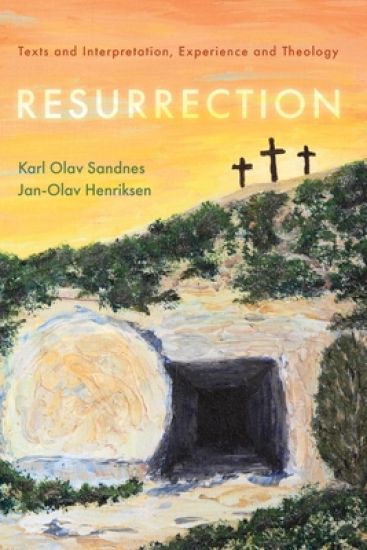
Resurrection

Resurrection

Karl Olav Sandnes; Jan-Olav Henriksen

Pickwick Publications
2020
sidottu
Christian faith depends upon the resurrection of Jesus, but the claim about Jesus' resurrection is, nevertheless, disputed. This book, written by a New Testament scholar and a systematic theologian in conjunction, develops the conditions for the claim. It carefully analyzes the relevant texts and their possible interpretations and engages with New Testament scholarship in order to show nuances and different trajectories in the material. The picture emerging is that the New Testament authors themselves tried to come to terms with how to understand the claim that Jesus had been resurrected from the dead. But the book does not stop there: by also asking for the experiential content that gave rise to the belief in the resurrection. Sandnes and Henriksen argue that there is no such thing as an experience of the resurrection reported in the New Testament--only experiences of an empty tomb and appearance of Jesus, interpreted as Jesus resurrected. Hence, resurrection emerges as an interpretative category for post-Easter experiences, and is only understandable in light of the full content of Jesus' ministry and its context.
The Challenge of Homer

The Challenge of Homer

Karl Olav Sandnes

T. T.Clark Ltd
2019
nidottu
Homer was the gateway to education, to the skills of reading and writing. These skills were necessary for the nascent Church. Knowledge of Homer's writings was a sign of Greekness, of at-home-ness in the society. Education was embedded in the mythology, immorality and idolatry of these writings. This challenged the Christians. This study presents how Christians responded to this. The opinions varied from rejection of Homer and all pagan literature, considering them works of the Devil, to critical involvement with this literature. This study attempts to trace the discourse on Homer and education among the Christians back to the New Testament. The topic does not come to the surface, but it is argued that in Paul's letters contrasting attitudes towards the propaideutic logic and the philosophical principle of usus (making right use of) are present. He opposed a logic wherein Christian faith represented the peak of education, the culmination of liberal studies. In his instruction on how to relate to the pagan world, Paul argues in accordance with the principle of usus. The New Testament is not so dependent upon the Homeric poems, as assumed by some scholars. The first Christians faced two hermeneutical challenges of fundamental importnce: that of interpreting the Old Testament and how to cope with the Greek legacy embedded in Homer. The latter is not explicitly raised in the New Testament. But since the art of interpreting any text, presupposes reading skills, conveyed through liberal studies, the Homeric challenge must have been of outmost importance.
Paul Perceived

Paul Perceived

Karl Olav Sandnes

Mohr Siebeck
2018
sidottu
An epicenter in present-day Pauline scholarship is the issue of the Law. The interpretation of this contentious issue started before Paul's letters and found its way into them by his citing how others perceived of his theology, and in Paul rendering rumors and criticism, and also interacting with them. To this reception-oriented perspective belong also punitive actions taken against Paul by synagogues. As a reception of Paul, Acts is included, leaving a more complex picture than argued by advocates of Paul within Judaism. Thus Karl Olav Sandnes uncovers the first interpretation or reception of Paul's view on Torah. It is limited in its scope, but provides a critical and necessary view on common trends in Pauline scholarship. Paul's decentering of the Torah was considered endangering for morality, for Jews and Gentiles alike. Perceptions of Paul's theology must be accounted for in Pauline studies.
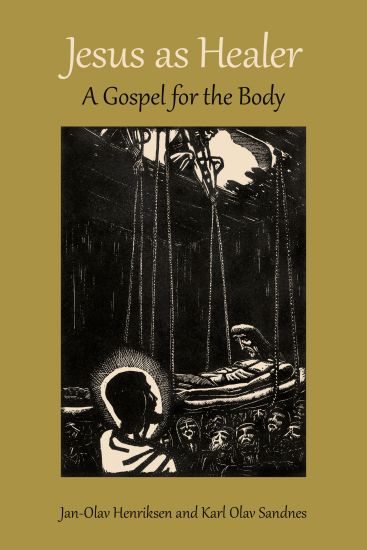
Jesus as Healer

Jesus as Healer

Jan-Olav Henriksen; Karl Olav Sandnes

William B Eerdmans Publishing Co
2016
nidottu
Healings and miracles play a prominent role in the New Testament accounts of Jesus' life and ministry. In the Western Christian tradition, however, Jesus' works of healing tend to be downplayed and understood as little more than a demonstration of his divine power. In this book Jan-Olav Henriksen and Karl Olav Sandnes draw on both contemporary systematic theology and New Testament scholarship to challenge and investigate the reasons for that oversight. They constructively consider what it can mean for Christian theology today to understand Jesus as a healer, to embrace fully the embodied character of the Christian faith, and to recognize the many ways in which God can still be seen to have a healing presence in the world.
Kristendommen I

Kristendommen I

Helje Kringlebotn Sødal; Karl Olav Sandnes; Levi Geir Eidhamar

Høyskoleforlaget
2009
nidottu
Ingen bok i verden har hatt så stor utbredelse og betydning som Bibelen. Opp gjennom historien har den øvd fundamental innflytelse på samfunn, språk og kultur – og på troslivet til utallige mennesker. Kristendommen I, Bibelen gir grunnleggende innføring i bibelkunnskap. Den tar opp historisk bakgrunnsstoff til skriftene i den bibelske boksamlingen og viser deler av Bibelens virkningshistorie. Men i første rekke vil boken gi en presentasjon av de mest sentrale bibelske fortellingene, slik de blir presentert i Det gamle og Det nye testamente. Tilnærmingen er historisk-litterær og behandler fortellingene som litteratur samtidig som de får en forankring i den tiden og det miljøet de ble til i. Boken passer for alle som er interessert i å skaffe seg kunnskap om Bibelen som kilde for tro, moral og kultur. Samtidig er den spesielt tilrettelagt for allmennlærerutdanningens studieenhet KRL1. Kristendommen II. Tro og tradisjon fortsetter fremstillingen om kristendommen med en innføring i kristendommens historie, kristen troslære og etikk og konfesjonskunnskap, men begge bøkene kan leses selvstendig. Kristendommen I, Bibelen er skrevet av tre forfattere med lang undervisningserfaring.
The Challenge of Homer

The Challenge of Homer

Karl Olav Sandnes

BLOOMSBURY PUBLISHING PLC
2009
sidottu
Homer was the gateway to education, to the skills of reading and writing. These skills were necessary for the nascent Church. Knowledge of Homer's writings was a sign of Greekness, of at-home-ness in the society. Education was embedded in the mythology, immorality and idolatry of these writings. This challenged the Christians. This study presents how Christians responded to this. The opinions varied from rejection of Homer and all pagan literature, considering them works of the Devil, to critical involvement with this literature. This study attempts to trace the discourse on Homer and education among the Christians back to the New Testament. The topic does not come to the surface, but it is argued that in Paul's letters contrasting attitudes towards the propaideutic logic and the philosophical principle of usus (making right use of) are present. He opposed a logic wherein Christian faith represented the peak of education, the culmination of liberal studies. In his instruction on how to relate to the pagan world, Paul argues in accordance with the principle of usus. The New Testament is not so dependent upon the Homeric poems, as assumed by some scholars. The first Christians faced two hermeneutical challenges of fundamental importnce: that of interpreting the Old Testament and how to cope with the Greek legacy embedded in Homer. The latter is not explicitly raised in the New Testament. But since the art of interpreting any text, presupposes reading skills, conveyed through liberal studies, the Homeric challenge must have been of outmost importance.
I Paulus' fotspor

I Paulus' fotspor

Karl Olav Sandnes; Ernst Baasland; Bjørn Helge Sandvei

Verbum
2008
nidottu
Gjennom Hellas i fotsporene til apostelen Paulus. Spennende glimt inn i bl.a. Filippi, Tessalonika, Berøa, Delfi, Athen og Korint. En ressursbok for bibel- og kulturinteresserte. Boka er et resultat av en rekke studiereiser forfatterne har hatt til Hellas.
Belly and Body in the Pauline Epistles

Belly and Body in the Pauline Epistles

Karl Olav Sandnes

Cambridge University Press
2005
pokkari
The belly is today a matter of much concern. Modern cultures, particularly in the West, have developed means to cultivate this part of the body: corsets, exercises, revealing fashions. In this compelling exploration of the 'belly' motif, Karl Olav Sandnes asks whether St Paul might be addressing a culture in which the stomach is similarly high on the agenda. The result is a surprising new insight into his writings. Paul twice mentions the enigmatic phrase 'belly-worship' (Phil 3; Rom 16). The proper context for these texts is the moral philosophy debate about mastering the desires, and the reputation of Epicurus' philosophy as promoting indulgence. The belly became a catchword for a life controlled by pleasures. Belly-worship was not only pejorative rhetoric, but developed from Paul's conviction that the body was destined to a future with Christ.
Belly and Body in the Pauline Epistles

Belly and Body in the Pauline Epistles

Karl Olav Sandnes

Cambridge University Press
2002
sidottu
The belly is today a matter of much concern. Modern cultures, particularly in the West, have developed means to cultivate this part of the body: corsets, exercises, revealing fashions. In this compelling exploration of the 'belly' motif, Karl Olav Sandnes asks whether St Paul might be addressing a culture in which the stomach is similarly high on the agenda. The result is a surprising new insight into his writings. Paul twice mentions the enigmatic phrase 'belly-worship' (Phil 3; Rom 16). The proper context for these texts is the moral philosophy debate about mastering the desires, and the reputation of Epicurus' philosophy as promoting indulgence. The belly became a catchword for a life controlled by pleasures. Belly-worship was not only pejorative rhetoric, but developed from Paul's conviction that the body was destined to a future with Christ.