Kirjojen hintavertailu – 12 903 725 kirjaa ja 27 kauppaa

Kirjailija

Karl Schlögel

Kirjat ja teokset yhdessä paikassa: 31 kirjaa, julkaisuja vuosilta 2002–2025, suosituimpiin kuuluu Lviv : en resa till Europa. Vertaile teosten hintoja ja tarkista saatavuus suomalaisista kirjakaupoista.

31 kirjaa

Kirjojen julkaisuvuodet: 2002–2025.

In Space We Read Time – On the History of Civilization and Geopolitics

In Space We Read Time – On the History of Civilization and Geopolitics

Karl Schlögel; Gerrit Jackson

Bard Graduate Center, Exhibitions Department
2016
sidottu
History is usually thought of as a tale of time, a string of events flowing in a particular chronological order. But as Karl SchlOgel shows in this groundbreaking book, the where of history is just as important as the when. SchlOgel relishes space the way a writer relishes a good story: on a quest for a type of history that takes full account of place, he explores everything from landscapes to cities, maps to railway timetables. Do you know the origin of the name "Everest"? What can the layout of towns tell us about the American Dream? In Space We Read Time reveals this and much, much more. Here is both a model for thinking about history within physical space and a stimulating history of thought about space, as SchlOgel reads historical periods and events within the context of their geographical location. Discussions range from the history of geography in France to what a town directory from 1930s Berlin can say about professional trades that have since disappeared. He takes a special interest in maps, which can serve many purposes one poignant example being the German Jewish community's 1938 atlas of emigration, which showed the few remaining possibilities for escape. Other topics include Thomas Jefferson's map of the United States; the British survey of India; and the multiple cartographers with Woodrow Wilson at the Paris Peace Conference, where the aim was to redraw Europe's boundaries on the basis of ethnicity. Moving deftly from the Austro-Hungarian Empire to 9/11 and from Vermeer's paintings to the fall of the Berlin Wall, this intriguing book presents history from a completely new perspective.
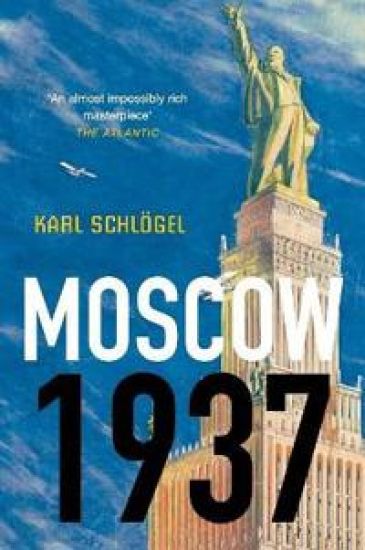
Moscow, 1937

Moscow, 1937

Karl Schlögel

Polity Press
2014
nidottu
Moscow, 1937: the soviet metropolis at the zenith of Stalin’s dictatorship. A society utterly wrecked by a hurricane of violence. In this compelling book, the renowned historian Karl Schlögel reconstructs with meticulous care the process through which, month by month, the terrorism of a state-of-emergency regime spiraled into the ‘Great Terror’ during which 1 ½ million human beings lost their lives within a single year. He revisits the sites of show trials and executions and, by also consulting numerous sources from the time, he provides a masterful panorama of these key events in Russian history. He shows how, in the shadow of the reign of terror, the regime around Stalin also aimed to construct a new society. Based on countless documents, Schlögel’s historical masterpiece vividly presents an age in which the boundaries separating the dream and the terror dissolve, and enables us to experience the fear that was felt by people subjected to totalitarian rule. This rich and absorbing account of the Soviet purges will be essential reading for all students of Russia and for any readers interested in one of the most dramatic and disturbing events of modern history.
Moscow, 1937

Moscow, 1937

Karl Schlögel

Polity Press
2012
sidottu
Moscow, 1937: the soviet metropolis at the zenith of Stalin’s dictatorship. A society utterly wrecked by a hurricane of violence. In this compelling book, the renowned historian Karl Schlögel reconstructs with meticulous care the process through which, month by month, the terrorism of a state-of-emergency regime spiraled into the ‘Great Terror’ during which 1 ½ million human beings lost their lives within a single year. He revisits the sites of show trials and executions and, by also consulting numerous sources from the time, he provides a masterful panorama of these key events in Russian history. He shows how, in the shadow of the reign of terror, the regime around Stalin also aimed to construct a new society. Based on countless documents, Schlögel’s historical masterpiece vividly presents an age in which the boundaries separating the dream and the terror dissolve, and enables us to experience the fear that was felt by people subjected to totalitarian rule. This rich and absorbing account of the Soviet purges will be essential reading for all students of Russia and for any readers interested in one of the most dramatic and disturbing events of modern history.
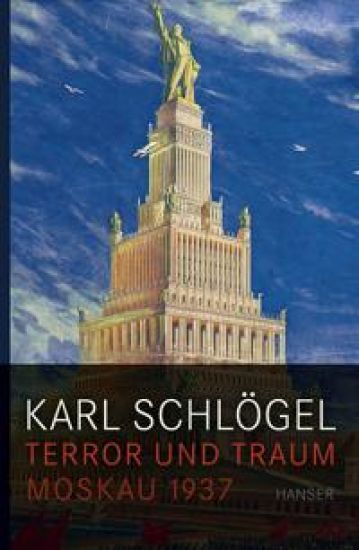
Terror und Traum

Terror und Traum

Karl Schlögel

Carl Hanser Verlag
2008
sidottu
Moskau 1937: Die sowjetische Metropole auf dem Höhepunkt der stalinistischen Diktatur. In einem Orkan der Gewalt geht eine Gesellschaft vollständig zugrunde. Karl Schlögel rekonstruiert Monat für Monat, wie sich der Terror eines Notstandsregimes zum "Großen Terror" steigerte, dem binnen eines Jahres anderthalb Millionen Menschen zum Opfer fielen. Doch damit ist noch nicht die ganze Geschichte erzählt: Im Schatten des Terrors will das Regime um Stalin eine neue Gesellschaft aufbauen. Gestützt auf zahllose Dokumente, vergegenwärtigt Schlögel in seinem historischen Meisterwerk eine Zeit, in der Terror und Traum fließend ineinander übergingen.
Die Mitte liegt ostwärts

Die Mitte liegt ostwärts

Karl Schlögel

S. Fischer Verlag
2008
pokkari
Karl Schlögels Erkundungen in der Mitte Europas setzen beachtliche Orientierungszeichen, die die dunklen Flecken auf der europäischen Landkarte erhellen. Sie handeln von der Wichtigkeit des Ostens auch im Rahmen der EU-Erweiterung, über Russland in Alltag und Intelligenz, bis hin zur Migration in Europa durch Krieg, Vertreibung oder Erfordernisse des Arbeitsmarktes.
Im Raume lesen wir die Zeit

Im Raume lesen wir die Zeit

Karl Schlögel

S. Fischer Verlag
2006
pokkari
Was sagt uns der Grundriss einer Stadt über den amerikanischen Traum? Wie haben Eisenbahn, Auto und Flugzeug unseren Sinn für Distanzen verändert? Karl Schlögel findet Antworten an überraschenden Stellen: in Fahrplänen, Adressbüchern, auf Landkarten und Grundrissen. Er holt damit die Geschichte an ihre Schauplätze zurück, macht sie anschaulich, lebendig und wunderbar lesbar. "Ein Buch von tiefem Ernst und großer Leichtigkeit, ein Pamphlet und eine Spurenlese, dicht und welthaltig." Jürgen Osterhammel, Die Zeit