Kirjojen hintavertailu – 12 859 818 kirjaa ja 27 kauppaa

Kirjailija

Karlos K. Hill

Kirjat ja teokset yhdessä paikassa: 5 kirjaa, julkaisuja vuosilta 2016–2021, suosituimpiin kuuluu Beyond the Rope. Vertaile teosten hintoja ja tarkista saatavuus suomalaisista kirjakaupoista.

5 kirjaa

Kirjojen julkaisuvuodet: 2016–2021.

The 1921 Tulsa Race Massacre

The 1921 Tulsa Race Massacre

Karlos K. Hill; Kevin Matthews

University of Oklahoma Press
2021
sidottu
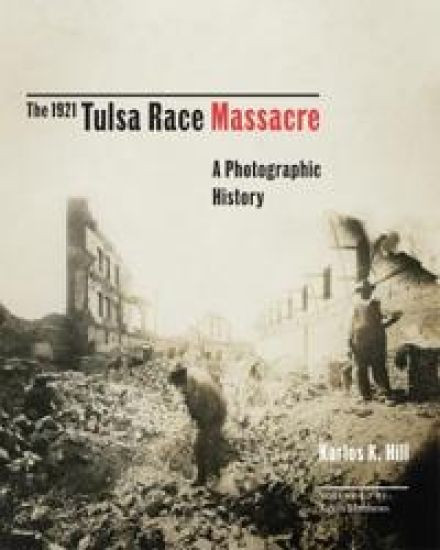
On the evening of May 31, 1921, and in the early morning hours of June 1, several thousand white citizens and authorities violently attacked the African American Greenwood District of Tulsa, Oklahoma. In the course of some twelve hours of mob violence, white Tulsans reduced one of the nation's most prosperous black communities to rubble and killed an estimated 300 people, mostly African Americans. This richly illustrated volume, featuring more than 175 photographs, along with oral testimonies, shines a new spotlight on the race massacre from the vantage point of its victims and survivors. Historian and Black Studies professor Karlos K. Hill presents a range of photographs taken before, during, and after the massacre, mostly by white photographers. Some of the images are published here for the first time. Comparing these photographs to those taken elsewhere in the United States of lynchings, the author makes a powerful case for terming the 1921 outbreak not a riot but a massacre. White civilians, in many cases assisted or condoned by local and state law enforcement, perpetuated a systematic and coordinated attack on Black Tulsans and their property. Despite all the violence and devastation, black Tulsans rebuilt the Greenwood District brick by brick. By the mid-twentieth century, Greenwood had reached a new zenith, with nearly 250 Black-owned and Black-operated businesses. Today the citizens of Greenwood, with support from the broader community, continue to work diligently to revive the neighborhood once known as 'Black Wall Street.' As a result, Hill asserts, the most important legacy of the Tulsa Race Massacre is the grit and resilience of the Black survivors of racist violence. The 1921 Tulsa Race Massacre: A Photographic History offers a perspective largely missing from other accounts. At once captivating and disturbing, it will embolden readers to confront the uncomfortable legacy of racial violence in U. S. history.
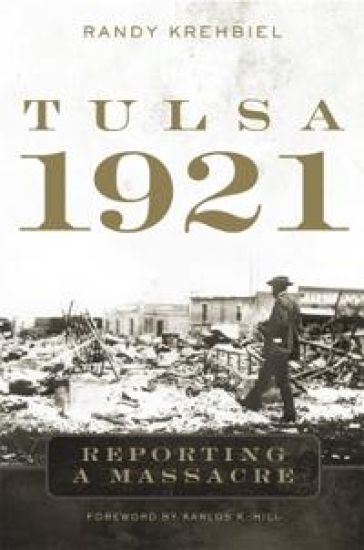
Tulsa, 1921

Tulsa, 1921

Randy Krehbiel; Karlos K. Hill

University of Oklahoma Press
2021
nidottu
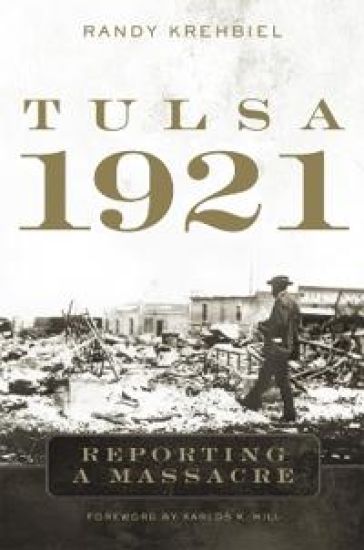
In 1921 Tulsa's Greenwood District, known then as the nation's 'Black Wall Street,' was one of the most prosperous African American communities in the United States. But on May 31 of that year, a white mob, inflamed by rumors that a young Black man had attempted to rape a white teenage girl, invaded Greenwood. By the end of the following day, thousands of homes and businesses lay in ashes, and perhaps as many as three hundred people were dead. Tulsa, 1921 shines new light into the shadows that have long been cast over this extraordinary instance of racial violence. With the clarity and descriptive power of a veteran journalist, author Randy Krehbiel digs deep into the events and their aftermath and investigates decades-old questions about the local culture at the root of what one writer has called a white-led pogrom. Krehbiel analyzes local newspaper accounts in an unprecedented effort to gain insight into the minds of contemporary Tulsans. In the process he considers how the Tulsa World, the Tulsa Tribune, and other publications contributed to the circumstances that led to the disaster and helped solidify enduring white justifications for it. Some historians have dismissed local newspapers as too biased to be of value for an honest account, but by contextualizing their reports, Krehbiel renders Tulsa's papers an invaluable resource, highlighting the influence of news media on our actions in the present and our memories of the past. The Tulsa Massacre was a result of racial animosity and mistrust within a culture of political and economic corruption. In its wake, Black Tulsans were denied redress and even the right to rebuild on their own property, yet they ultimately prevailed and even prospered despite systemic racism and the rise during the 1920s of the second Ku Klux Klan. As Krehbiel considers the context and consequences of the violence and devastation, he asks, Has the city - indeed, the nation - exorcised the prejudices that led to this tragedy?
Tulsa, 1921

Tulsa, 1921

Randy Krehbiel; Karlos K. Hill

University of Oklahoma Press
2019
sidottu
In 1921 Tulsa's Greenwood District, known then as the nation's "Black Wall Street", was one of the most prosperous African American communities in the United States. But on May 31 of that year, a white mob, inflamed by rumors that a young black man had attempted to rape a white teenage girl, invaded Greenwood. By the end of the following day, thousands of homes and businesses lay in ashes, and perhaps as many as three hundred people were dead. Tulsa, 1921 shines new light into the shadows that have long been cast over this extraordinary instance of racial violence. With the clarity and descriptive power of a veteran journalist, author Randy Krehbiel digs deep into the events and their aftermath and investigates decades-old questions about the local culture at the root of what one writer has called a white-led pogrom. Krehbiel analyzes local newspaper accounts in an unprecedented effort to gain insight into the minds of contemporary Tulsans. In the process he considers how the Tulsa World, the Tulsa Tribune, and other publications contributed to the circumstances that led to the disaster and helped solidify enduring white justifications for it. Some historians have dismissed local newspapers as too biased to be of value for an honest account, but by contextualizing their reports, Krehbiel renders Tulsa's papers an invaluable resource, highlighting the influence of news media on our actions in the present and our memories of the past. The Tulsa Massacre was a result of racial animosity and mistrust within a culture of political and economic corruption. In its wake, black Tulsans were denied redress and even the right to rebuild on their own property, yet they ultimately prevailed and even prospered despite systemic racism and the rise during the 1920s of the second Ku Klux Klan. As Krehbiel considers the context and consequences of the violence and devastation, he asks, Has the city - indeed, the nation - exorcised the prejudices that led to this tragedy?
Beyond the Rope

Beyond the Rope

Karlos K. Hill

Cambridge University Press
2016
sidottu
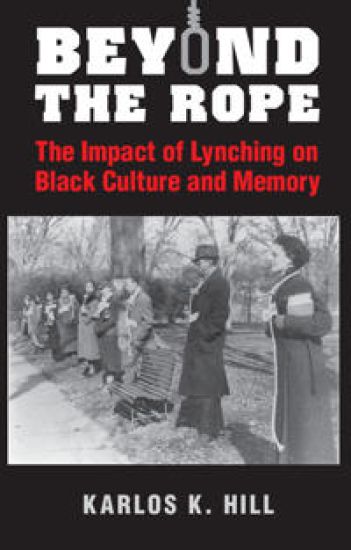
Beyond the Rope is an interdisciplinary study that draws on narrative theory and cultural studies methodologies to trace African Americans' changing attitudes and relationships to lynching over the twentieth century. Whereas African Americans are typically framed as victims of white lynch mob violence in both scholarly and public discourses, Karlos K. Hill reveals that in the late nineteenth and early twentieth centuries African Americans lynched other African Americans in response to alleged criminality, and that twentieth-century black writers envisaged African American lynch victims as exemplars of heroic manhood. By illuminating the submerged histories of black vigilantism and consolidating narratives of lynching in African American literature that framed black victims of white lynch mob violence as heroic, Hill argues that rather than being static and one dimensional, African American attitudes towards lynching and the lynched black evolved in response to changing social and political contexts.
Beyond the Rope

Beyond the Rope

Karlos K. Hill

Cambridge University Press
2016
pokkari
Beyond the Rope is an interdisciplinary study that draws on narrative theory and cultural studies methodologies to trace African Americans' changing attitudes and relationships to lynching over the twentieth century. Whereas African Americans are typically framed as victims of white lynch mob violence in both scholarly and public discourses, Karlos K. Hill reveals that in the late nineteenth and early twentieth centuries African Americans lynched other African Americans in response to alleged criminality, and that twentieth-century black writers envisaged African American lynch victims as exemplars of heroic manhood. By illuminating the submerged histories of black vigilantism and consolidating narratives of lynching in African American literature that framed black victims of white lynch mob violence as heroic, Hill argues that rather than being static and one dimensional, African American attitudes towards lynching and the lynched black evolved in response to changing social and political contexts.