Kirjojen hintavertailu – 12 859 828 kirjaa ja 27 kauppaa

Kirjailija

Katalin Nun

Kirjat ja teokset yhdessä paikassa: 14 kirjaa, julkaisuja vuosilta 2001–2021, suosituimpiin kuuluu Maedchenleben in Ost Und West - Ddr, Ungarn, Bundesrepublik Deutschland. Vertaile teosten hintoja ja tarkista saatavuus suomalaisista kirjakaupoista.

14 kirjaa

Kirjojen julkaisuvuodet: 2001–2021.

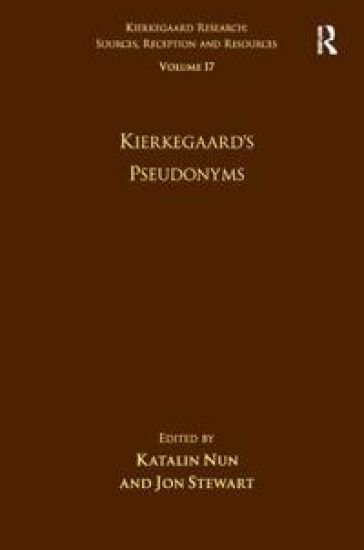
Volume 17: Kierkegaard's Pseudonyms

Volume 17: Kierkegaard's Pseudonyms

Katalin Nun; Jon Stewart

Taylor Francis Ltd
2021
nidottu
One of the elements that many readers admire in Kierkegaard’s skill as a writer is his ability to create different voices and perspectives in his works. Instead of unilaterally presenting clear-cut doctrines and theses, he confronts the reader with a range of personalities and figures who all espouse different views. One important aspect of this play of perspectives is Kierkegaard’s controversial use of pseudonyms. The present volume is dedicated to exploring the different pseudonyms and authorial voices in Kierkegaard’s writing. The articles featured here try to explore each pseudonymous author as a literary figure and to explain what kind of a person is at issue in each of the pseudonymous works. The hope is that by taking seriously each of these figures as individuals, we will be able to gain new insights into the texts which they are ostensibly responsible for.
Volume 16, Tome II: Kierkegaard's Literary Figures and Motifs

Volume 16, Tome II: Kierkegaard's Literary Figures and Motifs

Katalin Nun; Jon Stewart

Taylor Francis Ltd
2021
nidottu
While Kierkegaard is perhaps known best as a religious thinker and philosopher, there is an unmistakable literary element in his writings. He often explains complex concepts and ideas by using literary figures and motifs that he could assume his readers would have some familiarity with. This dimension of his thought has served to make his writings far more popular than those of other philosophers and theologians, but at the same time it has made their interpretation more complex. Kierkegaard readers are generally aware of his interest in figures such as Faust or the Wandering Jew, but they rarely have a full appreciation of the vast extent of his use of characters from different literary periods and traditions. The present volume is dedicated to the treatment of the variety of literary figures and motifs used by Kierkegaard. The volume is arranged alphabetically by name, with Tome II covering figures and motifs from Gulliver to Zerlina.
Volume 16, Tome I: Kierkegaard's Literary Figures and Motifs

Volume 16, Tome I: Kierkegaard's Literary Figures and Motifs

Katalin Nun; Jon Stewart

Taylor Francis Ltd
2021
nidottu
While Kierkegaard is perhaps known best as a religious thinker and philosopher, there is an unmistakable literary element in his writings. He often explains complex concepts and ideas by using literary figures and motifs that he could assume his readers would have some familiarity with. This dimension of his thought has served to make his writings far more popular than those of other philosophers and theologians, but at the same time it has made their interpretation more complex. Kierkegaard readers are generally aware of his interest in figures such as Faust or the Wandering Jew, but they rarely have a full appreciation of the vast extent of his use of characters from different literary periods and traditions. The present volume is dedicated to the treatment of the variety of literary figures and motifs used by Kierkegaard. The volume is arranged alphabetically by name, with Tome I covering figures and motifs from Agamemnon to Guadalquivir.
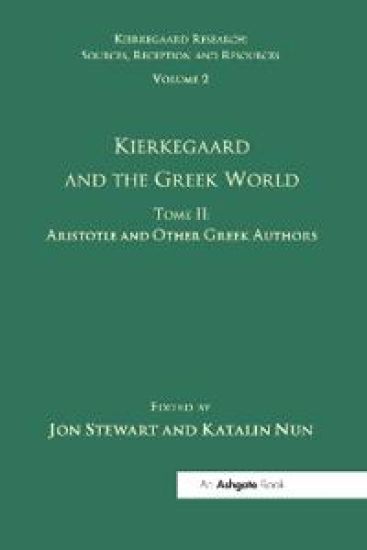
Volume 2, Tome II: Kierkegaard and the Greek World - Aristotle and Other Greek Authors
The articles in this volume employ source-work research to trace Kierkegaard's understanding and use of authors from the Greek tradition. A series of figures of varying importance in Kierkegaard's authorship are treated, ranging from early Greek poets to late Classical philosophical schools. In general it can be said that the Greeks collectively constitute one of the single most important body of sources for Kierkegaard's thought. He studied Greek from an early age and was profoundly inspired by what might be called the Greek spirit. Although he is generally considered a Christian thinker, he was nonetheless consistently drawn back to the Greeks for ideas and impulses on any number of topics. He frequently contrasts ancient Greek philosophy, with its emphasis on the lived experience of the individual in daily life, with the abstract German philosophy that was in vogue during his own time. It has been argued that he modeled his work on that of the ancient Greek thinkers specifically in order to contrast his own activity with that of his contemporaries.
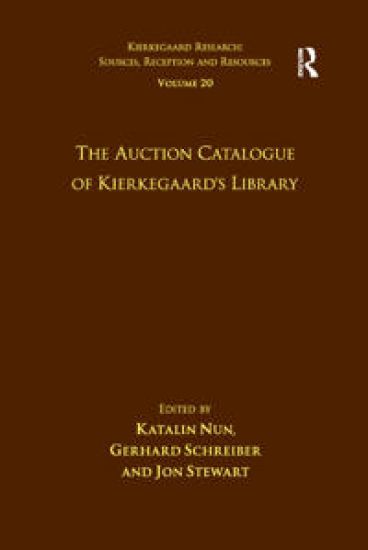
Volume 20: The Auction Catalogue of Kierkegaard's Library

Volume 20: The Auction Catalogue of Kierkegaard's Library

Katalin Nun; Gerhard Schreiber

Routledge
2019
nidottu
This volume is a revised and improved edition of the auction catalogue of Kierkegaard’s private library. The catalogue has long served as one of the most valuable tools in Kierkegaard studies and has been actively used by commentators, translators and researchers for tracing the various sources of Kierkegaard’s thought. With the catalogue in hand, one can determine with some degree of probability what books he read and what editions he used for his information about specific authors. The present volume represents the fourth printing of the catalogue, and it differs from its predecessors in many respects. The previous editions contained incomplete, erroneous and inconsistent bibliographical information about the works in the catalogue. The primary goal of the present edition was to obtain all of the books and check their title pages for the precise bibliographical information. The result is an accurate and reliable edition of the catalogue that conforms to the needs of Kierkegaard studies in the digital age.
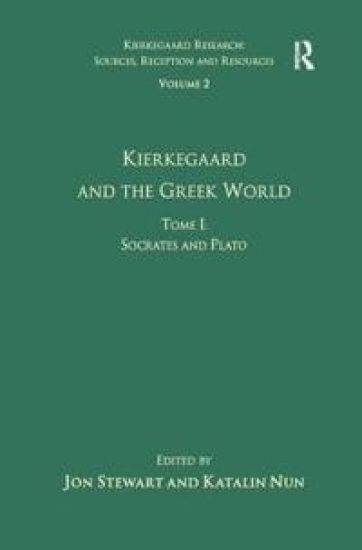
Volume 2, Tome I: Kierkegaard and the Greek World - Socrates and Plato
The articles in this volume employ source-work research to trace Kierkegaard's understanding and use of authors from the Greek tradition. A series of figures of varying importance in Kierkegaard's authorship are treated, ranging from early Greek poets to late Classical philosophical schools. In general it can be said that the Greeks collectively constitute one of the single most important body of sources for Kierkegaard's thought. He studied Greek from an early age and was profoundly inspired by what might be called the Greek spirit. Although he is generally considered a Christian thinker, he was nonetheless consistently drawn back to the Greeks for ideas and impulses on any number of topics. He frequently contrasts ancient Greek philosophy, with its emphasis on the lived experience of the individual in daily life, with the abstract German philosophy that was in vogue during his own time. It has been argued that he modeled his work on that of the ancient Greek thinkers specifically in order to contrast his own activity with that of his contemporaries.
Volume 17: Kierkegaard's Pseudonyms

Volume 17: Kierkegaard's Pseudonyms

Katalin Nun; Jon Stewart

Routledge
2015
sidottu
One of the elements that many readers admire in Kierkegaard’s skill as a writer is his ability to create different voices and perspectives in his works. Instead of unilaterally presenting clear-cut doctrines and theses, he confronts the reader with a range of personalities and figures who all espouse different views. One important aspect of this play of perspectives is Kierkegaard’s controversial use of pseudonyms. The present volume is dedicated to exploring the different pseudonyms and authorial voices in Kierkegaard’s writing. The articles featured here try to explore each pseudonymous author as a literary figure and to explain what kind of a person is at issue in each of the pseudonymous works. The hope is that by taking seriously each of these figures as individuals, we will be able to gain new insights into the texts which they are ostensibly responsible for.
Volume 20: The Auction Catalogue of Kierkegaard's Library

Volume 20: The Auction Catalogue of Kierkegaard's Library

Katalin Nun; Gerhard Schreiber

Routledge
2015
sidottu
This volume is a revised and improved edition of the auction catalogue of Kierkegaard’s private library. The catalogue has long served as one of the most valuable tools in Kierkegaard studies and has been actively used by commentators, translators and researchers for tracing the various sources of Kierkegaard’s thought. With the catalogue in hand, one can determine with some degree of probability what books he read and what editions he used for his information about specific authors. The present volume represents the fourth printing of the catalogue, and it differs from its predecessors in many respects. The previous editions contained incomplete, erroneous and inconsistent bibliographical information about the works in the catalogue. The primary goal of the present edition was to obtain all of the books and check their title pages for the precise bibliographical information. The result is an accurate and reliable edition of the catalogue that conforms to the needs of Kierkegaard studies in the digital age.
Volume 16, Tome II: Kierkegaard's Literary Figures and Motifs
While Kierkegaard is perhaps known best as a religious thinker and philosopher, there is an unmistakable literary element in his writings. He often explains complex concepts and ideas by using literary figures and motifs that he could assume his readers would have some familiarity with. This dimension of his thought has served to make his writings far more popular than those of other philosophers and theologians, but at the same time it has made their interpretation more complex. Kierkegaard readers are generally aware of his interest in figures such as Faust or the Wandering Jew, but they rarely have a full appreciation of the vast extent of his use of characters from different literary periods and traditions. The present volume is dedicated to the treatment of the variety of literary figures and motifs used by Kierkegaard. The volume is arranged alphabetically by name, with Tome II covering figures and motifs from Gulliver to Zerlina.
Volume 16, Tome I: Kierkegaard's Literary Figures and Motifs
While Kierkegaard is perhaps known best as a religious thinker and philosopher, there is an unmistakable literary element in his writings. He often explains complex concepts and ideas by using literary figures and motifs that he could assume his readers would have some familiarity with. This dimension of his thought has served to make his writings far more popular than those of other philosophers and theologians, but at the same time it has made their interpretation more complex. Kierkegaard readers are generally aware of his interest in figures such as Faust or the Wandering Jew, but they rarely have a full appreciation of the vast extent of his use of characters from different literary periods and traditions. The present volume is dedicated to the treatment of the variety of literary figures and motifs used by Kierkegaard. The volume is arranged alphabetically by name, with Tome I covering figures and motifs from Agamemnon to Guadalquivir.
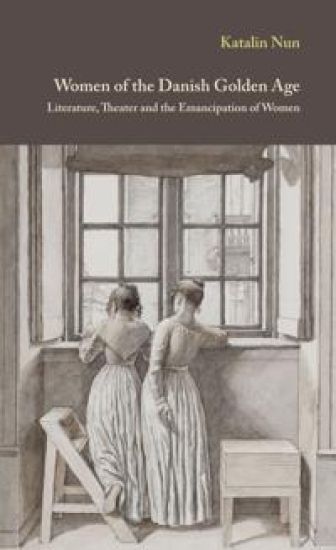
Women of the Danish Golden Age

Women of the Danish Golden Age

Katalin Nun

Museum Tusculanum Press
2013
sidottu
This broad, interdisciplinary work explores the little recognised contributions of women to the cultural life of the Danish Golden Age. Featuring chapters on the novelist Thomasine Gyllembourg, the actress Johanne Louise Heiberg and the feminist writer Mathilde Fibiger, this text spans three generations of women from the early to the late Golden Age and indeed beyond. Further it treats the notions about what was considered the proper role of women in Danish society at the time, including the views of male authors such as Søren Kierkegaard and Hans Lassen Martensen. This work provides a fascinating panorama of personalities, literary texts, theatre performances, art works and social-political debates, which collectively give the reader a rich appreciation of the importance of women for the age.
Volume 2, Tome II: Kierkegaard and the Greek World - Aristotle and Other Greek Authors
The articles in this volume employ source-work research to trace Kierkegaard's understanding and use of authors from the Greek tradition. A series of figures of varying importance in Kierkegaard's authorship are treated, ranging from early Greek poets to late Classical philosophical schools. In general it can be said that the Greeks collectively constitute one of the single most important body of sources for Kierkegaard's thought. He studied Greek from an early age and was profoundly inspired by what might be called the Greek spirit. Although he is generally considered a Christian thinker, he was nonetheless consistently drawn back to the Greeks for ideas and impulses on any number of topics. He frequently contrasts ancient Greek philosophy, with its emphasis on the lived experience of the individual in daily life, with the abstract German philosophy that was in vogue during his own time. It has been argued that he modeled his work on that of the ancient Greek thinkers specifically in order to contrast his own activity with that of his contemporaries.
Volume 2, Tome I: Kierkegaard and the Greek World - Socrates and Plato
The articles in this volume employ source-work research to trace Kierkegaard's understanding and use of authors from the Greek tradition. A series of figures of varying importance in Kierkegaard's authorship are treated, ranging from early Greek poets to late Classical philosophical schools. In general it can be said that the Greeks collectively constitute one of the single most important body of sources for Kierkegaard's thought. He studied Greek from an early age and was profoundly inspired by what might be called the Greek spirit. Although he is generally considered a Christian thinker, he was nonetheless consistently drawn back to the Greeks for ideas and impulses on any number of topics. He frequently contrasts ancient Greek philosophy, with its emphasis on the lived experience of the individual in daily life, with the abstract German philosophy that was in vogue during his own time. It has been argued that he modeled his work on that of the ancient Greek thinkers specifically in order to contrast his own activity with that of his contemporaries.
Maedchenleben in Ost Und West - Ddr, Ungarn, Bundesrepublik Deutschland
Madchenliteratur als Teil der Gesamtliteratur eines Landes bildet gleichzeitig einen Teil des kulturellen Systems, dessen Charakteristika wiederum mit dem politischen und gesellschaftlichen System zusammenhangen. Diese Verbindung ausnutzend, kann man aus Analysen von Madchenromanen viele Informationen uber den jeweiligen gesellschaftlichen Hintergrund eines Landes gewinnen. Bei dieser Studie handelt es sich um eine landeskundlich orientierte, komparatistische Studie. Die Autorin setzt sich mit ausgewahlten ostdeutschen, ungarischen und westdeutschen madchenliterarischen Texten in ihrem jeweiligen historischen Kontext vom Ende des Zweiten Weltkriegs bis zum Zusammenbruch der osteuropaischen sozialistischen Regime (1989) auseinander. In dieser Arbeit wird Madchenliteratur in Hinblick auf die historische, politische, gesellschaftliche und kulturelle Entwicklung gelesen, die in den einzelnen Landern wahrend dieser Zeit zu erfahren war. Hierbei nehmen jene Probleme einen wichtigen Platz ein, die mit dem Frauenbild und der Situation der Frau zusammenhangen.