
Kirjojen hintavertailu – 12 903 725 kirjaa ja 27 kauppaa

Kirjailija

Katarina Elvén

Kirjat ja teokset yhdessä paikassa: 2 kirjaa, julkaisuja vuosilta 2014–2025, suosituimpiin kuuluu Konstnärlig pedagogik & praktik: metoder, dialoger, reflektioner. Vertaile teosten hintoja ja tarkista saatavuus suomalaisista kirjakaupoista.

2 kirjaa

Kirjojen julkaisuvuodet: 2014–2025.

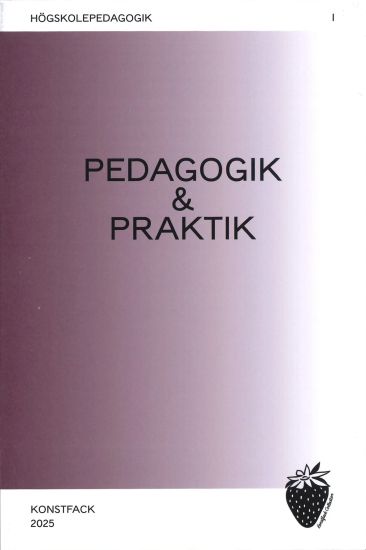
Konstnärlig pedagogik & praktik: metoder, dialoger, reflektioner

Konstnärlig pedagogik & praktik: metoder, dialoger, reflektioner

Miriam von Schantz; Jens Schildt; Anneli Renborg; Elsa Chartin; Agnieszka Knap; Katarina Elvén; Mara Lee Gerdén; Jenny Althoff; Michell Zethson

Konstfack Collection
2025
nidottu
Hur ser undervisning ut på en konstnärlig högskola i ateljéer, verkstäder och experimentella rum? I denna brokiga och utforskande skrift delar lärare på Konstfack med sig av konkreta metoder, reflektioner och frågor om lärande, feedback och pedagogik. Se den som en inbjudan till vidare samtal om undervisningens möjligheter och utmaningar. HÖGSKOLEPEDAGOGIK är en samling högskolepedagogiska texter i ett litet format och i modern typografisk utstyrsel som publiceras via Konstfack Collection.
Architecture, photography and the contemporary past

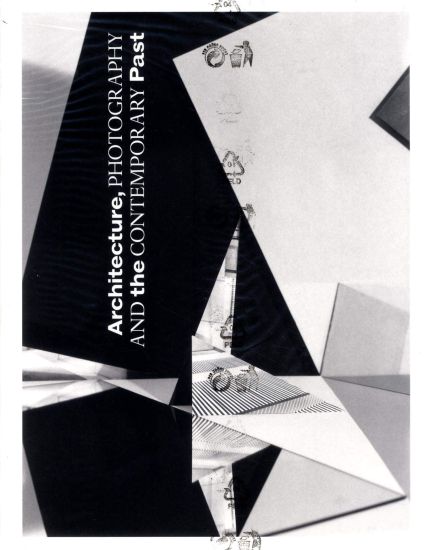
Architecture, photography and the contemporary past

Claes Caldenby; David Kendall; Helena Mattsson; Katarina Elvén; Astrid von Rosen; Hendrik Zeitler; Staffan Schmidt; Klas Grinell; Cecilia Gronberg; Ana Betancour; Alyssa Grossman; Patrik Elgstrom; Andrej Slavik; Victor Buchli

Art and Theory
2014
nidottu
As traces left behind by the last two hundred years of profound historical change, architecture and photography contribute both to our contemporary skyline and to our image of the past. Their common history thus provides an indispensable background to every discussion of what has been called the contemporary past - that is, to modernity considered as an open problem rather than a closed historical period. Architecture can be seen as a kind of macromodernity, a social scope where the diverse discourses of modernity have assumed their most large-scale form. In analogy, photographic media constitute a micromodernity, where the underside of modern society has been registered, identified, classified, and archived. In both cases, we trace out the irregular borderline between the discursive and its opposite, the material. At this point of intersection, an interesting confrontation between traditional academic historiography and an artistic application of historical perspectives might be staged. What contribution can architecture and photography make to the exploration of our contemporary past? Victor Buchli, in his afterword, underlines the potential of such confrontations: Translation always betrays the original intention, but what might be described as the infelicities of the translation that are inherently treacherous are precisely what constitute its productive capacities.