Kirjojen hintavertailu – 12 903 725 kirjaa ja 27 kauppaa

Kirjailija

Kate Brown

Kirjat ja teokset yhdessä paikassa: 24 kirjaa, julkaisuja vuosilta 2005–2027, suosituimpiin kuuluu Gender in Conflicts. Vertaile teosten hintoja ja tarkista saatavuus suomalaisista kirjakaupoista.

24 kirjaa

Kirjojen julkaisuvuodet: 2005–2027.

Secondary Starters and Plenaries

Secondary Starters and Plenaries

Kate Brown

Bloomsbury Education
2013
nidottu
Starters and plenaries are now an essential part of all lessons and this highly practical, bestselling book provides busy secondary teachers with 50 creative activities to use in the classroom. The tasks will help ensure the first five minutes of any lesson are a time for motivation, energy and forward thinking and will help students to reflect on, and embed their learning at the end. From game show inspired quizzes to bingo and dominoes, Kate Brown’s wealth of original ideas have been tried and tested by secondary teachers and can be adapted to use in any subject. Concise explanations and cross-curricular examples make this book an accessible and time saving resource for all secondary teachers looking to inject some new life and enthusiasm into their lessons.

Fish + Chocolate

Fish + Chocolate

Kate Brown

SelfMadeHero
2011
sidottu
Three short stories, each focusing on the relationship between mother and child. 'The Piper Man' is structured around the legend of The Pied Piper of Hamelin. Marie Nicholls is a single mother bringing up her two boys, who are desperately missing their father. When a strange man arrives on their street, they are inexplicably drawn to him, much to Marie's horror. 'The Cherry Tree' tells the story of a musician, who finds her career at odds with being a mother, while 'Matryoshka' follows a woman's struggle with grief and loss following the death of her baby.
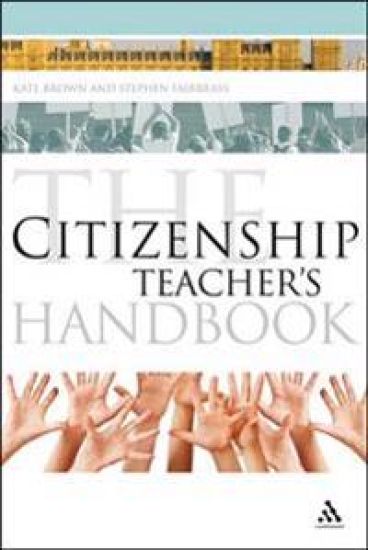
The Citizenship Teacher's Handbook

The Citizenship Teacher's Handbook

Kate Brown; Stephen Fairbrass

Continuum International Publishing Group Ltd.
2009
nidottu
This is a practical and passionate resource that provides support for Secondary teachers in teaching Citizenship effectively. Concern about the future of a democratic society is not new. However, the commitment to equip young citizens with the knowledge and skills to enable them to be vigilant, to do something, and to speak up, is. The purpose of "Citizenship Education" is ultimately to contribute to the continuance and development of just and democratic societies, with vibrant and active engagement of citizens. "Citizenship Education" is education about democracy, but more importantly it is education for democracy. This highly practical and passionate book outlines the essential elements of teaching Citizenship effectively. It covers: teaching and learning Citizenship; planning to teach Citizenship; implementing whole school initiatives; and, assessment in Citizenship education, and much more. This is essential reading for all those involved in Citizenship Education in secondary schools.
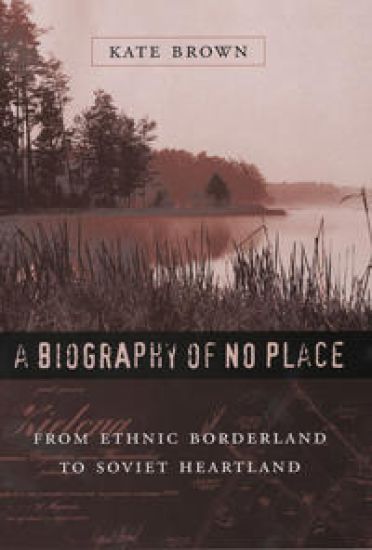
A Biography of No Place

A Biography of No Place

Kate Brown

Harvard University Press
2005
nidottu
This is a biography of a borderland between Russia and Poland, a region where, in 1925, people identified as Poles, Germans, Jews, Ukrainians, and Russians lived side by side. Over the next three decades, this mosaic of cultures was modernized and homogenized out of existence by the ruling might of the Soviet Union, then Nazi Germany, and finally, Polish and Ukrainian nationalism. By the 1950s, this “no place” emerged as a Ukrainian heartland, and the fertile mix of peoples that defined the region was destroyed. Kate Brown’s study is grounded in the life of the village and shtetl, in the personalities and small histories of everyday life in this area. In impressive detail, she documents how these regimes, bureaucratically and then violently, separated, named, and regimented this intricate community into distinct ethnic groups. Drawing on recently opened archives, ethnography, and oral interviews that were unavailable a decade ago, A Biography of No Place reveals Stalinist and Nazi history from the perspective of the remote borderlands, thus bringing the periphery to the center of history. We are given, in short, an intimate portrait of the ethnic purification that has marked all of Europe, as well as a glimpse at the margins of twentieth-century “progress.”