Kirjailija
Kate Burridge
Kirjat ja teokset yhdessä paikassa: 16 kirjaa, julkaisuja vuosilta 1997–2026, suosituimpiin kuuluu Introducing English Grammar. Vertaile teosten hintoja ja tarkista saatavuus suomalaisista kirjakaupoista.
16 kirjaa
Kirjojen julkaisuvuodet: 1997–2026.
Introducing English Grammar introduces readers to the methodology and terminology needed to analyse English sentences. The approach taken is in line with current research in grammar, a particular advantage for students who may go on to study syntax in more depth. All the examples and exercises use real language taken from both standard and non-standard geographical areas and dialects, and include excerpts from Australian and British newspaper articles. Students are encouraged to think about the terminology as a tool kit for studying language and to test what can and cannot be described using these tools. This new edition has been fully updated and features:- A revised layout and clearer structure including new embedded questions within chapters to help students better engage with the material- New simpler examples to provide a better progression to the more complex examples and concepts- Updates to reflect more recent developments, for instance further reading; E-speak examples; other/new English examples; more up-to-date break-out boxes- Updated online support material with extensive further reading and answers to the exercisesWritten for readers with no previous experience of grammatical analysis, Introducing English Grammar is suited to anyone beginning a study of linguistics, English language or speech pathology, as well as to students whose interests are primarily literary but who need a better understanding of the structure of English.
Introducing English Grammar introduces readers to the methodology and terminology needed to analyse English sentences. The approach taken is in line with current research in grammar, a particular advantage for students who may go on to study syntax in more depth. All the examples and exercises use real language taken from both standard and non-standard geographical areas and dialects, and include excerpts from Australian and British newspaper articles. Students are encouraged to think about the terminology as a tool kit for studying language and to test what can and cannot be described using these tools. This new edition has been fully updated and features: - A revised layout and clearer structure, including new embedded questions within chapters to help students better engage with the material - New, simpler examples to provide a better progression to the more complex examples and concepts - Updates to reflect more recent developments, for instance, further reading; E-speak examples; other/new English examples; more up-to-date break-out boxes - Updated online support material with extensive further reading and answers to the exercises Written for readers with no previous experience of grammatical analysis, Introducing English Grammar is suited to anyone beginning a study of linguistics, English language or speech pathology, as well as to students whose interests are primarily literary but who need a better understanding of the structure of English.
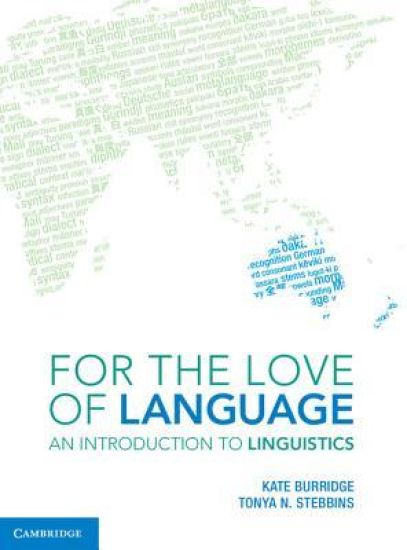
For the Love of Language: An Introduction to Linguistics is an engaging introduction to human language and the role of linguistics in understanding its fundamental design, acquisition and functions. Replete with case studies and examples from Australia, New Zealand and around the world, this text offers a thorough introduction to core topics, including the structure and meaning of words, the systems that organise language, strategies for learning about language, the evolution of language and the function of language as a complex social resource. The second edition includes extensive new content across the entire text, including the areas of orthography, syntax, corpus linguistics, language acquisition and multilingualism. Each topic is accompanied by a wide array of pedagogical resources designed to consolidate student understanding, including examples and exercises. Each chapter ends with a research project, providing readers with an opportunity to build on fundamental skills and engage more thoroughly with each topic.
Introducing English Grammar introduces readers to the methodology and terminology needed to analyse English sentences. The approach taken is in line with current research in grammar, a particular advantage for students who may go on to study syntax in more depth. All the examples and exercises use real language taken from both standard and non-standard geographical areas and dialects, and include excerpts from Australian and British newspaper articles. Students are encouraged to think about the terminology as a tool kit for studying language and to test what can and cannot be described using these tools. This new edition has been fully updated and features: an expanded introduction; new texts and exercises that include data from social media; revised material on 'Grammar at work' and 'English worldwide'; more suggestions for further reading at the end of the book; updated online resources with extensive further reading and answers to the exercises, which can be found at https://www.routledge.com/9781138635319. Written for readers with no previous experience of grammatical analysis, Introducing English Grammar is suited to anyone beginning a study of linguistics, English language or speech pathology, as well as to students whose interests are primarily literary but who need a better understanding of the structure of English.

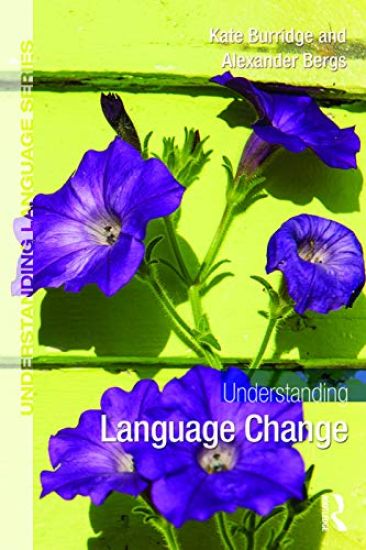
The Understanding Language series provides approachable, yet authoritative, introductions to all the major topics in linguistics. Ideal for students with little or no prior knowledge of linguistics, each book carefully explains the basics, emphasising understanding of the essential notions rather than arguing for a particular theoretical position. Understanding Language Change offers a complete introduction to historical linguistics and language change. The book takes a step-by-step approach, first by introducing concepts through English examples and building on this with illustrations from other languages. Key features of this introductory text include:up to date and recent case studies at the end of each chapterchapter summaries and exercises that feature a wide range of languagescoverage of application of historical linguistics in each chapterglossary of termsThis book is essential reading for any students studying Historical Linguistics for the first time.
Language is essential to human life, both as a basic social necessity and also as a powerful and complex social resource. For the Love of Language: An Introduction to Linguistics offers a comprehensive introduction to the workings of language and the role of linguistics in investigating its fundamental design. This thorough and engaging investigation into language and linguistics covers topics including: • strategies for learning about how language works • using linguistics to address real-world problems • the structure and meaning of words • the systems that organise language • changes to language over time • how language is used in written and spoken communication • the links between language, the mind and the world. Written by authors with extensive academic experience in the field of linguistics and including examples from Australia, New Zealand and around the world to engage the reader, For the Love of Language is a lively yet comprehensive resource for undergraduate students in foundation linguistics.
Wrestling with Words and Meanings
Kate Burridge; Reka Benczes
Monash University Publishing
2014
nidottu
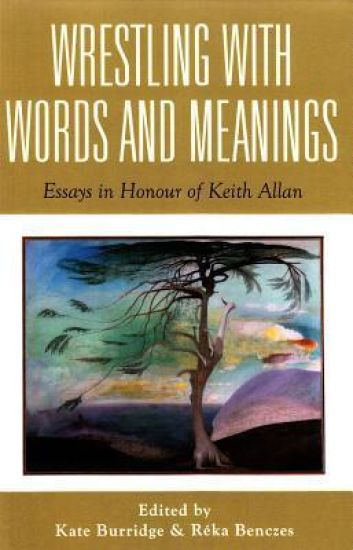
Wrestling with Words and Meanings honors the life and career of Professor Keith Allan, commemorating at the same time the occasion of his 70th birthday. The book brings together top-level researchers in linguistics - colleagues, collaborators, and former students - who have all been inspired by Allan's work in some way. These appropriately eclectic contributions are organized into the three main themes that run through Allan's multifaceted and multifarious research: word meaning, pragmatics and discourse, and semantic theory and philosophy of language. The festschrift offers glimpses into corpus linguistics, cognitive linguistics, and cultural linguistics, as well as the more traditional descriptive, diachronic, and typological perspectives. It is an outstanding collection in honor of an outstanding researcher. (Series: Linguistics) Subject: Linguistics, Language]
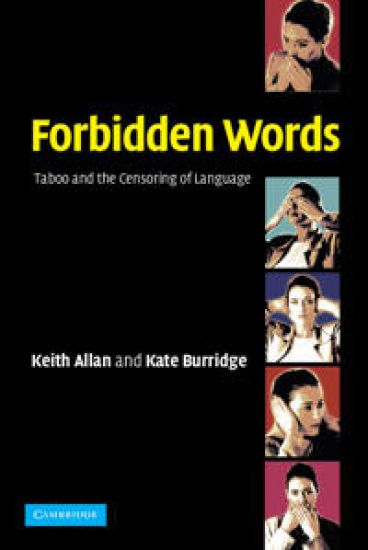
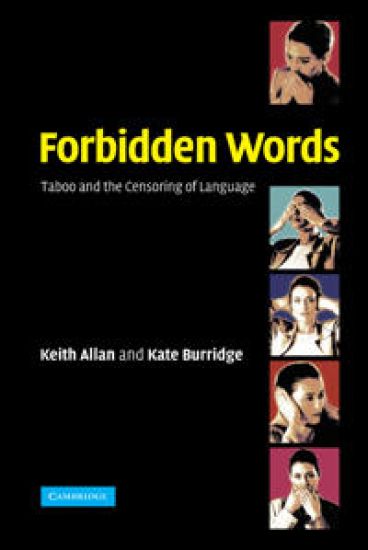
Many words and expressions are viewed as 'taboo', such as those used to describe sex, our bodies and their functions, and those used to insult other people. This 2006 book provides a fascinating insight into taboo language and its role in everyday life. It looks at the ways we use language to be polite or impolite, politically correct or offensive, depending on whether we are 'sweet-talking', 'straight-talking' or being deliberately rude. Using a range of colourful examples, it shows how we use language playfully and figuratively in order to swear, to insult, and also to be politically correct, and what our motivations are for doing so. It goes on to examine the differences between institutionalized censorship and the ways individuals censor their own language. Lively and revealing, Forbidden Words will fascinate anyone who is interested in how and why we use and avoid taboos in daily conversation.
If the English language is a glorious garden, filled with exotic hybrids and the continuing tradition of heritage specimens, then it is no surprise that we will also find some weeds. Linguistic weeds may have pronunciations we don't want or constructions that are out of place. We may be trying to hold on to words and usage we should perhaps have said farewell to. But as all gardeners know, what one gardener calls a 'weed', another may call a 'flower'. The same goes for words and their usage in English - sometimes we just haven't realized their virtues. Kate Burridge follows the international success of her book Blooming English with another entertaining excursion into the ever-changing nature of our complex and captivating language.
English is the most creative, changeable and imaginative of languages. Some words are invented to meet temporary needs and are quickly discarded; others carry meanings hundreds of years old. Language fascinates us, and we spend a lot of time playing with it, concocting everything from puns, riddles and secret languages to wonderful prose and poetry. We also worry about it a great deal, looking up and checking words in dictionaries and usage guides, occasionally arguing about definitions. This book celebrates our capacity to play with language, as well as examining the ways we use it: in slang and jargon, swearing, speaking the unspeakable, or concealing unpleasant or inconvenient facts. It is a book for browsing, for finding beguiling snippets about language, history and social customs, and a formidable weapon in word games.
Canada-Australia
Kate Burridge; Lois Foster; Gerry Turcotte
Carleton University Press,Canada
1997
nidottu
This volume is the result of the Association for Canadian Studies in Australia and New Zealand (ACSANZ) 1995 conference held at La Trobe University in Melbourne, Australia. A special feature of the conference, though not its exclusive focus, was trade relations. But as with all ACSANZ conferences, the papers were wide-ranging and contributors were not limited to a single theme. This publication is a refereed collection from more than sixty papers that were presented and range from discussions of immigration policy in Canada and Australia to architectural practices in British Columbia; from Canadian influences on Australia's economic development to issues of identity politics in each nation's literature. In addition, the collection represents major research in the areas of globalization, migration, pluralism, and ethnic relations, with a strongly, though not exclusively, comparative orientation. This work is a co-publication with the International Council for Canadian Studies.