Kirjojen hintavertailu – 12 859 826 kirjaa ja 27 kauppaa

Kirjailija

Kate Chatfield

Kirjat ja teokset yhdessä paikassa: 4 kirjaa, julkaisuja vuosilta 2018–2026, suosituimpiin kuuluu Vulnerability Revisited. Vertaile teosten hintoja ja tarkista saatavuus suomalaisista kirjakaupoista.

4 kirjaa

Kirjojen julkaisuvuodet: 2018–2026.

Vulnerability Revisited

Vulnerability Revisited

Doris Schroeder; Kate Chatfield; Roger Chennells; Hazel Partington; Joshua Kimani; Gillian Thomson; Joyce Adhiambo Odhiambo; Leana Snyders; Collin Louw

Springer International Publishing AG
2024
nidottu
Open access. This open-access book discusses vulnerability and the protection-inclusion dilemma of including those who suffer from serious poverty, severe stigma, and structural violence in research. Co-written with representatives from indigenous peoples in South Africa and sex workers in Nairobi, the authors come down firmly on the side of inclusion. In the spirit of leaving no one behind in research, the team experimented with data collection methods that prioritize research participant needs over researcher needs. This involved foregoing the collection of personal data and community researchers being involved in all stages of the research. In the process, the term ‘vulnerability’ was illuminated across significant language barriers as it was defined by indigenous peoples and sex workers themselves. The book describes a potential alternative to exclusion from research that moves away from traditional research methods. By ensuring that the research is led by vulnerable groups for vulnerable groups, it offers an approach that fosters trust and collaboration with benefits for the community researchers, the wider community as well as research academics. Those living in low-income settings, in dire situations that are summarized with the term ‘vulnerability’ know best what their problems are and which priorities they have. To exclude them from research for their own protection is a patronizing approach which insinuates that researchers and research ethics committees know best. The team from this book have shown that minimally risky and minimally burdensome research tailored towards the needs of highly marginalized and stigmatized communities can be scientifically valuable as well as inclusive and equitable. I congratulate them. Prof. Klaus Leisinger, President Global Values Alliance, Former personal advisor to Kofi Annan on corporate responsibility

Research Ethics and Integrity in Fragile Settings

Research Ethics and Integrity in Fragile Settings

Schroeder Doris; Kate Chatfield; Saleh Aljadeeah; Hazel Partington; Michelle Singh; Drummond Orla; Young Su Park; Lisa Tambornino

Springer Nature Switzerland AG
2026
Sidottu
This open-access book is an essential read for anyone interested in undertaking research in fragile settings, such as post-disaster regions, conflict or post-conflict zones, and high-crime informal settlements. More than a quarter of humanity live in conflict-affected regions and many more are affected by natural disasters, including the impacts of climate change. Research has a crucial role to play as the insights generated through research can improve future support efforts and help to make local systems more resilient. However, as this book highlights, researchers and research participants in fragile settings face significant, and sometimes unique, ethics challenges. Readers will not only learn about these challenges but also how to address them responsibly through application of a bespoke ethics code, the TRUST Code Supplement. Thus, the book will be of interest to researchers, research ethics committee members, funders and publishers who are committed to supporting ethically sound research in challenging environments. “What makes this book particularly valuable is not only the guidance it offers but also that it shows the rigorous process through which that guidance was developed.” Dr Mihalis Kritikos, Secretary of the European Group on Ethics in Science and New Technologies and a Senior Policy Analyst at the Ethics and Integrity Sector of the European Commission.
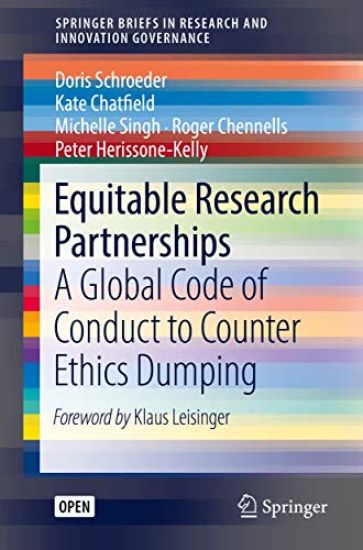
Equitable Research Partnerships

Equitable Research Partnerships

Doris Schroeder; Kate Chatfield; Michelle Singh; Roger Chennells; Peter Herissone-Kelly

Springer Nature Switzerland AG
2019
nidottu
This open access book offers insights into the development of the ground-breaking Global Code of Conduct for Research in Resource-Poor Settings (GCC) and the San Code of Research Ethics. Using a new, intuitive moral framework predicated on fairness, respect, care and honesty, both codes target ethics dumping – the export of unethical research practices from a high-income setting to a lower- or middle-income setting. The book is a rich resource of information and argument for any research stakeholder who opposes double standards in research. It will be indispensable for applicants to European Union framework programmes, as the GCC is now a mandatory reference document for EU funding.
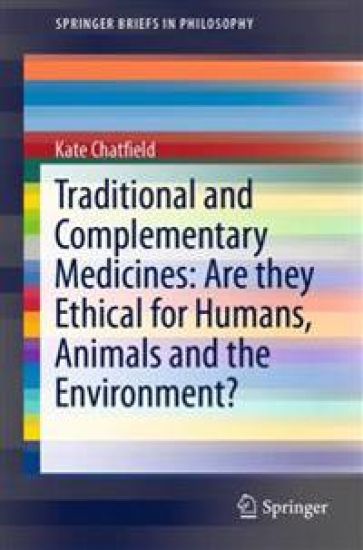
Traditional and Complementary Medicines: Are they Ethical for Humans, Animals and the Environment?
This book provides a systematic analysis of the ethical implications of traditional and complementary medicine (T&CM), focusing on pragmatic solutions. The author uses a bioethical methodology called the “Ethical Matrix,” to consider the impact of T&CM use for animals and the environment as well as for humans. A systematic search of the literature reveals that most published ethical concerns are related to the safety of T&CM use for humans. However, application of the Ethical Matrix demonstrates that the ethical implications for T&CM use are much broader. In this book, the author analyses the most serious implications, including adverse events related to homeopathy, the use of animals in T&CM products, and the impact of herbal medicine on the environment. Comparisons with the ethical implications of conventional biomedicine help readers to contextualise debate, and highlight aspects that may be unique to T&CM. Globally, many high-level health policy makerspromote T&CM as an accessible and affordable healthcare option. However, their use is considered by some to be a waste of resources, unscientific, and unethical. Offering a frank analysis of this largely ignored field of healthcare ethics, this book is both timely and essential. It helps patients, policy makers, practitioners, researchers, and students gain the knowledge they need to make more informed decisions.