Kirjojen hintavertailu – 12 903 735 kirjaa ja 27 kauppaa

Kirjailija

Kate Clarke

Kirjat ja teokset yhdessä paikassa: 10 kirjaa, julkaisuja vuosilta 2013–2021, suosituimpiin kuuluu Trial of Eliza Fenning. Vertaile teosten hintoja ja tarkista saatavuus suomalaisista kirjakaupoista.

10 kirjaa

Kirjojen julkaisuvuodet: 2013–2021.

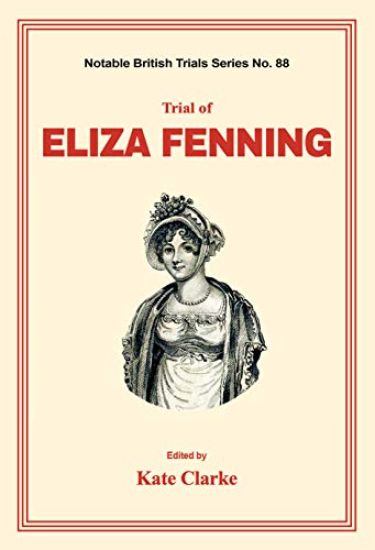
Trial of Eliza Fenning

Trial of Eliza Fenning

Kate Clarke

Mango Books
2021
sidottu
On the afternoon of 21 March 1815 Orlibar Turner and his family sat down to a meal of rump steak, potatoes and dumplings prepared by their young cook Elizabeth (or Eliza) Fenning. Shortly afterwards, the family was taken violently ill with stomach pains and vomiting. Next morning a local surgeon, urgently summoned to the Turners' house in London's Chancery Lane, identified arsenic in the dough that had been used to make the dumplings. Eliza was immediately arrested and within weeks she found herself on trial for attempted murder at the Central Criminal Court of the Old Bailey. After a hasty and woefully inadequate and prejudicial trial, she was convicted and sentenced to death. On 26 July 1815, wearing a white dress and lilac leather boots, she stood quietly on the scaffold outside Newgate Prison in front of a crowd of 45,000 people who had gathered to watch her die, having repeatedly declared her innocence, yet accepting her fate. The trial of Eliza Fenning is one of the most shameful miscarriages of justice in English criminal history. The Establishment closed ranks, determined to see the pretty servant of Irish descent hang. Despite gaining the support of several eminent liberals such as William Hone, John Watkins and Basil Montagu, who campaigned tirelessly for a reprieve, Eliza Fenning never stood a chance. Trial of Eliza Fenning is an important and deeply moving book. It describes the events leading up to the trial, the trial itself, and its aftermath, making use of many interesting and previously unseen documents that help place the case in its social, political and cultural context.
Fatal Affairs

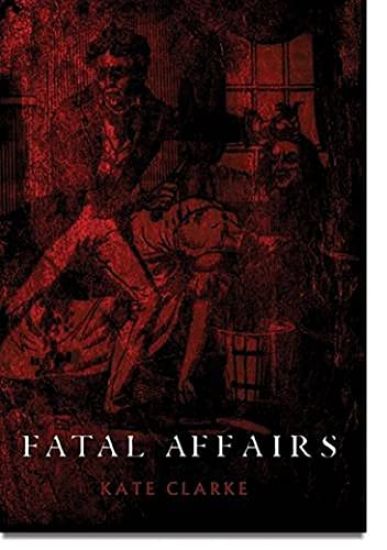
Fatal Affairs

Kate Clarke

Mango Books
2019
sidottu
In FATAL AFFAIRS, Kate Clarke recounts five extraordinary murder cases from the eighteenth and nineteenth century where love and romantic infatuation ended in death. In 1752, MARY BLANDY fell in love with army officer WILLIAM CRANSTOUN. Thwarted by her father's opposition to the match, they plotted his murder by arsenic poisoning. Cranstoun evaded justice, but Mary was hanged at Oxford Castle. Sexually violated as a child, ELIZABETH JEFFRIES and her lover JOHN SWAN shot and killed her uncle as he lay in bed. They were both publicly executed in Epping Forest in 1752. In 1765, nineteen-year-old KATHARINE NAIRN began a reckless affair with her brother-in-law Lieutenant PATRICK OGILVIE. When her husband died after a sudden, excruciating illness, Katharine and Patrick were arrested and convicted of incest and murder by poisoning. Ogilvie was hanged, but Katharine made a daring escape from the notorious Tolbooth Prison in Edinburgh and fled to France. On Christmas Eve in 1836, JAMES GREENACRE brutally murdered his wife-to-be Hannah Brown. He dismembered her body and dumped the remains in several locations around London. His mistress SARAH GALE spent days removing the blood stains from the crime scene. Greenacre met his death on the scaffold; Gale was transported to Australia where her life took an unexpected turn. In 1870, Brighton spinster CHRISTIANA EDMUNDS developed an inappropriate attachment to DR CHARLES BEARD. After attempting to murder Mrs Beard, Christiana began distributing poisoned chocolate creams around the town, killing one four-year-old boy. Sentenced to death at the Old Bailey she was reprieved on the grounds of insanity and spent the rest of her life in Broadmoor Hospital. FATAL AFFAIRS examines these cases in great detail and offers new insights into the motivations behind these dreadful crimes. It makes for fascinating and chilling reading.
Deadly Service

Deadly Service

Kate Clarke

Mango Books
2019
pokkari
What is it that ignites and unleashes an uncontrollable fury, exposing the smouldering resentment in those who finally rebel against a life of servitude? Surprisingly perhaps, this type of killing is relatively rare and when one considers the degradation and exploitation experienced by generations of servants, it is remarkable indeed that so few have resorted to murder. This book contains studies of seven extraordinary cases of servants who have killed their employers, revealing the frustration and inner turmoil fostered by insecurity, poverty or greed so urgent and compelling that they were driven to kill, each in a totally different way. But in each case it achieved nothing. Kate Webster, Charles Houghton and Louisa Merrifield lost their lives on the gallows. One of the Papin sisters lost her sanity. Jane Cox, though never charged with the murder of Charles Bravo, lost Florence Bravo's friendship, her credibility and her job. As for John Lee, though he cheated death in one of the most bizarre incidents in criminal history, nevertheless wasted twenty-two years of his life in prison. Finally, the incorrigible Roy Fontaine, convicted of five murders and incarcerated for the rest of his life, time enough to reflect on his extraordinary life and truly callous killings before dying in Kingston Prison, Portsmouth, on 16 September, 2002, aged 78.
Trial of Louise Masset

Trial of Louise Masset

Kate Clarke

Mango Books
2019
pokkari
The trial of Louise Masset for the murder of her son Manfred was opened on Wednesday 13 December 1899 at the Old Bailey, and it ran for five days. The story that unfolded was disturbing, and certain aspects of it remain unresolved. Who were the two strange women with whom Louise said she had arranged to hand over her son? Were they real or fictitious - and, if they did exist, were they operating as baby farmers? Louise Masset insisted that she had caught the 4.00 pm train to Brighton on the day of Manfred's murder, even though a cloakroom assistant had testified to seeing her at London Bridge Station at about 7.00 pm that Friday evening. At the trial, this crucial point of disagreement in the evidence was aired and explored. If she really had caught the earlier train, she could not have murdered Manfred. If, however, she caught the 7.00 pm train, then she could have been the killer after all. Louise Masset was found guilty of the murder of her son and was hanged on 9 January 1900, the first person to be executed in England in the twentieth century. This book reproduces the testimony given at the trial, together with an introduction, a chronology and appendices.
In the Interests of Science

In the Interests of Science

Kate Clarke

Mango Books
2019
sidottu
On 12th April, 1886, a young woman, dark-eyed and petite, stood in the dock at the Old Bailey charged with the murder of her husband. She was the attractive, French-speaking wife of a South London grocer and of little importance socially, yet her maiden name was unusual, aristocratic even - Adelaide Blanche de la Tremoille. Uncommon, too, was her alleged crime, for her husband, Edwin Bartlett, had died with his stomach full of liquid chloroform, a poison that was more generally associated with cases of suicide or accidental death, not murder. But then, many things about Adelaide were extraordinary. Her name, the crime with which she was charged, the outrageous scenes at her trial - indeed, her whole life - might have sprung from the pages of a far-fetched novel. Even The Times felt moved to declare that 'whether on the theory of guilt or innocence, the whole story is marvellous.' The crowds that flocked to her trial certainly thought so, and their voracious interest was finally rewarded by the sight of her defence counsel, the great Edward Clarke, sobbing with emotion as the verdict was delivered.
Deadly Service

Deadly Service

Kate Clarke

Mango Books
2019
sidottu
What is it that ignites and unleashes an uncontrollable fury, exposing the smouldering resentment in those who finally rebel against a life of servitude? Surprisingly perhaps, this type of killing is relatively rare and when one considers the degradation and exploitation experienced by generations of servants, it is remarkable indeed that so few have resorted to murder. This book contains studies of seven extraordinary cases of servants who have killed their employers, revealing the frustration and inner turmoil fostered by insecurity, poverty or greed so urgent and compelling that they were driven to kill, each in a totally different way. But in each case it achieved nothing. Kate Webster, Charles Houghton and Louisa Merrifield lost their lives on the gallows. One of the Papin sisters lost her sanity. Jane Cox, though never charged with the murder of Charles Bravo, lost Florence Bravo's friendship, her credibility and her job. As for John Lee, though he cheated death in one of the most bizarre incidents in criminal history, nevertheless wasted twenty-two years of his life in prison. Finally, the incorrigible Roy Fontaine, convicted of five murders and incarcerated for the rest of his life, time enough to reflect on his extraordinary life and truly callous killings before dying in Kingston Prison, Portsmouth, on 16 September, 2002, aged 78.
The A-Z of Victorian Crime

The A-Z of Victorian Crime

Neil R. A. Bell; Trevor Bond; Kate Clarke; M.W. Oldridge

Amberley Publishing
2019
pokkari

Halvin toimitettuna 19,90 €

Few things are more evocative of Victorian Britain than its criminals; they are, together with railways, gas lamps and swirling fog, vital ingredients in any Victorian melodrama. The truth, however, was often stranger, more thrilling and more horrifying than fiction. In this book, four eminent crime historians reveal the realities of this aspect of Victorian life, illuminating not just the criminals and their victims, but also the policemen, forensic scientists and others who rubbed shoulders with the nineteenth-century underworld. Notorious crimes – the Road Hill Murder, the Balham Mystery and Jack the Ripper – stand alongside long-forgotten, neglected cases; the most shocking and terrifying cases appear next to everyday horrors, some stunning and some merely sad. This unique work of reference deserves a place on every true crime reader’s bookshelf.
Trial of Louise Masset

Trial of Louise Masset

Kate Clarke

Mango Books
2018
sidottu
The trial of Louise Masset for the murder of her son Manfred was opened on Wednesday 13 December 1899 at the Old Bailey, and it ran for five days. The story that unfolded was disturbing, and certain aspects of it remain unresolved. Who were the two strange women with whom Louise said she had arranged to hand over her son? Were they real or fictitious - and, if they did exist, were they operating as baby farmers? Louise Masset insisted that she had caught the 4.00 pm train to Brighton on the day of Manfred's murder, even though a cloakroom assistant had testified to seeing her at London Bridge Station at about 7.00 pm that Friday evening. At the trial, this crucial point of disagreement in the evidence was aired and explored. If she really had caught the earlier train, she could not have murdered Manfred. If, however, she caught the 7.00 pm train, then she could have been the killer after all. Louise Masset was found guilty of the murder of her son and was hanged on 9 January 1900, the first person to be executed in England in the twentieth century. This book reproduces the testimony given at the trial, together with an introduction, a chronology and appendices.
The Slim Drinker. Low-Cal Alcohol Guide: Low on Calories. Big on Fun.
There is NO REASON why you can't still DRINK and SHRINKYou too can be a SLIM DRINKER with this easy to follow low calorie alcohol guide - also includes marvelous MOCKTAIL recipes. Learn how to: -Manage your weight loss goals whilst drinking alcoholPrepare your body for a great night outTake control of your beer bellyMake healthy food choices before AND after alcoholReduce your alcohol consumption and still have funMake alcohol free drinks including amazing "Mocktails""This is fantastic, I now find it so much easier to make sensible drink choices when I'm socialising, the best thing is I still have a fantastic night without feeling I'm missing out ...the advice is simple, but it really works ""Preparation is the key, this has really helped me plan ahead and stop the usual next day binge. I also love the Mocktail options, this has honestly changed the way I think about alcohol - highly recommended"
Bad Companions

Bad Companions

Kate Clarke

The History Press Ltd
2013
nidottu
This book features the cases of six London women, each very different in temperament, age and status, who resorted to murder. Their reasons were varied: in the case of the surly maid Kate Webster, sheer temper seems the likely cause; avarice seemed to spur Catherine Wilson to murder an estimated seven times; desperation to pay for the upkeep of her two-year-old son lay behind Sarah Drake’s crime; seductive young cook Eliza Fenning was accused of serving poison with her dumplings; evil mistress Elizabeth Brownrigg whipped her servant to death in a home-built dungeon; and finally, the vicious Catherine Hayes persuaded two lovers – one of whom was her own son – to decapitate her husband in an orgy of violence. This fascinating study explores these cases in depth, and reveals whether these women were tragic, misunderstood or just plain wicked.