Kirjojen hintavertailu – 12 903 725 kirjaa ja 27 kauppaa

Kirjailija

Kate Gibson

Kirjat ja teokset yhdessä paikassa: 7 kirjaa, julkaisuja vuosilta 2016–2026, suosituimpiin kuuluu How Lucky Am I?. Vertaile teosten hintoja ja tarkista saatavuus suomalaisista kirjakaupoista.

7 kirjaa

Kirjojen julkaisuvuodet: 2016–2026.

Faith in the Town

Faith in the Town

Hannah Barker; Carys Brown; Kate Gibson; Jeremy Gregory

Oxford University Press
2025
sidottu
This is an open access title available under the terms of a CC BY-NC-ND 4.0 International licence. It is free to read on the Oxford Academic platform and offered as a free PDF download from OUP and selected open access locations. Across eighteenth- and early nineteenth-century northern England, religious faith continued to affect the lives of men, women, and children in profound ways. Rather than abandoning their faith in the face of increasing urbanisation and industrialisation - as is often assumed was the case - town dwellers across the social and denominational spectrum commonly understood their relationships with their families, households, and the world within a framework of religious duty and virtue. For urban middling and labouring individuals, religious practice and the influence of faith was not limited to time spent in church or chapel but extended into all areas of activity and experience: the workplace, the streets and other public spaces, and the home. The importance of faith in the lived experience of town dwellers was not something that existed in spite of change; faith was promoted by the new conditions of urban life. Faith in the Town explores key decades of this transformational period, encompassing almost a century of urban development between 1740 and 1830. By placing lay religious belief centre-stage, this book demonstrates that many of the developments associated with 'modernity', specifically industrialisation, urbanisation, population growth, and Enlightenment thinking, were not inimical to faith. Instead, religious belief and lay piety was a crucial element in the formation of urban economy, society, and culture during the 'long' eighteenth century, meaning that northern towns were not only places where faith could both be nourished and flourish, but that these urban centres were themselves shaped by faith.
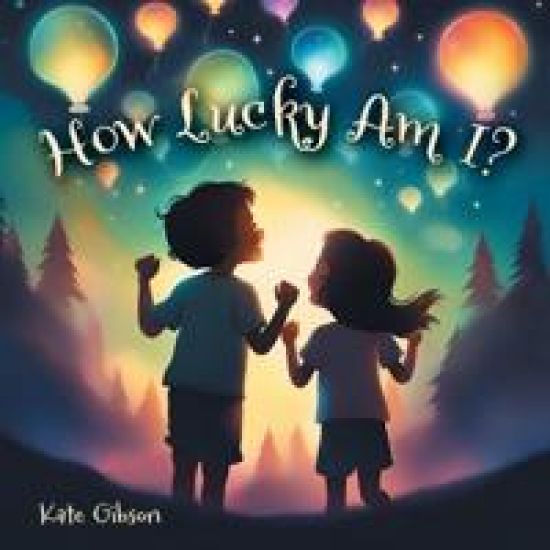
How Lucky Am I?

How Lucky Am I?

Kate Gibson

Friesenpress
2024
pokkari
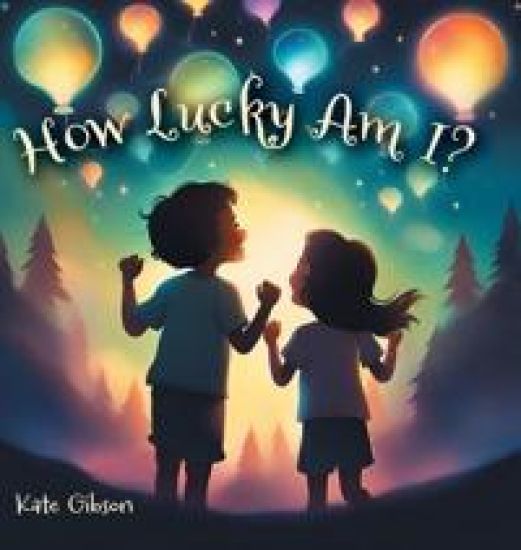
True friendship is a gift, a gift that all of us wish to receive. A true friend likes you for you, looks past your differences and embraces them. During childhood no gift is greater than having and being a true friend. Sometimes these friendships can materialize and flourish from unexpected places. How Lucky Am I acknowledges, explores, and showcases the traits we all possess to be a friend. With a focus on inclusive friendships and celebrating differences, How Lucky Am I outlines how a friend with Down Syndrome can enhance your life; offering you the unexpected gift of true friendship.
How Lucky Am I?

How Lucky Am I?

Kate Gibson

Friesenpress
2024
sidottu
True friendship is a gift, a gift that all of us wish to receive. A true friend likes you for you, looks past your differences and embraces them. During childhood no gift is greater than having and being a true friend. Sometimes these friendships can materialize and flourish from unexpected places. How Lucky Am I acknowledges, explores, and showcases the traits we all possess to be a friend. With a focus on inclusive friendships and celebrating differences, How Lucky Am I outlines how a friend with Down Syndrome can enhance your life; offering you the unexpected gift of true friendship.
Feeding the Middle Classes

Feeding the Middle Classes

Kate Gibson

Bristol University Press
2023
sidottu
Political and public stories about class and food rarely scrutinize how socio-economic and cultural resources enable access to certain foods. Tracing the symbolic links between everyday eating at home and broader social frameworks, this book examines how classed relations play out in middle-class homes to show why class is relevant to all understandings of food in Great Britain. The author illuminates how ‘good’ food, and the identities configured through its consumption, is associated with middle-class lifestyles and why this relationship is often unquestioned and thus saliently normalized. Considering food consumption in a wider social context, the book offers an alternative understanding of class relations, which extends academic, political and public debates about privilege.
Illegitimacy, Family, and Stigma in England, 1660-1834
Illegitimacy, Family, and Stigma is the first full-length exploration of what it was like to be illegitimate in eighteenth-century England, a period of 'sexual revolution', unprecedented increase in illegitimate births, and intense debate over children's rights to state support. Using the words of illegitimate individuals and their families preserved in letters, diaries, poor relief, and court documents, this study reveals the impact of illegitimacy across the life cycle. How did illegitimacy affect children's early years, and their relationships with parents, siblings, and wider family as they grew up? Did illegitimacy limit education, occupation, or marriage chances? What were individuals' experiences of shame and stigma, and how did being illegitimate affect their sense of identity? Historian Kate Gibson investigates the circumstances that governed families' responses, from love and pragmatic acceptance, to secrecy and exclusion. In a major reframing of assumptions that illegitimacy was experienced only among the poor, this volume tells the stories of individuals from across the socio-economic scale, including children of royalty, physicians and lawyers, servants and agricultural labourers. It demonstrates that the stigma of illegitimacy operated along a spectrum, varying according to the type of parental relationship, the child's race, gender, and socio-economic status. Financial resources and the class-based ideals of parenthood or family life had a significant impact on how families reacted to illegitimacy. Class became more important over the eighteenth century, under the influence of Enlightenment ideals of tolerance, sensibility, and redemption. The child of sin was now recast as a pitiable object of charity, but this applied only to those who could fit narrow parameters of genteel tragedy. This vivid investigation of the meaning of illegitimacy gets to the heart of powerful inequalities in families, communities, and the state.