Kirjailija
Kate Marsh
Kirjat ja teokset yhdessä paikassa: 11 kirjaa, julkaisuja vuosilta 2007–2017, suosituimpiin kuuluu The Low GI Eating Plan for an Optimal Pregnancy: The Authoritative Science-Based Nutrition Guide for Mother and Baby. Vertaile teosten hintoja ja tarkista saatavuus suomalaisista kirjakaupoista.
11 kirjaa
Kirjojen julkaisuvuodet: 2007–2017.
This study interrogates how the French empire was imagined in three literary representations of French colonialism: the conquest of Tahiti, and the established colonial systems in Martinique and in India. The study is the first in either English or French to demonstrate that representations of power relations, as well as the broader discourses with which they were linked, were as closely concerned with probing the similarities and differences of rival European colonial systems as they were with reinforcing their imagined superiority over the colonized, and that such power relations should not be conceptualized as a dualistic categorization of ‘colonizer’ versus ‘colonized’. In doing so, it aims to go beyond examining the interaction between colonized and colonizer, or between colonial centre and periphery, and to interrogate instead the circulation of ideas and practices across different sites of European colonialism, drawing attention to a historical complexity which has been neglected in the necessary race to recover voices previously occluded from academic analysis. In exploring how the notion of the French empire overseas was construed and how it was infused with meaning at three different historical moments, 1784, 1835 and 1938, it demonstrates how precarious the French empire was perceived to be, in terms of both European rivalry and resistance from the colonized, and how the rhetoric of a French colonisation douce was pitted against the inscribed excesses of the more powerful British empire. Rather than employing the sorts of recuperative agenda which focus on how the colonized were elided (viz., Subaltern Studies) or on the writings of the formerly colonized (viz., Francophone Studies), the study concerns itself specifically with how French colonialism and imperialism were perceived, and thus offers a further corrective to any generalizations about European colonialism and imperialism. More particularly, by examining how the representational strategy of nostalgia is used in these texts, the study demonstrates how perceived loss, and nostalgia for an imperial past, played a role in dynamically shaping the French colonial enterprise across its various manifestations.
Examines metropolitan French-language representations of India from the period between the recall of Dupleix to France to the Second Treaty of Paris. This book explores what a European power, territorially peripheral in India, thought of both India and the administrative rule there of its rival, Britain.
This study interrogates how the French empire was imagined in three literary representations of French colonialism: the conquest of Tahiti, and the established colonial systems in Martinique and in India. The study is the first in either English or French to demonstrate that representations of power relations, as well as the broader discourses with which they were linked, were as closely concerned with probing the similarities and differences of rival European colonial systems as they were with reinforcing their imagined superiority over the colonized, and that such power relations should not be conceptualized as a dualistic categorization of ‘colonizer’ versus ‘colonized’. In doing so, it aims to go beyond examining the interaction between colonized and colonizer, or between colonial centre and periphery, and to interrogate instead the circulation of ideas and practices across different sites of European colonialism, drawing attention to a historical complexity which has been neglected in the necessary race to recover voices previously occluded from academic analysis. In exploring how the notion of the French empire overseas was construed and how it was infused with meaning at three different historical moments, 1784, 1835 and 1938, it demonstrates how precarious the French empire was perceived to be, in terms of both European rivalry and resistance from the colonized, and how the rhetoric of a French colonisation douce was pitted against the inscribed excesses of the more powerful British empire. Rather than employing the sorts of recuperative agenda which focus on how the colonized were elided (viz., Subaltern Studies) or on the writings of the formerly colonized (viz., Francophone Studies), the study concerns itself specifically with how French colonialism and imperialism were perceived, and thus offers a further corrective to any generalizations about European colonialism and imperialism. More particularly, by examining how the representational strategy of nostalgia is used in these texts, the study demonstrates how perceived loss, and nostalgia for an imperial past, played a role in dynamically shaping the French colonial enterprise across its various manifestations.
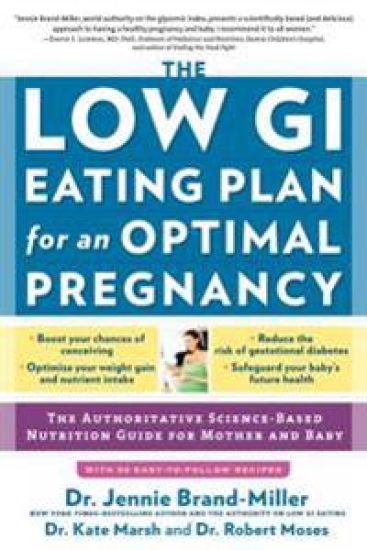
The Low GI Eating Plan for an Optimal Pregnancy: The Authoritative Science-Based Nutrition Guide for Mother and Baby
Jennie Brand-Miller; Kate Marsh; Robert Moses
Experiment
2013
nidottu
The Low GI Eating Plan for an Optimal Pregnancy--written by the world's leading experts on the glycemic index (GI)--will help you to clearly understand the connection between the food you eat, your blood glucose levels, and your baby's future health. The focus is on low GI carbohydrates--vital at this time, because reducing the GI of your diet is one of the safest and most effective ways to ensure that your baby grows at the optimal rate, without you gaining excessive body fat and without compromising nutrition during this important stage of life. This book will show you how to optimize your diet--pre-conception, during pregnancy, and once your child has been born--to ensure a healthy baby and a healthy mom, and includes: - What to be aware of once you're eating for two - How to ensure your weight gain is healthy - The importance of blood glucose in pregnancy (and why gestational diabetes is a big deal) - 8 guiding principles that make it easy to put everything into practice - The best foods to eat--as well as the ones to avoid - 50 delicious, quick, and easy low GI recipes, plus sample menu ideas - Helpful checklists and guidance on how to exercise safely. The Low GI Eating Plan for an Optimal Pregnancy is the only book specifically for pregnancy written by internationally recognized scientists qualified in nutrition, dietetics, and diabetes. It is an essential, authoritative guide for all mothers-to-be and new moms.
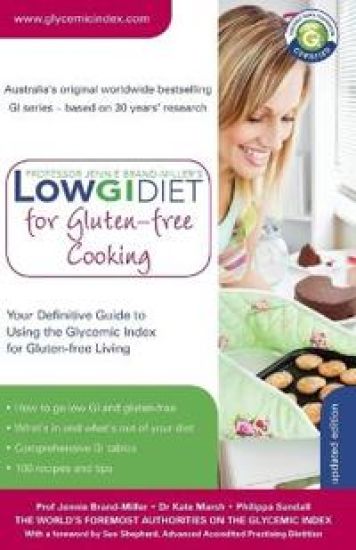
Low GI Diet for Gluten-free Cooking
Philippa Sandall; Kate Marsh; Jennie Brand-Miller
HACHETTE AUSTRALIA
2012
pokkari
The best-selling gluten-free recipe book in fresh new livery and a convenient smaller format. More than 200,000 Australians have coeliac disease, and many others with gluten intolerance or other conditions are discovering the benefits of switching to a gluten-free diet. Widely recognised as the most significant dietary finding of the last twenty-five years, the gylcemic index (GI) is an easy-to-understand measure of how foods affect blood glucose levels. Low-GI diets improve health and weight control, lower 'bad' cholesterol and help prevent or reduce your risk of type 2 diabetes, heart disease, cancer and other chronic diseases. In LOW GI DIET FOR GLUTEN-FREE COOKING the best-selling Low GI Diet team explain clearly and simply how to combine the ground rules of a gluten-free diet with the lifelong health benefits of low-GI eating to enable you to live well and stay healthy. Includes: 7 simple dietary guidelines for eating gluten-free and low GI; How to find and source gluten-free products; Low-GI substitutes for common high-GI foods; 100 delicious, easy-to-prepare recipes with dishes for each meal of the day; GI tables with values for popular gluten-free foods.
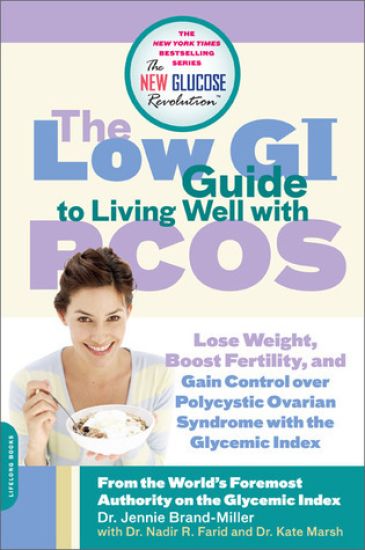
The Low GI Guide to Living Well with PCOS
Nadir Farid; Kate Marsh; Jennie Brand-Miller
Da Capo Lifelong
2011
pokkari
The Only Book You Will Ever Need for Managing PCOS- Completely Revised and Updated What exactly is PCOS? What are the signs and symptoms? How is the diagnosis confirmed? What causes it? And most importantly, what can you do about it? If you've been diagnosed with polycystic ovarian syndrome (PCOS) or suspect you have it, and you're looking for a way to manage your condition, you've come to the right place. In this newly revised edition of Living Well with PCOS , Dr. Jennie Brand-Miller and PCOS experts Drs. Nadir Farid and Kate Marsh address the root cause of PCOS- insulin resistance- and show you how eating a low-GI diet can help alleviate even your most troublesome symptoms, including weight gain, infertility, unsightly hair growth, irregular cycles, and fatigue. This all-new second edition features: type="disc" The latest up-to-date research on PCOS and its treatment type="disc" New quick-and-easy low-GI recipes type="disc" Low-GI kick-start menus- with vegetarian and gluten-free options type="disc" Easy-to-use tables of GI values type="disc" Tips for a more active lifestyle real-life stories from women who have used the GI to successfully combat PCOS
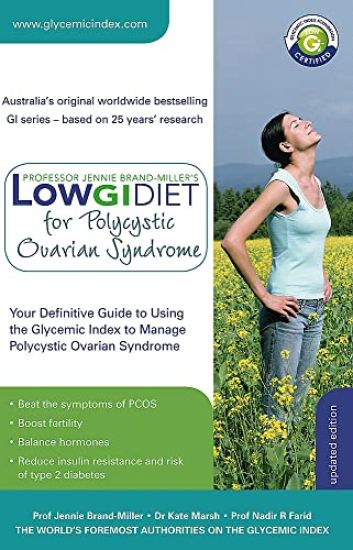
Low GI Diet for Polycystic Ovarian Syndrome
Nadir Farid; Kate Marsh; Jennie Brand-Miller
HACHETTE AUSTRALIA
2011
pokkari
If you've been diagnosed with polycystic ovarian syndrome (PCOS) or suspect you have it, this book provides advice about how to manage your condition, and shows how eating the healthy low GI way can help you take control. This updated edition is companion to Australia's original New York Times bestseller, the LOW GI DIET HANDBOOK and is filled with indispensable advice on switching to a low GI diet. The authors' total lifestyle approach includes: - Easy-to-understand information on low GI carbs and their benefits for PCOS - Practical tips to make low GI eating and regular exercise a way of life - An at-a-glance guide to the GI and glycemic load values of more than 1000 foods - How to beat the symptoms of PCOS - How to boost fertility - How to balance hormones - How to reduce insulin resistance - How to reduce the risk of diabetes Start eating towards good health today
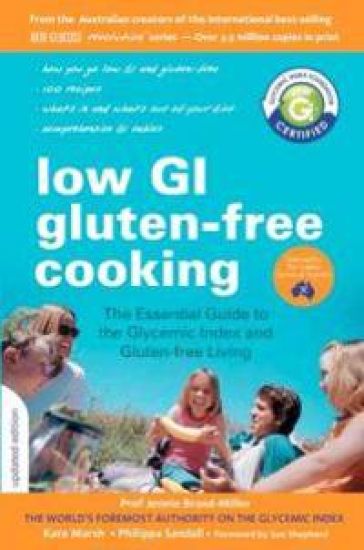
Low GI Gluten-Free Cooking
Jennie Brand-Miller; Kate Marsh; Philippa Sandall
Hachette Australia
2009
nidottu
The best-selling Gluten-free recipe book, still in original livery and trade-paperback format while stocks last. More than 200 000 Australians have coeliac disease, and many others with gluten intolerance or other conditions are discovering the benefits of switching to a gluten-free diet. Widely recognised as the most significant dietary finding of the last twenty-five years, the gylcemic index (GI) is an easy-to-understand measure of how foods affect blood glucose levels. Low-GI diets improve health and weight control, lower 'bad' cholesterol and help prevent or reduce your risk of type 2 diabetes, heart disease, cancer and other chronic diseases. In LOW GI GUIDE TO GLUTEN-FREE COOKING the bestselling New Glucose Revolution team explain clearly and simply how to combine the ground rules of a gluten-free diet with the lifelong health benefits of low-GI eating to enable you to live well and stay healthy. Including: * 7 simple dietary guidelines for eating gluten-free and low GI * how to find and source gluten-free products * low-GI substitutes for common high-GI foods * 100 delicious, easy-to-prepare recipes with dishes for each meal of the day * GI tables with values for popular gluten-free foods.
Examines metropolitan French-language representations of India from the period between the recall of Dupleix to France to the Second Treaty of Paris. This book explores what a European power, territorially peripheral in India, thought of both India and the administrative rule there of its rival, Britain.
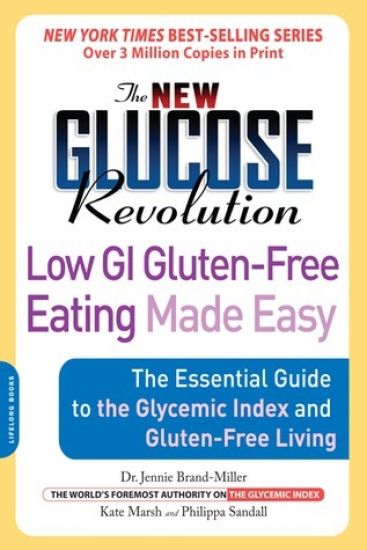
The New Glucose Revolution Low GI Gluten-Free Eating Made Easy
Jennie Brand-Miller; Kate Marsh; Philippa Sandall
Da Capo Press Inc
2008
pokkari
More than two million North Americans have celiac disease and must follow a gluten-free diet-but the absence of grains and the higher fat and sugar content of many gluten-free products can cause health problems and nutrient deficiencies. Now, The New Glucose Revolution Low GI Gluten-Free Eating Made Easy simplifies the challenges of a gluten-free diet-and emphasizes the lifelong health benefits of low-GI, gluten-free eating. Widely recognized as the most significant dietary finding of the last 25 years, the glycemic index (GI) is an easy-to-understand measure of how foods affect blood glucose levels. Low-GI diets improve health and weight control, lower "bad" cholesterol, and help prevent or reduce your risk of type 2 diabetes, heart disease, cancer, and other chronic diseases. This clear, accessible guide has everything you need to know for healthful gluten-free eating, including Seven simple dietary guidelines for eating gluten-free and low GI A guide to finding and buying gluten-free products Low-GI substitutes for common high-GI (albeit gluten-free) foods Cutting-edge scientific findings on the benefits of eating low-GI foods 70 delicious, easy-to-prepare recipes include dishes for each meal of the day GI values of hundreds of popular gluten-free foods The New Glucose Revolution Low GI Gluten-Free Eating Made Easy is the definitive resource to healthy living for everyone with celiac disease, gluten intolerance, or other wheat sensitivities.
The end of the British Raj, and the creation of the two states of India and Pakistan in August 1947, is a recognizable narrative within British Anglophone culture and colonial history. In contrast, the persistence of the five French trading posts, or "comptoirs," on the Indian subcontinent until 1954 remains largely ignored by both French and British historians of French colonialism and the popular culture of the "Hexagone." In examining metropolitan French-language representations of Indian decolonization, this book demonstrates the importance of the British imperial loss in 1947 as a reference point within French cultural production. The critical investigation into the strategies of representation used problematizes existing Anglophone theoretical models, by critics such as Said, Bhabha and Spivak, for the analysis of colonial discourse. It reveals that French-language representations of Indian decolonization cannot be fully appreciated without engaging methodologically with France's politically subordinate status in India. The book thus challenges the commonly accepted binary between colonizer and colonized, proposing in its place a triangular model composed of the colonized (India), the 'subaltern' colonizer (France), and the dominant colonizer (Britain). Through a systematic critical evaluation of the range of texts (journalistic, intellectual, political, and literary) produced in metropolitan France by authors such as Romain Rolland, Jean Rous, Helene Cixous, Catherine Clement and Marguerite Duras, the book challenges the current postcolonial orthodoxy that the story of Indian decolonization is solely an Anglophone space."