Kirjojen hintavertailu – 12 859 826 kirjaa ja 27 kauppaa

Kirjailija

Kateri Thunder

Kirjat ja teokset yhdessä paikassa: 6 kirjaa, julkaisuja vuosilta 2019–2024, suosituimpiin kuuluu Teaching Mathematics in the Visible Learning Classroom, Grades 3-5. Vertaile teosten hintoja ja tarkista saatavuus suomalaisista kirjakaupoista.

6 kirjaa

Kirjojen julkaisuvuodet: 2019–2024.

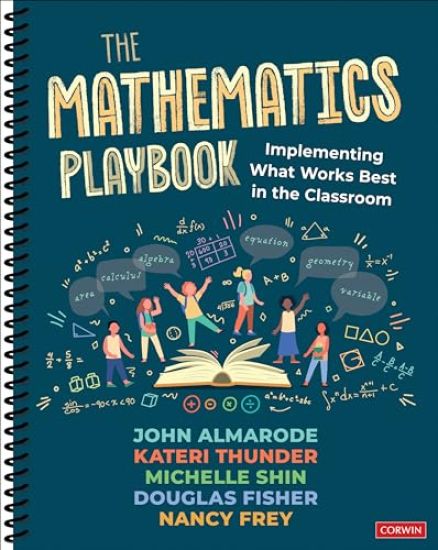
The Mathematics Playbook

The Mathematics Playbook

John T. Almarode; Kateri Thunder; Michelle Shin; Douglas Fisher; Nancy Frey

SAGE PUBLICATIONS INC
2024
kierre
Your Guide to Engaging and Effective Math Instruction With the latest research on what works best in teaching and learning, The Mathematics Playbook is your comprehensive guide to enhancing mathematics teaching and learning. With a focus on fostering equity and maximizing student learning, the authors provide practical modules that integrate the latest research on effective teaching practices, and answer four critical questions: How do we foster, nurture, and sustain mathematics learning? How do we ensure all learners have equity of access and opportunity? What are the non-negotiables in a high-quality mathematics task? How do we know if learners really "get it"? Through real-life examples and an emphasis on self-assessment and reflection, this playbook empowers you to create engaging and impactful learning experiences in mathematics.

The Early Childhood Education Playbook

The Early Childhood Education Playbook

Kateri Thunder; John T. Almarode; Alisha Demchak; Douglas Fisher; Nancy Frey

SAGE PUBLICATIONS INC
2022
kierre
Learn how the Visible Learning® research guides our planning and teaching as we partner with families and colleagues to have the greatest impact on the learning and development of young children.
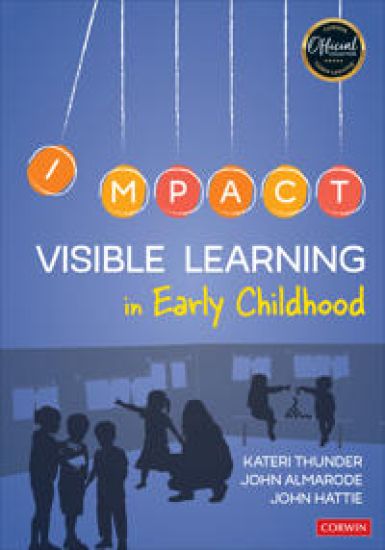
Visible Learning in Early Childhood

Visible Learning in Early Childhood

Kateri Thunder; John T. Almarode; John Hattie

SAGE PUBLICATIONS INC
2022
nidottu
Make learning visible in the early years Early childhood is a uniquely sensitive time, when young learners are rapidly developing across multiple domains, including language and literacy, mathematics, and motor skills. Knowing which teaching strategies work best and when can have a significant impact on a child’s development and future success. Visible Learning in Early Childhood investigates the critical years between ages 3 and 6 and, backed by evidence from the Visible Learning® research, explores seven core strategies for learning success: working together as evaluators, setting high expectations, measuring learning with explicit success criteria, establishing developmentally appropriate levels of learning, viewing mistakes as opportunities, continually seeking feedback, and balancing surface, deep, and transfer learning. The authors unpack the symbiotic relationship between these seven tenets through Authentic examples of diverse learners and settings Voices of master teachers from the US, UK, and AustraliaMultiple assessment and differentiation strategiesMultidisciplinary approaches depicting mathematics, literacy, art and music, social-emotional learning, and more Using the Visible Learning research, teachers partner with children to encourage high expectations, developmentally appropriate practices, the right level of challenge, and a focus on explicit success criteria. Get started today and watch your young learners thrive!
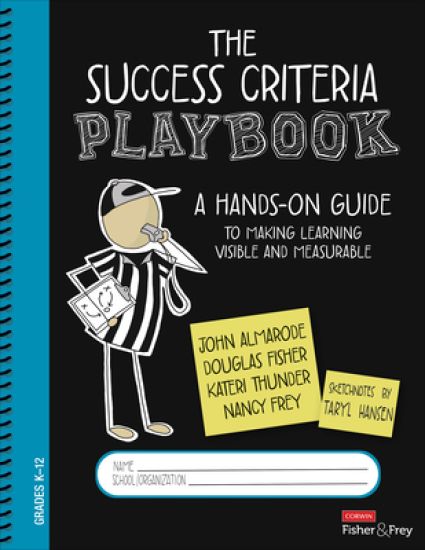
The Success Criteria Playbook

The Success Criteria Playbook

John T. Almarode; Douglas Fisher; Kateri Thunder; Nancy Frey

SAGE Publications Inc
2021
kierre
Provide students a clear view of what success looks like for any process, task, or product. What does success look like for your students? How will they know if they have learned? This essential component of teaching and learning can be difficult to articulate but is vital to achievement for both teachers and students. The Success Criteria Playbook catapults teachers beyond learning intentions to define clearly what success looks like for every student—whether face-to-face or in a remote learning environment. Designed to be used collaboratively in grade-level, subject area teams—or even on your own—the step-by-step playbook expands teacher understanding of how success criteria can be utilized to maximize student learning and better engage learners in monitoring and evaluating their own progress. Each module is designed to support the creation and immediate implementation of high-quality, high impact success criteria and includes: • Templates that allow for guided and independent study for teachers. • Extensive STEM-focused examples from across the K-12 STEM curriculum to guide teacher learning and practice. • Examples of success criteria applied across learning domains and grades, including high school content, skills, practices, dispositions, and understandings. Ensure equity of access to learning and opportunity for all students by designing and employing high-quality, high-impact success criteria that connect learners to a shared understanding of what success looks like for any given learning intention.
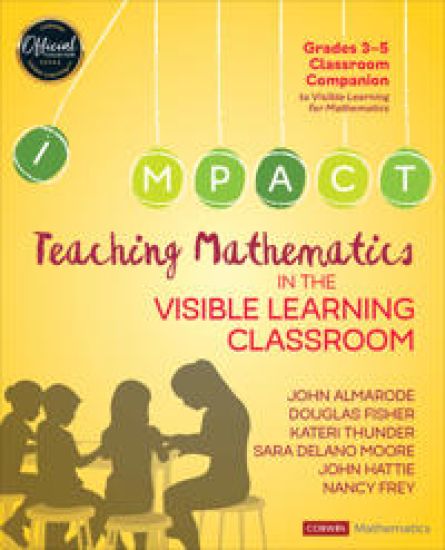
Teaching Mathematics in the Visible Learning Classroom, Grades 3-5

Teaching Mathematics in the Visible Learning Classroom, Grades 3-5

John T. Almarode; Douglas Fisher; Kateri Thunder; Sara Delano Moore; John Hattie; Nancy Frey

SAGE Publications Inc
2019
nidottu
It could happen in the morning during homework review. Or perhaps it happens when listening to students as they struggle through a challenging problem. Or maybe even after class, when planning a lesson. At some point, the question arises: How do I influence students' learning—what’s going to generate that light bulb "aha" moment of understanding? In this sequel to the megawatt best seller Visible Learning for Mathematics, John Almarode, Douglas Fisher, Nancy Frey, John Hattie, and Kateri Thunder help you answer that question by showing how Visible Learning strategies look in action in the mathematics classroom. Walk in the shoes of elementary school teachers as they engage in the 200 micro-decisions-per-minute needed to balance the strategies, tasks, and assessments seminal to high-impact mathematics instruction. Using grade-leveled examples and a decision-making matrix, you’ll learn to Articulate clear learning intentions and success criteria at surface, deep, and transfer levelsEmploy evidence to guide students along the path of becoming metacognitive and self-directed mathematics achieversUse formative assessments to track what students understand, what they don’t, and whySelect the right task for the conceptual, procedural, or application emphasis you want, ensuring the task is for the right phase of learningAdjust the difficulty and complexity of any task to meet the needs of all learners It’s not only what works, but when. Exemplary lessons, video clips, and online resources help you leverage the most effective teaching practices at the most effective time to meet the surface, deep, and transfer learning needs of every student.
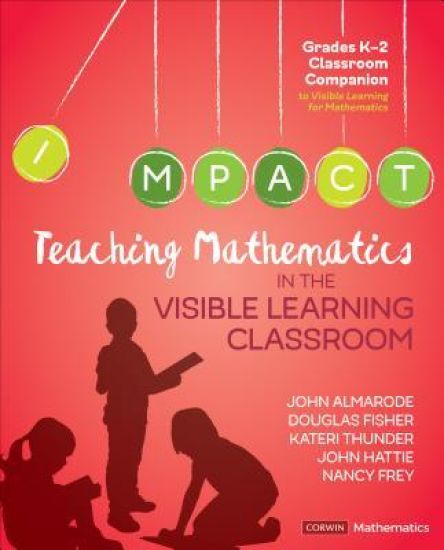
Teaching Mathematics in the Visible Learning Classroom, Grades K-2

Teaching Mathematics in the Visible Learning Classroom, Grades K-2

John T. Almarode; Douglas Fisher; Kateri Thunder; John Hattie; Nancy Frey

SAGE Publications Inc
2019
nidottu
Select the right task, at the right time, for the right phase of learning Young students come to elementary classrooms with different background knowledge, levels of readiness, and learning needs. What works best to help K–2 students develop the tools to become visible learners in mathematics? What works best for K-=–2 mathematics learning at the surface, deep, and transfer levels? In this sequel to the megawatt bestseller Visible Learning for Mathematics, John Almarode, Douglas Fisher, Kateri Thunder, John Hattie, and Nancy Frey help you answer those questions by showing how Visible Learning strategies look in action in K–2 mathematics classrooms. Walk in the shoes of teachers as they mix and match the strategies, tasks, and assessments seminal to making conceptual understanding, procedural knowledge, and the application of mathematical concepts and thinking skills visible to young students as well as to you. Using grade-leveled examples and a decision-making matrix, you’ll learn to Articulate clear learning intentions and success criteria at surface, deep, and transfer levelsEmploy evidence to guide students along the path of becoming metacognitive and self-directed mathematics achieversUse formative assessments to track what students understand, what they don’t, and whySelect the right task for the conceptual, procedural, or application emphasis you want, ensuring the task is for the right phase of learningAdjust the difficulty and complexity of any task to meet the needs of all learners It’s not only what works, but when. Exemplary lessons, video clips, and online resources help you leverage the most effective teaching practices at the most effective time to meet the surface, deep, and transfer learning needs of every K–2 student.