Kirjojen hintavertailu – 12 903 724 kirjaa ja 27 kauppaa

Kirjailija

Katherine Adams

Kirjat ja teokset yhdessä paikassa: 11 kirjaa, julkaisuja vuosilta 1999–2026, suosituimpiin kuuluu Saving Money, Resources and Carbon Through SMARTWaste. Vertaile teosten hintoja ja tarkista saatavuus suomalaisista kirjakaupoista.

11 kirjaa

Kirjojen julkaisuvuodet: 1999–2026.

Saving Money, Resources and Carbon Through SMARTWaste

Saving Money, Resources and Carbon Through SMARTWaste

Katherine Adams; Margaret Blackwell; Amanda Holt

IHS BRE Press
2013
nidottu
SMARTWaste Plan is an online tool that was developed by BRE to help users to prepare, implement and review their site waste management plans. This report provides an overview of SMARTWaste Plan and how the data it collects can be used. Since SMARTWaste Plan was introduced in 2008, data on over 6500 completed construction projects have been collected and this information has been used to produce a range of benchmarks and performance indicators. This report provides detailed performance indicators of waste arising (related to project value or floor area) for both newbuild and refurbishment projects. These performance indicators will be of interest to clients, contractors and planners, and information is provided on how the data can be used. The report also provides case studies showing how the tool can provide an overall view of all company projects and how it has helped users to reduce the time spent on recording data and producing reports, thereby saving money.

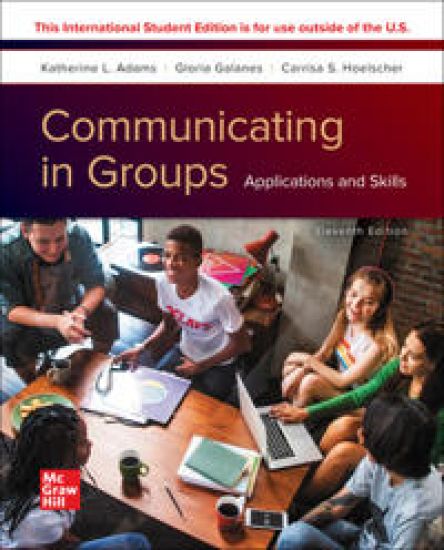
ISE Communicating in Groups: Applications and Skills

ISE Communicating in Groups: Applications and Skills

Katherine Adams; Gloria Galanes

McGraw-Hill Education
2020
nidottu
Communicating in Groups provides a contemporary look at group communication while retaining the foundational research and theory that has made the text so popular. Opening cases give an immediate context to each chapter’s main theme and key principles. Helpful tables and images, boxes showcasing ethical dilemmas, and “Apply Now” scenarios help students actively create their own understanding of key chapter ideas and concepts. Current issues related to media and technology complement the information. Along with the authors' conversational style, these features make the text accessible and relatable for students, who will come away with a practical understanding of small group communication and the positive impact they can make through effective communication choices with others.
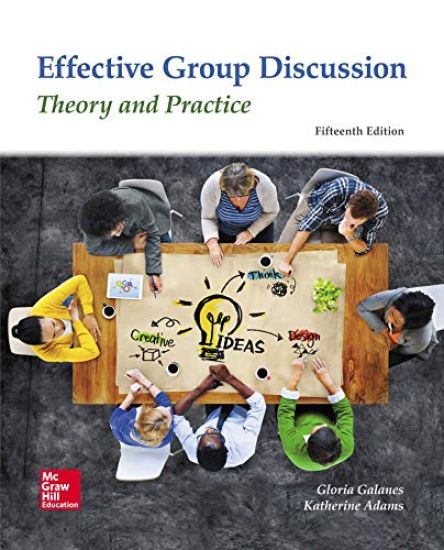
Effective Group Discussion: Theory and Practice

Effective Group Discussion: Theory and Practice

Gloria Galanes; Katherine Adams

McGraw-Hill Professional
2020
nidottu
Now in its fifteenth successful edition, Effective Group Discussion combines the most recent research findings and practical tools students need to become productive group members. A variety of secondary groups are covered in the text: work groups, committees, task forces, self-directed work teams, and other small groups whose objectives include finding solutions to problems, producing goods, and creating policies. Instructors and students can now access their course content through the Connect digital learning platform by purchasing either standalone Connect access or a bundle of print and Connect access. McGraw-Hill Connect® is a subscription-based learning service accessible online through your personal computer or tablet. Choose this option if your instructor will require Connect to be used in the course. Your subscription to Connect includes the following:• SmartBook® - an adaptive digital version of the course textbook that personalizes your reading experience based on how well you are learning the content.• Access to your instructor’s homework assignments, quizzes, syllabus, notes, reminders, and other important files for the course.• Progress dashboards that quickly show how you are performing on your assignments and tips for improvement.• The option to purchase (for a small fee) a print version of the book. This binder-ready, loose-leaf version includes free shipping. Complete system requirements to use Connect can be found here: http://www.mheducation.com/highered/platforms/connect/training-support-students.html
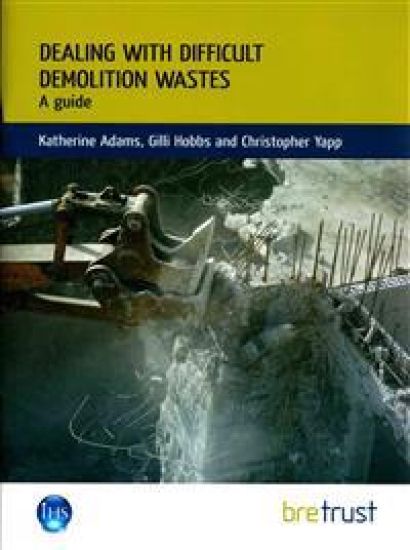
Dealing with Difficult Demolition Wastes

Dealing with Difficult Demolition Wastes

Katherine Adams; Gilli Hobbs; Christopher Yapp

IHS BRE Press
2013
nidottu
This report provides practical guidance for recovery of product and waste types that are difficult to recover or recycle, such as carpet underlay, insulated concrete formwork, industrial batteries, structural insulated panels and smoke alarms. Current waste management routes are examined, together with the potential to improve levels of reuse, recycling and recovery. The key principles relating to 'design for deconstruction' are summarised. Appendices include a wider directory of potentially difficult waste types, together with a short summary of recycling and recovery issues that may need to be considered. The guidance will be useful to those working in the demolition sector, policy makers and their advisors working in waste and recycling, those in the respective product supply chains who need to improve resource efficiency by designing for deconstruction to facilitate reuse at end of life, and construction clients and contractors who have targets to divert increasing amounts of waste from landfill.
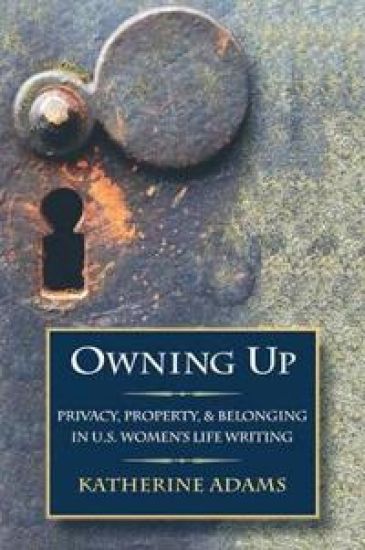
Owning Up

Owning Up

Katherine Adams

Oxford University Press Inc
2009
sidottu
Owning Up argues that from its beginning the U. S. discourse on privacy has been couched in terms of violation and dispossession, so that even as nineteenth-century Americans came to regard privacy as a natural right, and to identify it with sacred ideals of democratic freedom and individuality, they also understood it as under threat or erasure. Using biographical and autobiographical writing as her primary archive, Adams traces the public narrative of imperiled privacy across five centuries. Her analyses begin with the premise that nineteenth-century conceptions of privacy became meaningful only in negative relation to the encroaching forces of market capitalism and commodification. Where previous studies treat privacy as a stable category whose defining features are middle-class domesticity and femininity, Owning Up contends that privacy is an empty category that lacks fixed content and requires constant re-articulation via panic narratives in which gender always operates in intersection with race. Chapters look at how the discourse of imperiled privacy develops in conjunction with Romantic idealism and antebellum reform, racial reconstruction and the ethic of self-right, and Social Darwinist laissez faire, and culminates at the end of the century in calls for legislation to protect the American individual's "right to be let alone".
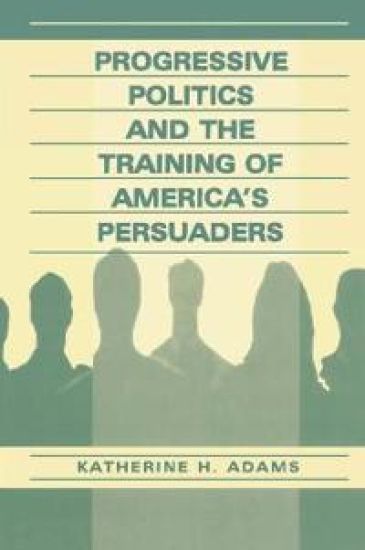
Progressive Politics and the Training of America's Persuaders

Progressive Politics and the Training of America's Persuaders

Katherine Adams

Routledge Member of the Taylor and Francis Group
1999
nidottu
At the beginning of the 20th century, Progressive reformers set up curricula in journalism, public relations, and creative writing to fulfill their own purposes: well-trained rhetors could convince the United States citizenry to accept Progressive thinking on monopolies and unions and to elect reform candidates. Although Progressive politicians and educators envisioned these courses and majors as forwarding their own goals, they could not control the intentions of the graduates thus trained or the employers who hired them. The period's vast panorama of rhetoric, including Theodore Roosevelt's publicity stunts, muckraker exposés, ad campaigns for patent medicines, and the selling of World War I, revealed the new national power of propaganda and the media, especially when wielded by college-trained experts imbued with the Progressive tradition of serving a cause and ensuring social betterment. In this unique volume, Adams' chronicles the creation of this advanced curriculum in speaking and writing during the Progressive era and examines the impact of that curriculum on public discourse. Unlike other studies of writing instruction, which have concentrated on freshman curriculum or on a specific genre, this book provides a historical and cultural analysis of the advanced composition curriculum and of its impact on public persuasion. Adams surveys American instruction at state and private schools across the country, with special attention given to the influential Progressive universities of the Midwest. She draws on a wide variety of primary data sources including college catalogs, course assignments, departmental minutes, speeches, and journals, and includes an extensive bibliography of research sources concerning advanced composition instruction and American rhetoric before World War II. As a resource offering remarkable historical insights on the history of writing instruction in America, this volume is of great interest to scholars and students in rhetoric, communication, and technical writing.
Progressive Politics and the Training of America's Persuaders

Progressive Politics and the Training of America's Persuaders

Katherine Adams

Routledge Member of the Taylor and Francis Group
1999
sidottu
At the beginning of the 20th century, Progressive reformers set up curricula in journalism, public relations, and creative writing to fulfill their own purposes: well-trained rhetors could convince the United States citizenry to accept Progressive thinking on monopolies and unions and to elect reform candidates. Although Progressive politicians and educators envisioned these courses and majors as forwarding their own goals, they could not control the intentions of the graduates thus trained or the employers who hired them. The period's vast panorama of rhetoric, including Theodore Roosevelt's publicity stunts, muckraker exposés, ad campaigns for patent medicines, and the selling of World War I, revealed the new national power of propaganda and the media, especially when wielded by college-trained experts imbued with the Progressive tradition of serving a cause and ensuring social betterment. In this unique volume, Adams' chronicles the creation of this advanced curriculum in speaking and writing during the Progressive era and examines the impact of that curriculum on public discourse. Unlike other studies of writing instruction, which have concentrated on freshman curriculum or on a specific genre, this book provides a historical and cultural analysis of the advanced composition curriculum and of its impact on public persuasion. Adams surveys American instruction at state and private schools across the country, with special attention given to the influential Progressive universities of the Midwest. She draws on a wide variety of primary data sources including college catalogs, course assignments, departmental minutes, speeches, and journals, and includes an extensive bibliography of research sources concerning advanced composition instruction and American rhetoric before World War II. As a resource offering remarkable historical insights on the history of writing instruction in America, this volume is of great interest to scholars and students in rhetoric, communication, and technical writing.