
Kirjailija
Katherine Sonderegger
Kirjat ja teokset yhdessä paikassa: 10 kirjaa, julkaisuja vuosilta 2015–2026, suosituimpiin kuuluu Systematic Theology, Volume 3. Vertaile teosten hintoja ja tarkista saatavuus suomalaisista kirjakaupoista.
10 kirjaa
Kirjojen julkaisuvuodet: 2015–2026.
Episcopalians are famous for their liturgy, music, and their thoughtful approach to faith and prayer. However, Episcopalians are less famous for their willingness to talk about their faith and their experience of God. In this volume, a group of leading Episcopalians share moments of deep spiritual intimacy. When did they sense the presence of God? How did they experience the presence of God? What is prayer like? How do they pray? What is it like to walk each day with Jesus? How seriously do they take the promptings of the Holy Spirit? How does the "transcendent" feel in their lives? How does the "transcendent" show up in their daily lives? This is a unique book that invites the reader to also start sharing their own sense of God with others.
Episcopalians are famous for their liturgy, music, and their thoughtful approach to faith and prayer. However, Episcopalians are less famous for their willingness to talk about their faith and their experience of God. In this volume, a group of leading Episcopalians share moments of deep spiritual intimacy. When did they sense the presence of God? How did they experience the presence of God? What is prayer like? How do they pray? What is it like to walk each day with Jesus? How seriously do they take the promptings of the Holy Spirit? How does the "transcendent" feel in their lives? How does the "transcendent" show up in their daily lives? This is a unique book that invites the reader to also start sharing their own sense of God with others.
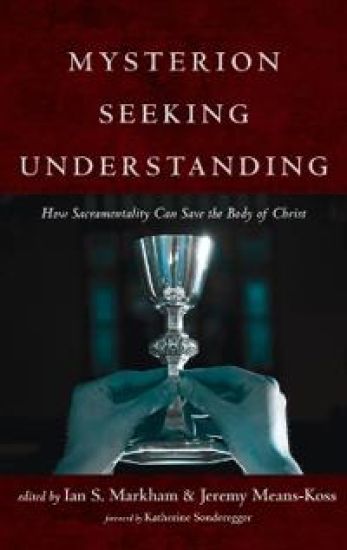
The common misconception is that first came the church and then came the sacraments. The reality is that first came God's grace and then came the church and then the church found visible ways to see the invisible grace God bestows. The resulting perspective shift puts Christ where Paul would have us put him, as the head of the church and author or our salvation. This book invites us to see and write about the sacraments not as mere band aids to the problems we face but as lenses for examining our church. Some of the authors delve deep into intellectual conceptions while others make plain what has always seemed so extravagant. The thread they all hold onto however is the desire to help the reader see sacramentality as something wonderous rather than archaic; and to find deep value for sacramentality and the visible signs of God's invisible grace.
When Holy Scripture is read aloud in the liturgy, the church confesses with joy and thanksgiving that it has heard the word of the Lord. What does it mean to make that confession? And why does it occasion praise? The doctrine of Scripture is a theological investigation into those and related questions, and this book is an exploration of that doctrine. It argues backward from the church's liturgical practice, presupposing the truth of the Christian confession: namely, that the canon does in fact mediate the living word of the risen Christ to and for his people. What must be true of the sacred texts of Old and New Testament alike for such confession, and the practices of worship in which they are embedded, to be warranted? By way of an answer, the book examines six aspects of the doctrine of Scripture: its source, nature, attributes, ends, interpretation, and authority. The result is a catholic and ecumenical presentation of the historic understanding of the Bible common to the people of God across the centuries, an understanding rooted in the church's sacred tradition, in service to the gospel, and redounding to the glory of the triune God.
Systematic Theology, Volume 2
Katherine Sonderegger
Fortress Press,U.S.
2020
sidottu
Halvin toimitettuna 44,30 €
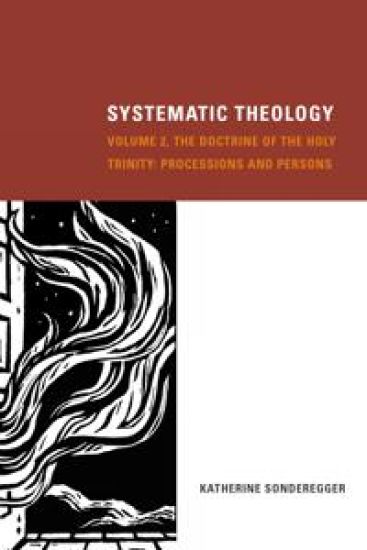
Katherine Sonderegger follows her monumental volume on the doctrine of God with this second entry of her Systematic Theology, which explores the doctrine of the Holy Trinity. Locating her analysis first in the Hebrew Scriptures, Sonderegger examines the thrice-holy God that is proclaimed to Isaiah in the sanctuary and manifested in the sacrifice of the temple. The book of Leviticus, read in conversation with Exodus, unfolds the doctrine of the Trinity under the character of holiness. In the One God, Trinity speaks of the life, movement, and self-offering of God, who is the eternal procession of goodness and light. In Israel's sacrificial covenant, the Triune God is perfect self-offering: the eternal descent of the Father of Lights is the offering who is Son, eternally received and hallowed in the one who is Spirit. Anchoring the theology of the Trinity in Israel's Scriptures in this way elevates the processions over the persons, exploring the mystery of the Divine Life as holy, rational, and good. The Divine Persons, named in the New Testament, cannot be defined but may be glimpsed in the notion of perfection, a complete and perfect infinite set. In all these ways, the Holy Trinity may be praised as the deep reality of the life of God.
Praying the Stations of the Cross
Margaret Adams Parker; Katherine Sonderegger
William B. Eerdmans Publishing Company
2019
pokkari
Systematic Theology
Katherine Sonderegger
Fortress Press,U.S.
2015
sidottu
Halvin toimitettuna 35,30 €
The mystery of Almighty God is most properly an explication of the oneness of God, tying the faith of the church to the bedrock of Israel's confession of the lord of the covenant, the lord of our Lord Jesus Christ. The doctrine of divine attributes, then, is set out as a reflection on Holy Scripture: the One God as omnipresent, omnipotent, and omniscient, and all these as expressions of the Love who is God. Systematic theology must make bold claims about its knowledge and service of this One lord: the Invisible God must be seen and known in the visible. In this way, God and God's relation to creation are distinguished-but not separated-from Christology, the doctrine of perfections from redemption. The lord God will be seen as compatible with creatures, and the divine perfections express formally distinct and unique relations to the world. This systematic theology, then, begins from the treatise De Deo Uno and develops the dogma of the Trinity as an expression of divine unicity, on which will depend creation, Christology, and ecclesiology. In the end, the transcendent beauty who is God can be known only in worship and praise.