Kirjojen hintavertailu – 12 859 829 kirjaa ja 27 kauppaa

Kirjailija

Katheryn M. Linduff

Kirjat ja teokset yhdessä paikassa: 5 kirjaa, julkaisuja vuosilta 2017–2025, suosituimpiin kuuluu Archaeological Studies on Gender in Early East Asia. Vertaile teosten hintoja ja tarkista saatavuus suomalaisista kirjakaupoista.

5 kirjaa

Kirjojen julkaisuvuodet: 2017–2025.

Archaeological Studies on Gender in Early East Asia

Archaeological Studies on Gender in Early East Asia

Mandy Jui-man Wu; Katheryn M. Linduff

Cambridge University Press
2025
sidottu
Gendered archaeology in Asia has been studied by archaeologists since the 1990s and scholars have posed questions such as the role and construction of gendered identities in ancient societies. In this Element, the authors review secondary literature, report on to what stage the research has evolved, evaluate methodologies, and use the concept of networking to examine the issues across East Asia, including China, Mongolia, Korea, Japan, and Taiwan. Interestingly, those literatures are not entirely parallel with each other – the authors found, for example, that archaeological investigation was largely bound by national guidelines, by local intellectual traditions, and by changing historiographic interpretations of past events, as well as funding. The complexion of recent studies on gender and archaeology in Asia has often been focused on providing a framework for a grand narrative of each national 'civilization' as the emergence of institutional political structures, including traditional values placed on men and women.
Archaeological Studies on Gender in Early East Asia

Archaeological Studies on Gender in Early East Asia

Mandy Jui-man Wu; Katheryn M. Linduff

Cambridge University Press
2025
pokkari
Gendered archaeology in Asia has been studied by archaeologists since the 1990s and scholars have posed questions such as the role and construction of gendered identities in ancient societies. In this Element, the authors review secondary literature, report on to what stage the research has evolved, evaluate methodologies, and use the concept of networking to examine the issues across East Asia, including China, Mongolia, Korea, Japan, and Taiwan. Interestingly, those literatures are not entirely parallel with each other – the authors found, for example, that archaeological investigation was largely bound by national guidelines, by local intellectual traditions, and by changing historiographic interpretations of past events, as well as funding. The complexion of recent studies on gender and archaeology in Asia has often been focused on providing a framework for a grand narrative of each national 'civilization' as the emergence of institutional political structures, including traditional values placed on men and women.
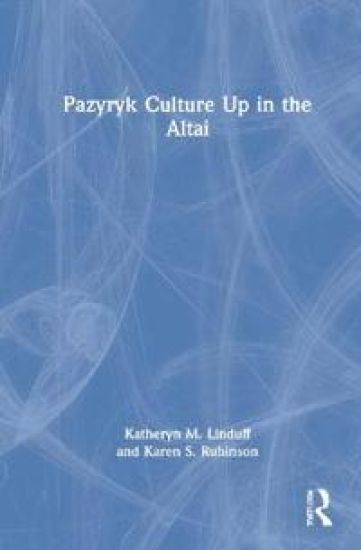
Pazyryk Culture Up in the Altai

Pazyryk Culture Up in the Altai

Katheryn M. Linduff; Karen S. Rubinson

Routledge
2021
sidottu
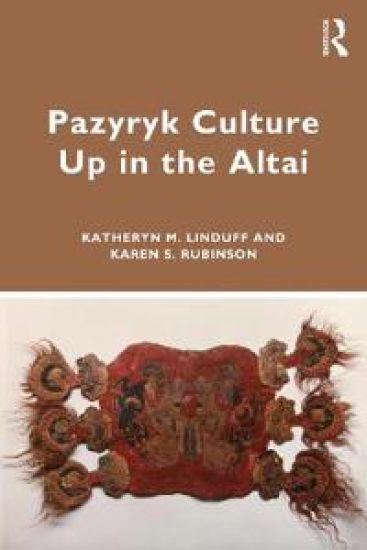
This book reconsiders the archaeology of the Pazyryk, the horse-riding people of the Altai Mountains who lived in the 4th–3rd centuries BCE, in light of recent scientific studies and excavations not only in Russia but also Kazakhstan, Mongolia and China, together with new theories of landscape. Excavation of the Pazyryk burials sparked great interest because of their wealth of organic remains, including tattooed bodies and sacrificed horses, together with superb wooden carvings and colorful textiles. In view of this new research, the role of the Pazyryk Culture in the ancient globalized world can now be more focused and refined. In this synthetic study of the region, the Pazyryk Culture is set into the landscape using recent studies on climate, technology, human and animal DNA and local resources. It shows that this was a powerful, semi-sedentary, interdependent group with contacts in Eurasia to their west, and to their east in Mongolia and south in China. This book is for archaeologists, anthropologists, art historians, social and economic historians as well as persons with general interests in mobile pastoralism, the emergence of complex societies, the social roles of artifacts and the diverse nature of an interconnected ancient world.
Pazyryk Culture Up in the Altai

Pazyryk Culture Up in the Altai

Katheryn M. Linduff; Karen S. Rubinson

Routledge
2021
nidottu
This book reconsiders the archaeology of the Pazyryk, the horse-riding people of the Altai Mountains who lived in the 4th–3rd centuries BCE, in light of recent scientific studies and excavations not only in Russia but also Kazakhstan, Mongolia and China, together with new theories of landscape. Excavation of the Pazyryk burials sparked great interest because of their wealth of organic remains, including tattooed bodies and sacrificed horses, together with superb wooden carvings and colorful textiles. In view of this new research, the role of the Pazyryk Culture in the ancient globalized world can now be more focused and refined. In this synthetic study of the region, the Pazyryk Culture is set into the landscape using recent studies on climate, technology, human and animal DNA and local resources. It shows that this was a powerful, semi-sedentary, interdependent group with contacts in Eurasia to their west, and to their east in Mongolia and south in China. This book is for archaeologists, anthropologists, art historians, social and economic historians as well as persons with general interests in mobile pastoralism, the emergence of complex societies, the social roles of artifacts and the diverse nature of an interconnected ancient world.
Ancient China and its Eurasian Neighbors

Ancient China and its Eurasian Neighbors

Katheryn M. Linduff; Yan Sun; Wei Cao; Yuanqing Liu

Cambridge University Press
2017
sidottu
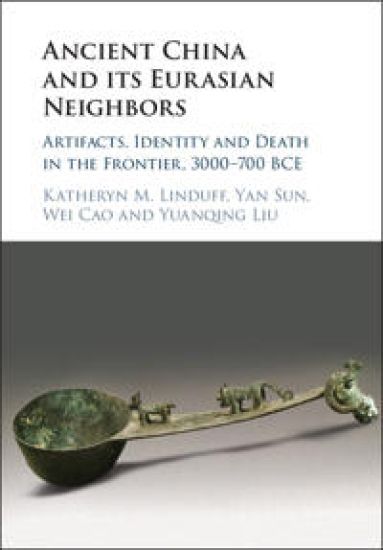
This volume examines the role of objects in the region north of early dynastic state centers, at the intersection of Ancient China and Eurasia, a large area that stretches from Xinjiang to the China Sea, from c.3000 BCE to the mid-eighth century BCE. This area was a frontier, an ambiguous space that lay at the margins of direct political control by the metropolitan states, where local and colonial ideas and practices were reconstructed transculturally. These identities were often merged and displayed in material culture. Types of objects, styles, and iconography were often hybrids or new to the region, as were the tomb assemblages in which they were deposited and found. Patrons commissioned objects that marked a symbolic vision of place and person and that could mobilize support, legitimize rule, and bind people together. Through close examination of key artifacts, this book untangles the considerable changes in political structure and cultural makeup of ancient Chinese states and their northern neighbors.