Kirjojen hintavertailu – 12 903 724 kirjaa ja 27 kauppaa

Kirjailija

Kathleen Hall Jamieson

Kirjat ja teokset yhdessä paikassa: 19 kirjaa, julkaisuja vuosilta 1990–2023, suosituimpiin kuuluu Capturing Campaign Dynamics, 2000 and 2004. Vertaile teosten hintoja ja tarkista saatavuus suomalaisista kirjakaupoista.

19 kirjaa

Kirjojen julkaisuvuodet: 1990–2023.

Democracy amid Crises

Democracy amid Crises

Matthew Levendusky; Josh Pasek; Bruce Hardy; R. Lance Holbert; Kate Kenski; Yotam Ophir; Andrew Renninger; Daniel Romer; Dror Walter; Ken Winneg; Kathleen Hall Jamieson

OXFORD UNIVERSITY PRESS INC
2023
sidottu
A data-rich analysis of how the four inter-related crises of 2020 -- the COVID-19 pandemic, the economic collapse and K-shaped recovery, the clashes over the legacy of racism and policing, and assaults on the legitimacy of democratic institutions (abetted by conspiracy theories) -- shaped not only the 2020 election, but also the future of our democracy. The 2020 election cycle was one of the most tumultuous in the nation's history. Early in the cycle, a global pandemic hit the US, paralyzing much of the economy and raising a multitude of questions about how people would go about voting. Then, beginning in late spring, a series of police brutality cases set off a nationwide wave of protests and civil disturbances related to racial justice concerns. In the final phase, the president of the United States refused to accept the results and incited his followers to storm the US Capitol. How did all of these momentous events shape voters' opinions? And what impact did they have on the outcome? To answer these questions, Kathleen Hall Jamieson and her collaborators surveyed 9,000 Americans over the course of the year to determine how voters reacted to the events on the ground, the campaigns' attempts at persuasion, and the post-election chaos that followed Biden's victory. Generally, American voters saw the multitude of crises through the lens of their polarized partisan predispositions. But why? Jamieson and her co-authors first stress that America has multiple electorates, and they are exposed to different informational environments. The divergent messages they received shaped not only their vote choice, but also how they made sense of these crises. Interestingly, though, while many voters were locked in place by their partisan priors, a majority of those who ended up voting for either Biden or Trump were unsure of their choice and whether they would actually vote at some point during the year. What led to both the wavering in people's choices and the attitudes they eventually adopted were in large part due to the differing media environments enveloping them: the messages from the campaigns, from their family and friends, as well from those in mass and social media. But this is not a simple story of "echo chambers," where individuals are immersed in only one type of media -- far from it. The distinct media environments in which these electorates experienced the election were in fact complex and varied, and the interaction between these different types of media was key. Indeed, most voters were subject to cross-cutting information pressures and not only one type of partisan source. This book's focus on the ebb and flow of the campaign over time and the centrality of wavering voters makes this an authoritative and essential account of one of the most momentous American elections ever.

Democracy amid Crises

Democracy amid Crises

Matthew Levendusky; Josh Pasek; Bruce Hardy; R. Lance Holbert; Kate Kenski; Yotam Ophir; Andrew Renninger; Daniel Romer; Dror Walter; Ken Winneg; Kathleen Hall Jamieson

OXFORD UNIVERSITY PRESS INC
2023
nidottu
A data-rich analysis of how the four inter-related crises of 2020 -- the COVID-19 pandemic, the economic collapse and K-shaped recovery, the clashes over the legacy of racism and policing, and assaults on the legitimacy of democratic institutions (abetted by conspiracy theories) -- shaped not only the 2020 election, but also the future of our democracy. The 2020 election cycle was one of the most tumultuous in the nation's history. Early in the cycle, a global pandemic hit the US, paralyzing much of the economy and raising a multitude of questions about how people would go about voting. Then, beginning in late spring, a series of police brutality cases set off a nationwide wave of protests and civil disturbances related to racial justice concerns. In the final phase, the president of the United States refused to accept the results and incited his followers to storm the US Capitol. How did all of these momentous events shape voters' opinions? And what impact did they have on the outcome? To answer these questions, Kathleen Hall Jamieson and her collaborators surveyed 9,000 Americans over the course of the year to determine how voters reacted to the events on the ground, the campaigns' attempts at persuasion, and the post-election chaos that followed Biden's victory. Generally, American voters saw the multitude of crises through the lens of their polarized partisan predispositions. But why? Jamieson and her co-authors first stress that America has multiple electorates, and they are exposed to different informational environments. The divergent messages they received shaped not only their vote choice, but also how they made sense of these crises. Interestingly, though, while many voters were locked in place by their partisan priors, a majority of those who ended up voting for either Biden or Trump were unsure of their choice and whether they would actually vote at some point during the year. What led to both the wavering in people's choices and the attitudes they eventually adopted were in large part due to the differing media environments enveloping them: the messages from the campaigns, from their family and friends, as well from those in mass and social media. But this is not a simple story of "echo chambers," where individuals are immersed in only one type of media -- far from it. The distinct media environments in which these electorates experienced the election were in fact complex and varied, and the interaction between these different types of media was key. Indeed, most voters were subject to cross-cutting information pressures and not only one type of partisan source. This book's focus on the ebb and flow of the campaign over time and the centrality of wavering voters makes this an authoritative and essential account of one of the most momentous American elections ever.
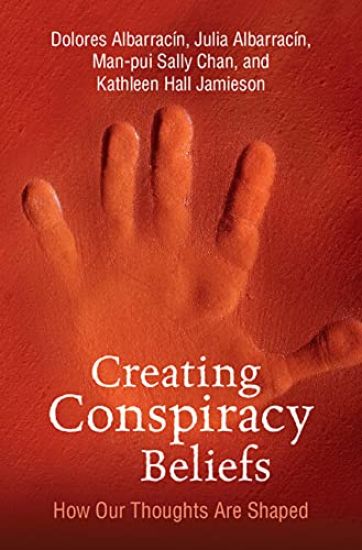
Creating Conspiracy Beliefs

Creating Conspiracy Beliefs

Dolores Albarracin; Julia Albarracin; Man-pui Sally Chan; Kathleen Hall Jamieson

Cambridge University Press
2021
sidottu
Conspiracy theories spread more widely and faster than ever before. Fear and uncertainty prompt people to believe false narratives of danger and hidden plots, but are not sufficient without considering the role and ideological bias of the media. This timely book focuses on making sense of how and why some people respond to their fear of a threat by creating or believing conspiracy stories. It integrates insights from psychology, political science, communication, and information sciences to provide a complete overview and theory of how conspiracy beliefs manifest. Through this multi-disciplinary perspective, rigoros research develops and tests a practical, simple way to frame and understand conspiracy theories. The book supplies unprecedented amounts of new data from six empirical studies and unpicks the complexity of the process that leads to the empowerment of conspiracy beliefs.
Creating Conspiracy Beliefs

Creating Conspiracy Beliefs

Dolores Albarracin; Julia Albarracin; Man-pui Sally Chan; Kathleen Hall Jamieson

Cambridge University Press
2021
pokkari
Conspiracy theories spread more widely and faster than ever before. Fear and uncertainty prompt people to believe false narratives of danger and hidden plots, but are not sufficient without considering the role and ideological bias of the media. This timely book focuses on making sense of how and why some people respond to their fear of a threat by creating or believing conspiracy stories. It integrates insights from psychology, political science, communication, and information sciences to provide a complete overview and theory of how conspiracy beliefs manifest. Through this multi-disciplinary perspective, rigoros research develops and tests a practical, simple way to frame and understand conspiracy theories. The book supplies unprecedented amounts of new data from six empirical studies and unpicks the complexity of the process that leads to the empowerment of conspiracy beliefs.
Cyberwar

Cyberwar

Kathleen Hall Jamieson

Oxford University Press Inc
2020
nidottu
The question of how Donald Trump won the 2016 election looms over his presidency. In particular, were the 78,000 voters who gave him an Electoral College victory affected by the Russian trolls and hackers? Trump has denied it. So has Vladimir Putin. Others cast the answer as unknowable. In Cyberwar, Kathleen Hall Jamieson marshals the troll posts, unique polling data, analyses of how the press used hacked content, and a synthesis of half a century of media effects literature to argue that, although not certain, it is probable that the Russians helped elect the 45th president of the United States. In the process, she asks: How extensive was the troll messaging? What characteristics of social media did the Russians exploit? Why did the mainstream press rush the hacked content into the citizenry's newsfeeds? Was Clinton telling the truth when she alleged that the debate moderators distorted what she said in the leaked speeches? Did the Russian influence extend beyond social media and news to alter the behavior of FBI director James Comey? After detailing the ways in which Russian efforts were abetted by the press, social media, candidates, party leaders, and a polarized public, Cyberwar closes with a warning: the country is ill-prepared to prevent a sequel. In this updated paperback edition, Jamieson covers the many new developments that have come to light since the original publication.
Cyberwar

Cyberwar

Kathleen Hall Jamieson

Oxford University Press Inc
2018
sidottu

Halvin toimitettuna 28,90 €

The question of how Donald Trump won the 2016 election looms over his presidency. In particular, were the 78,000 voters who gave him an Electoral College victory affected by the Russian trolls and hackers? Trump has denied it. So too has Vladimir Putin. Others cast the answer as unknowable. Drawing on path-breaking work in which she and her colleagues isolated significant communication effects in the 2000 and 2008 presidential campaigns, the eminent political communication scholar Kathleen Hall Jamieson marshals the troll posts, unique polling data, analyses of how the press used the hacked content, and a synthesis of half a century of media effects research to argue that, although not certain, it is probable that the Russians helped elect the 45th president of the United States. In the process, Cyberwar tackles questions that include: How extensive was the troll messaging? What characteristics of the social media platforms did the Russians exploit? Why did the mainstream press rush the hacked content into the citizenrys newsfeeds? Was Clinton telling the truth when she alleged that the debate moderators distorted what she said in the leaked speeches? Did the Russian influence extend beyond social media and news to alter the behavior of FBI director James Comey? After detailing the ways in which the Russian efforts were abetted by the press, social media platforms, the candidates, party leaders, and a polarized public, Cyberwar closes with a warning: the country is ill-prepared to prevent a sequel.
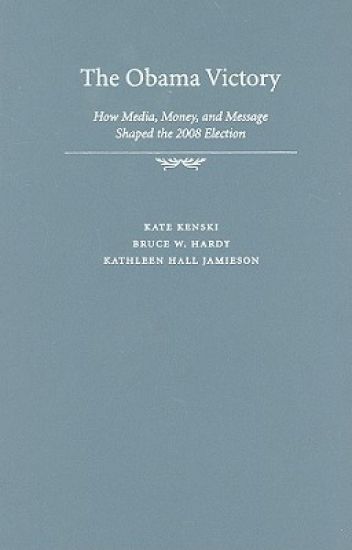
The Obama Victory

The Obama Victory

Kate Kenski; Bruce W. Hardy; Kathleen Hall Jamieson

Oxford University Press Inc
2010
nidottu
Barack Obama's stunning victory in the 2008 presidential election will go down as one of the more pivotal in American history. Given America's legacy of racism, how could a relatively untested first-term senator with an African father defeat some of the giants of American politics? In The Obama Victory, Kate Kenski, Bruce Hardy, and Kathleen Hall Jamieson draw upon the best voter data available, The National Annenberg Election Survey, as well as interviews with key advisors to each campaign, to illuminate how media, money, and messages shaped the 2008 election. In a crisp, incisive narrative, the authors identify the candidates' major themes-Maverick versus Mc-Same; Change versus Tax and Spend Liberal, etc.-and then apply them to the five main periods of the campaign: the early summer; the period from the vice presidential nominations through the conventions; the financial meltdown from mid-September to mid-October; the two weeks after the final debate; and the final week. Throughout, they explain how both sides worked the media to reinforce or combat images of McCain as too old and Obama as not ready; how Obama used a very effective rough-and-tumble radio and cable campaign that was largely unnoticed by the mainstream media; how the Vice Presidential nominees impacted the campaign; how McCain's age and Obama's race affected the final vote, and much more. Analyzing each nominee's broadcast, cable, and radio spending, the authors conclude that Obama's media campaign was more savvy than McCain's, and that early voting and the complete collapse of campaign finance reform will change elections for years to come. Briskly written and filled with surprising insights, The Obama Victory goes beyond opinion to offer the most authoritative account available of precisely how and why Obama won the presidency.
The Obama Victory

The Obama Victory

Kate Kenski; Bruce W. Hardy; Kathleen Hall Jamieson

Oxford University Press Inc
2010
sidottu
Barack Obama's stunning victory in the 2008 presidential election will go down as one of the more pivotal in American history. Given America's legacy of racism, how could a relatively untested first-term senator with an African father defeat some of the giants of American politics? In The Obama Victory, Kate Kenski, Bruce Hardy, and Kathleen Hall Jamieson draw upon the best voter data available, The National Annenberg Election Survey, as well as interviews with key advisors to each campaign, to illuminate how media, money, and messages shaped the 2008 election. In a crisp, incisive narrative, the authors identify the candidates' major themes--Maverick versus Mc-Same; Change versus Tax and Spend Liberal, etc.--and then apply them to the five main periods of the campaign: the early summer; the period from the vice presidential nominations through the conventions; the financial meltdown from mid-September to mid-October; the two weeks after the final debate; and the final week. Throughout, they explain how both sides worked the media to reinforce or combat images of McCain as too old and Obama as not ready; how Obama used a very effective rough-and-tumble radio and cable campaign that was largely unnoticed by the mainstream media; how the Vice Presidential nominees impacted the campaign; how McCain's age and Obama's race affected the final vote, and much more. Analyzing each nominee's broadcast, cable, and radio spending, the authors conclude that Obama's media campaign was more savvy than McCain's, and that early voting and the complete collapse of campaign finance reform will change elections for years to come. Briskly written and filled with surprising insights, The Obama Victory goes beyond opinion to offer the most authoritative account available of precisely how and why Obama won the presidency.
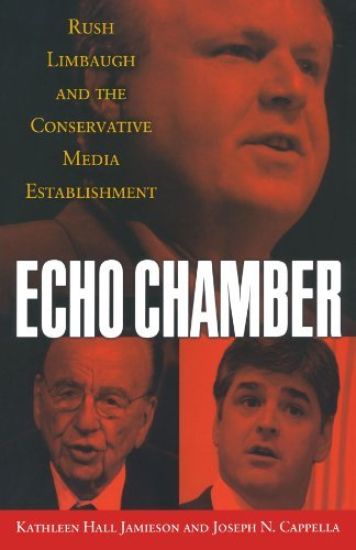
Echo Chamber

Echo Chamber

Kathleen Hall Jamieson; Joseph N. Cappella

Oxford University Press Inc
2010
nidottu
Rupert Murdoch's multibillion-dollar purchase of the Wall Street Journal in 2007 was but one more chapter in an untold story: the rise of an integrated conservative media machine that all began with Rush Limbaugh in the 1980s. Kathleen Hall Jamieson and Joseph Cappella--two of the nation's foremost experts on politics and communications--here offer a searching analysis of the conservative media establishment, from talk radio to Fox News to the editorial page of the Wall Street Journal. Indeed, Echo Chamber is the first serious account of how the conservative media arose, what it consists of, and how it operates. Surprisingly, President Obama's election has only enhanced the influence of Limbaugh. As an unofficial leader of the Republican Party, he has issued marching orders to the rest of the conservative media bent on challenging President Obama's agenda. To show how this influential segment of the media works, the authors examine the uproar that followed when Senator Trent Lott seemed to endorse Strom Thurmond's segregationist past. Limbaugh called the remarks "utterly indefensible," but added that a "double standard" was in play. That signaled a broad counterattack by the conservative media establishment, charging the mainstream media with hypocrisy (yet using its reports when convenient), creating a set of facts--or allegations--for partisans to draw upon, and fostering an in-group identity. Jamieson and Cappella find that Limbaugh, Fox News, and the Wall Street Journal opinion pages create a self-protective enclave for conservatives, shielding them from other information sources, and promoting strongly negative associations with political opponents. Limbaugh in particular, they write, fuses the roles of party leader and opinion leader in a fashion reminiscent of the nineteenth century's partisan newspaper editors.
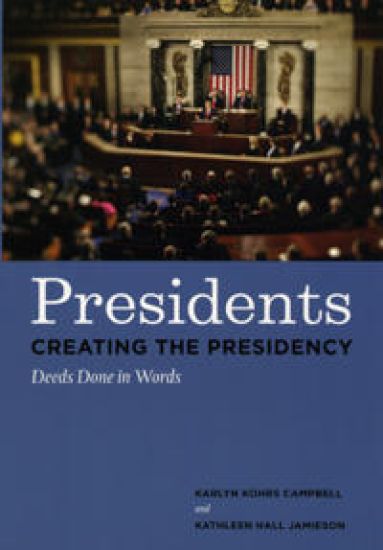
Presidents Creating the Presidency

Presidents Creating the Presidency

Karlyn Kohrs Campbell; Kathleen Hall Jamieson

University of Chicago Press
2008
nidottu
Arguing that the presidency is not defined by the Constitution - which doesn't use the term - but by what presidents say and how they say it, "Deeds Done in Words" has been the definitive book on presidential rhetoric for more than a decade. "Presidents Creating the Presidency" expands and recasts this classic work for the YouTube era, revealing how our media-saturated age has transformed the rhetorical strategies presidents use to increase and sustain the executive branch's powers. Identifying the primary genres of presidential oratory, Karlyn Kohrs Campbell and Kathleen Hall Jamieson add new analyses of signing statements and national eulogies to their explorations of inaugural addresses, veto messages, and war rhetoric, among other types. They explain that in some genres, the president acts alone, while in others, such as speeches that urge a legislative agenda, the executive solicits reaction from the other branches. Many of these rhetorical acts, the authors contend, extend over time: George W. Bush's post - September 11 statements, for example, culminated in a speech at the National Cathedral and became a touchstone for his subsequent address to Congress. For two centuries, presidential discourse has both succeeded brilliantly and failed miserably at satisfying the demands of audience, occasion, and institution - and in the process, it has increased and depleted political capital by enhancing authority or ceding it to the other branches. Illuminating the reasons behind each outcome, Campbell and Jamieson draw an authoritative picture of how presidents have used rhetoric to shape the presidency - and how they continue to recreate it.
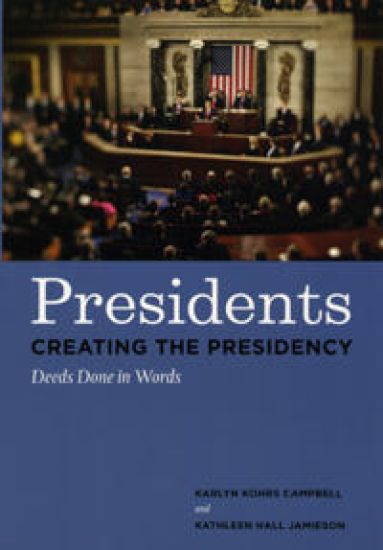
Presidents Creating the Presidency

Presidents Creating the Presidency

Karlyn Kohrs Campbell; Kathleen Hall Jamieson

University of Chicago Press
2008
sidottu
Arguing that the presidency is not defined by the Constitution - which doesn't use the term - but by what presidents say and how they say it, "Deeds Done in Words" has been the definitive book on presidential rhetoric for more than a decade. "Presidents Creating the Presidency" expands and recasts this classic work for the YouTube era, revealing how our media-saturated age has transformed the rhetorical strategies presidents use to increase and sustain the executive branch's powers. Identifying the primary genres of presidential oratory, Karlyn Kohrs Campbell and Kathleen Hall Jamieson add new analyses of signing statements and national eulogies to their explorations of inaugural addresses, veto messages, and war rhetoric, among other types. They explain that in some genres, the president acts alone, while in others, such as speeches that urge a legislative agenda, the executive solicits reaction from the other branches. Many of these rhetorical acts, the authors contend, extend over time: George W. Bush's post - September 11 statements, for example, culminated in a speech at the National Cathedral and became a touchstone for his subsequent address to Congress. For two centuries, presidential discourse has both succeeded brilliantly and failed miserably at satisfying the demands of audience, occasion, and institution - and in the process, it has increased and depleted political capital by enhancing authority or ceding it to the other branches. Illuminating the reasons behind each outcome, Campbell and Jamieson draw an authoritative picture of how presidents have used rhetoric to shape the presidency - and how they continue to recreate it.
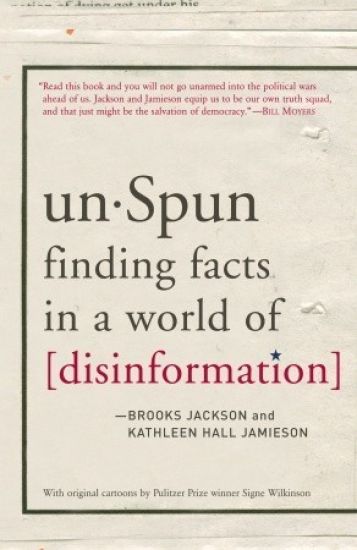
unSpun

unSpun

Brooks Jackson; Kathleen Hall Jamieson

Random House USA Inc
2007
pokkari
A practical guide to identifying bunk--from fact-twisting political ads and dubious infomercials to corporate PR and false e-mails--explains how and where to pick out the truth from the masses of false data, misleading messages, and fake resources. Original. 50,000 first printing.
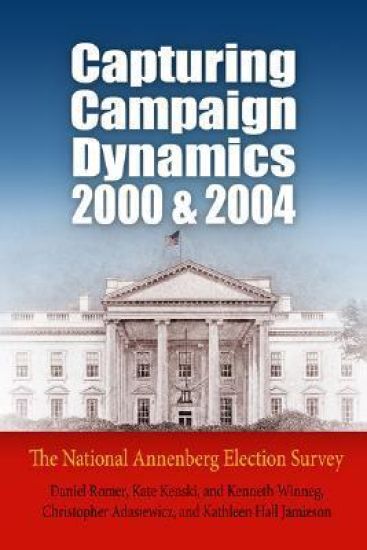
Capturing Campaign Dynamics, 2000 and 2004

Capturing Campaign Dynamics, 2000 and 2004

Daniel Romer; Kate Kenski; Kenneth Winneg; Christopher Adasiewicz; Kathleen Hall Jamieson

University of Pennsylvania Press
2006
pokkari
The presidential elections of 2000 and 2004 were two of the most contested and dramatic in our nation's history. During the election seasons of 2000 and 2004, the Annenberg Public Policy Center conducted the largest studies ever undertaken of the American electorate-the National Annenberg Election Survey (NAES). Capturing Campaign Dynamics, 2000 and 2004 provides the data from these two surveys to the general public as well as useful tools for analyzing and interpreting the findings. Featuring rolling cross-sectional analysis, this book walks researchers through different strategies for using this type of survey research to understand campaign dynamics. An important feature of the volume is its explanation of the use of time series analysis to study the dynamic effects of political events as they unfold during presidential elections. The application of this methodology will uncover new insights into the time-dependent processes that unfold during election campaigns in ways that have not been possible before NAES. The book includes a CD-ROM of the NAES codebooks and data, featuring more than 200,000 interviews with adults living in the United States. The data contained on the NAES CD-ROM are in both SPSS format and tab-delimited format for use with other statistical software. Capturing Campaign Dynamics, 2000 and 2004 is ideal for courses in survey research methods in political science, communications studies, and analysis of public opinion. It will also be of great interest to scholars and professionals, such as pollsters and political consultants.
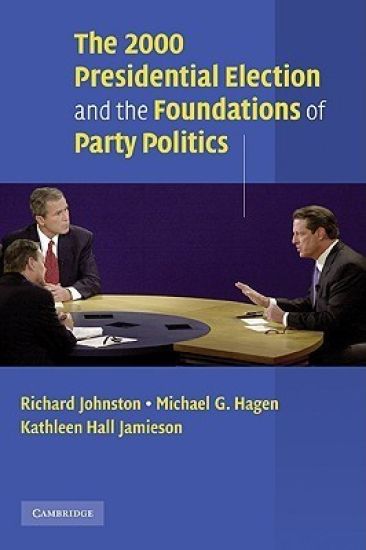
The 2000 Presidential Election and the Foundations of Party Politics

The 2000 Presidential Election and the Foundations of Party Politics

Richard Johnston; Michael G. Hagen; Kathleen Hall Jamieson

Cambridge University Press
2004
pokkari
In the aftermath of the 2000 presidential election, campaigns suddenly seem to matter, as do questions about the electoral process. Professors Johnston, Hagen and Jamieson have examined the US electoral process as an integrated event spanning a full year, drawing upon a data set that is massive in scale and novel in execution: the Annenberg 2000 Election Study. The scale of their fieldwork is such that they have been able to isolate key turning points and that dynamics can be studied within certain segments. The interviews are rich in opinion about policy, perception, information and judgement about candidates, media use and strategy. What is more, the authors have used candidate appearances, news coverage, and campaign advertising to provide the first integrated account of this or any US campaign.
The 2000 Presidential Election and the Foundations of Party Politics

The 2000 Presidential Election and the Foundations of Party Politics

Richard Johnston; Michael G. Hagen; Kathleen Hall Jamieson

Cambridge University Press
2004
sidottu
In the aftermath of the 2000 presidential election, campaigns suddenly seem to matter, as do questions about the electoral process. Professors Johnston, Hagen and Jamieson have examined the US electoral process as an integrated event spanning a full year, drawing upon a data set that is massive in scale and novel in execution: the Annenberg 2000 Election Study. The scale of their fieldwork is such that they have been able to isolate key turning points and that dynamics can be studied within certain segments. The interviews are rich in opinion about policy, perception, information and judgement about candidates, media use and strategy. What is more, the authors have used candidate appearances, news coverage, and campaign advertising to provide the first integrated account of this or any US campaign.
The Press Effect

The Press Effect

Kathleen Hall Jamieson; Paul Waldman

Oxford University Press Inc
2004
nidottu
Was the 2000 presidential campaign merely a contest between Pinocchio and Dumbo? And did Dumbo miraculously turn into Abraham Lincoln after the events of September 11? In fact, Kathleen Hall Jamieson and Paul Waldman argue in The Press Effect, these stereotypes, while containing some elements of the truth, represent the failure of the press and the citizenry to engage the most important part of our political process in a critical fashion. Jamieson and Waldman analyze both press coverage and public opinion, using the Annenberg 2000 survey, which interviewed more than 100,000 people, to examine one of the most interesting periods of modern presidential history, from the summer of 2000 through the aftermath of September 11th. How does the press fail us during presidential elections? Jamieson and Waldman show that when political campaigns side-step or refuse to engage the facts of the opposing side, the press often fails to step into the void with the information citizens require to make sense of the political give-and-take. They look at the stories through which we understand political events--examining a number of fabrications that deceived the public about consequential governmental activities--and explore the ways in which political leaders and reporters select the language through which we talk and think about politics, and the relationship between the rhetoric of campaigns and the reality of governance. They explore the role of the campaigns and the press in casting the 2000 general election as a contest between Pinocchio and Dumbo, and ask whether in 2000 the press applied the same standards of truth-telling to both Bush and Gore. The unprecedented events of election night and the thirty-six days that followed revealed the role that preconceptions play in press interpretation and the importance of press frames in determining the tone of political coverage as well as the impact of network overconfidence in polls. The Press Effect is, ultimately, a wide-ranging critique of the press's role in mediating between politicians and the citizens they are supposed to serve.
Beyond the Double Bind

Beyond the Double Bind

Kathleen Hall Jamieson

Oxford University Press Inc
1995
sidottu
Beyond the Double Bind traces how women have overcome a series of double binds - Catch 22's - which would seem to block them from success no matter what they do. Jamieson explores double binds such as uterus/brain, feminity/competence, equality/difference, and shows how women in all walks of life have moved beyond these traps and restrictions.
Presidential Debates

Presidential Debates

Kathleen Hall Jamieson; David S. Birdsell

Oxford University Press Inc
1990
nidottu
How important are presidential debates today? To answer this question, the authors place modern debates in their cultural and historical context, tracing their origins and development in the American political tradition, from the eighteenth century to the present, and concluding with some thoughtful suggestions for improving their current effectiveness.
Eloquence in an Electronic Age

Eloquence in an Electronic Age

Kathleen Hall Jamieson

Oxford University Press Inc
1990
nidottu
In a book that blends anecdote with analysis, Kathleen Hall Jamieson--author of the award-winning Packaging the Presidency--offers a perceptive and often disturbing account of the transformation of political speechmaking. Jamieson addresses such fundamental issues about public speaking as what talents and techniques differentiate eloquent speakers from non-eloquent speakers. She also analyzes the speeches of modern presidents from Truman to Reagan and of political players from Daniel Webster to Mario Cuomo. Ranging from the classical orations of Cicero to Kennedy's "Ich bin ein Berliner" speech, this lively, well-documented volume contains a wealth of insight into public speaking, contemporary characteristics of eloquence, and the future of political discourse in America.