
Kirjojen hintavertailu – 12 859 818 kirjaa ja 27 kauppaa

Kirjailija

Kathleen Hicks

Kirjat ja teokset yhdessä paikassa: 2 kirjaa, julkaisuja vuosilta 2016–2017, suosituimpiin kuuluu Countering Coercion in Maritime Asia. Vertaile teosten hintoja ja tarkista saatavuus suomalaisista kirjakaupoista.

2 kirjaa

Kirjojen julkaisuvuodet: 2016–2017.

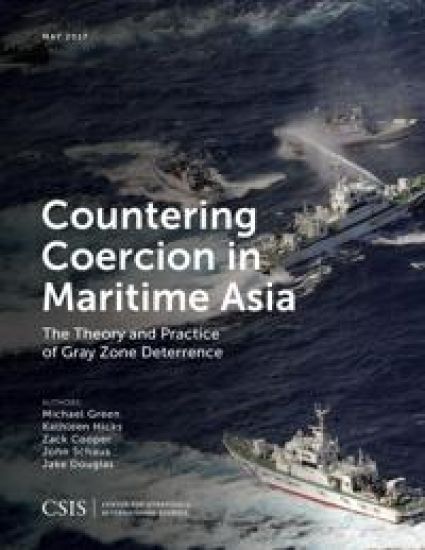
Countering Coercion in Maritime Asia

Countering Coercion in Maritime Asia

Michael Green; Kathleen Hicks; Zack Cooper; John Schaus; Jake Douglas

Centre for Strategic International Studies,U.S.
2017
nidottu
In the past decade, tensions in Asia have risen as Beijing has become more assertive in maritime disputes with its neighbors and the United States. Although taking place below the threshold of direct military confrontation, China’s assertiveness frequently involves coercive elements that put at risk existing rules and norms; physical control of disputed waters and territory; and the credibility of U. S. security commitments. Regional leaders have expressed increasing alarm that such “gray zone” coercion threatens to destabilize the region by increasing the risk of conflict and undermining the rules-based order. Yet, the United States and its allies and partners have struggled to develop effective counters to China’s maritime coercion. This study reviews deterrence literature and nine case studies of coercion to develop recommendations for how the United States and its allies and partners could counter gray zone activity.
Asia-Pacific Rebalance 2025

Asia-Pacific Rebalance 2025

Michael Green; Kathleen Hicks; Mark F. Cancian

Centre for Strategic International Studies,U.S.
2016
nidottu
In 2015, Congress tasked the Department of Defense to commission an independent assessment of U. S. military strategy and force posture in the Asia-Pacific, as well as that of U. S. allies and partners, over the next decade. This CSIS study fulfills that congressional requirement. The authors assess U. S. progress to date and recommend initiatives necessary to protect U. S. interests in the Pacific Command area of responsibility through 2025. Four lines of effort are highlighted: (1) Washington needs to continue aligning Asia strategy within the U. S. government and with allies and partners; (2) U. S. leaders should accelerate efforts to strengthen ally and partner capability, capacity, resilience, and interoperability; (3) the United States should sustain and expand U. S. military presence in the Asia-Pacific region; and (4) the United States should accelerate development of innovative capabilities and concepts for U. S. forces.