Kirjojen hintavertailu – 12 859 819 kirjaa ja 27 kauppaa

Kirjailija

Kathleen Lennon

Kirjat ja teokset yhdessä paikassa: 11 kirjaa, julkaisuja vuosilta 1998–2019, suosituimpiin kuuluu Imagination and the Imaginary. Vertaile teosten hintoja ja tarkista saatavuus suomalaisista kirjakaupoista.

11 kirjaa

Kirjojen julkaisuvuodet: 1998–2019.

Gender Theory in Troubled Times

Gender Theory in Troubled Times

Kathleen Lennon; Rachel Alsop

Polity Press
2019
nidottu

Halvin toimitettuna 30,80 €

Theorizing gender is more urgent and highly political than ever before. These are times, in many countries, of increased visibility of women in public life and high-profile campaigns against sexual violence and harassment. Challenges to fixed, traditional gender norms have paved the way for the recognition of gay marriage and gender recognition acts allowing people to change the gender assigned to them at birth. Yet these are also times of religious and political backlash by the alt right, the demonization of the very term ‘gender’ and a renewed embrace of the ‘naturalness’ of gendered difference as ordained by God or Science. A follow-up to the authors’ 2002 text, Theorizing Gender, this timely and necessary intervention revisits gender theory for contemporary times. Refusing a singular ‘truth about gender’, the authors explore the multiple strands which go into making our gendered identities, in the context of materialist and intersectional perspectives interwoven with phenomenological and performative ones. The resulting critical overview will be a welcome and invaluable guide for students and scholars of gender across the social sciences and humanities.

Gender Theory in Troubled Times

Gender Theory in Troubled Times

Kathleen Lennon; Rachel Alsop

Polity Press
2019
sidottu
Theorizing gender is more urgent and highly political than ever before. These are times, in many countries, of increased visibility of women in public life and high-profile campaigns against sexual violence and harassment. Challenges to fixed, traditional gender norms have paved the way for the recognition of gay marriage and gender recognition acts allowing people to change the gender assigned to them at birth. Yet these are also times of religious and political backlash by the alt right, the demonization of the very term ‘gender’ and a renewed embrace of the ‘naturalness’ of gendered difference as ordained by God or Science. A follow-up to the authors’ 2002 text, Theorizing Gender, this timely and necessary intervention revisits gender theory for contemporary times. Refusing a singular ‘truth about gender’, the authors explore the multiple strands which go into making our gendered identities, in the context of materialist and intersectional perspectives interwoven with phenomenological and performative ones. The resulting critical overview will be a welcome and invaluable guide for students and scholars of gender across the social sciences and humanities.

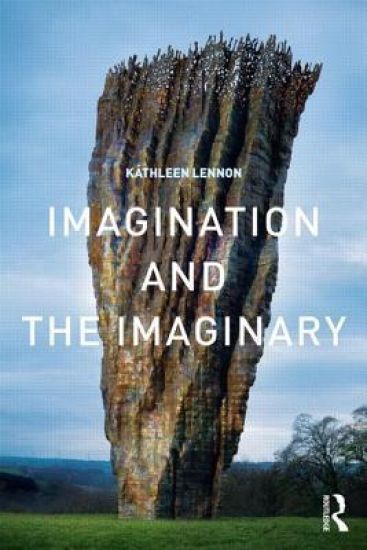
Imagination and the Imaginary

Imagination and the Imaginary

Kathleen Lennon

Routledge
2017
nidottu
The concept of the imaginary is pervasive within contemporary thought, yet can be a baffling and often controversial term. In Imagination and the Imaginary, Kathleen Lennon explores the links between imagination - regarded as the faculty of creating images or forms - and the imaginary, which links such imagery with affect or emotion and captures the significance which the world carries for us. Beginning with an examination of contrasting theories of imagination proposed by Hume and Kant, Lennon argues that the imaginary is not something in opposition to the real, but the very faculty through which the world is made real to us. She then turns to the vexed relationship between perception and imagination and, drawing on Kant, Merleau-Ponty and Sartre, explores some fundamental questions, such as whether there is a distinction between the perceived and the imagined; the relationship between imagination and creativity; and the role of the body in perception and imagination. Invoking also Spinoza and Coleridge, Lennon argues that, far from being a realm of illusion, the imaginary world is our most direct mode of perception. She then explores the role the imaginary plays in the formation of the self and the social world. A unique feature of the volume is that it compares and contrasts a philosophical tradition of thinking about the imagination - running from Kant and Hume to Strawson and John McDowell - with the work of phenomenological, psychoanalytic, poststructuralist and feminist thinkers such as Merleau-Ponty, Sartre, Lacan, Castoriadis, Irigaray, Gatens and Lloyd. This makes Imagination and the Imaginary essential reading for students and scholars working in phenomenology, philosophy of perception, social theory, cultural studies and aesthetics. Cover Image: Bronze Bowl with Lace, Ursula Von Rydingsvard, 2014. Courtesy the artist, Galerie Lelong and Yorkshire Sculpture Park. Photo Jonty Wilde.
Imagination and the Imaginary

Imagination and the Imaginary

Kathleen Lennon

Routledge
2015
sidottu
The concept of the imaginary is pervasive within contemporary thought, yet can be a baffling and often controversial term. In Imagination and the Imaginary, Kathleen Lennon explores the links between imagination - regarded as the faculty of creating images or forms - and the imaginary, which links such imagery with affect or emotion and captures the significance which the world carries for us. Beginning with an examination of contrasting theories of imagination proposed by Hume and Kant, Lennon argues that the imaginary is not something in opposition to the real, but the very faculty through which the world is made real to us. She then turns to the vexed relationship between perception and imagination and, drawing on Kant, Merleau-Ponty and Sartre, explores some fundamental questions, such as whether there is a distinction between the perceived and the imagined; the relationship between imagination and creativity; and the role of the body in perception and imagination. Invoking also Spinoza and Coleridge, Lennon argues that, far from being a realm of illusion, the imaginary world is our most direct mode of perception. She then explores the role the imaginary plays in the formation of the self and the social world. A unique feature of the volume is that it compares and contrasts a philosophical tradition of thinking about the imagination - running from Kant and Hume to Strawson and John McDowell - with the work of phenomenological, psychoanalytic, poststructuralist and feminist thinkers such as Merleau-Ponty, Sartre, Lacan, Castoriadis, Irigaray, Gatens and Lloyd. This makes Imagination and the Imaginary essential reading for students and scholars working in phenomenology, philosophy of perception, social theory, cultural studies and aesthetics. Cover Image: Bronze Bowl with Lace, Ursula Von Rydingsvard, 2014. Courtesy the artist, Galerie Lelong and Yorkshire Sculpture Park. Photo Jonty Wilde.
The World, the Flesh and the Subject

The World, the Flesh and the Subject

Paul Gilbert; Kathleen Lennon

Edinburgh University Press
2005
nidottu
Here, for the first time, contemporary Continental thought comes into conversation with analytic philosophy on all the principal topics of philosophy of mind. Rejecting the dominant Anglo-American paradigm, which reduces mental phenomena to their roles in a scientific psychology, the authors present a non-mysterious, naturalistic alternative. Characterising mental life is, they seek to show, capturing the world from the point of view of the subject. But the subject is essentially embodied, so that mental phenomena are modes of our fleshly existence in the world. The book aims to bring together these three themes - the world,the flesh and the subject - to resolve many of the puzzles that beset contemporary philosophy of mind. It thereby provides a coherent new approach which draws upon phenomenology, hermeneutics, psycho-analysis and poststructuralism, and relates recent feminist work on the body to traditional concerns with the mind. The topics discussed include the problem of consciousness, perception and sensation, imagination, desire, emotion, reason and agency, and the self and others. Features * Brings continental thought to bear on contemporary philosophy of mind * Offers a new approach to problems of mind * Brings recent work on the body together with traditional concerns with the mind * Treats philosophy of mind in a topic oriented way
The World, the Flesh and the Subject

The World, the Flesh and the Subject

Paul Gilbert; Kathleen Lennon

Edinburgh University Press
2005
sidottu
Here, for the first time, contemporary Continental thought comes into conversation with analytic philosophy on all the principal topics of philosophy of mind. Rejecting the dominant Anglo-American paradigm, which reduces mental phenomena to their roles in a scientific psychology, the authors present a non-mysterious, naturalistic alternative. Characterising mental life is, they seek to show, capturing the world from the point of view of the subject. But the subject is essentially embodied, so that mental phenomena are modes of our fleshly existence in the world. The book aims to bring together these three themes - the world,the flesh and the subject - to resolve many of the puzzles that beset contemporary philosophy of mind. It thereby provides a coherent new approach which draws upon phenomenology, hermeneutics, psycho-analysis and poststructuralism, and relates recent feminist work on the body to traditional concerns with the mind. The topics discussed include the problem of consciousness, perception and sensation, imagination, desire, emotion, reason and agency, and the self and others. Features * Brings continental thought to bear on contemporary philosophy of mind * Offers a new approach to problems of mind * Brings recent work on the body together with traditional concerns with the mind * Treats philosophy of mind in a topic oriented way
Theorizing Gender

Theorizing Gender

Rachel Alsop; Annette Fitzsimons; Kathleen Lennon

JOHN WILEY AND SONS LTD
2002
nidottu
This text aims to give a theoretical overview of approaches to gender. It discusses the major theories concerned with the ways in which we become engendered and explains and evaluates naturalist, psychoanalytic, materialist and post-structuralist accounts.
Theorizing Gender

Theorizing Gender

Rachel Alsop; Annette Fitzsimons; Kathleen Lennon

JOHN WILEY AND SONS LTD
2002
sidottu
This accessible text aims to give a theoretical overview of approaches to gender. The book discusses the major theories concerned with the ways in which we ‘become engendered', and explains and evaluates naturalist, psychoanalytic, materialist and post-structuralist accounts. Tensions between these different approaches are acknowledged , but stark polarities are resisted. Throughout the book it is recognized that becoming gendered implicates and is implicated by other aspects of social becoming. The work of Judith Butler is discussed in detail and its importance and limitations spelt out in key chapters on sexuality, the body, transgendering and political agency. Debates between ‘queer' approaches to gender and those prioritizing sexual difference are also brought to the fore. Theorizing Gender aims to provide a framework for weaving together what are often viewed as opposing directions of thought. Students and researchers in sociology, philosophy and gender studies, and all those with an interest in gender will find it an invaluable resource.
Explaining Human Action

Explaining Human Action

Kathleen Lennon

Open Court Publishing Co ,U.S.
1999
sidottu
Kathleen Lennon provides a new approach to the philosophy of action, showing how "reasons" fit into the casual framework of the world, while defending their autonomy. She disputes the rapidly-congealing orthodoxy which maintains that explanations according to intentional states cannot be casual explanations.
Explaining Human Action

Explaining Human Action

Kathleen Lennon

Open Court Publishing Co ,U.S.
1999
pokkari
Kathleen Lennon provides a new approach to the philosophy of action, showing how "reasons" fit into the casual framework of the world, while defending their autonomy. She disputes the rapidly-congealing orthodoxy which maintains that explanations according to intentional states cannot be casual explanations.
Philosophy Of Mind

Philosophy Of Mind

Paul Gilbert; Kathleen Lennon

Routledge
1998
nidottu
A welcome introduction to one of the most intellectually demanding areas of the undergraduate philosophy curriculum. The authors provide a clear framework within which students can fit contemporary developments in the Anglo-American tradition which provide the core themes of philosophy of mind and which connect to their other work in epistemology and philosophy of language.