Kirjojen hintavertailu – 12 859 818 kirjaa ja 27 kauppaa

Kirjailija

Kathleen M. Brown

Kirjat ja teokset yhdessä paikassa: 8 kirjaa, julkaisuja vuosilta 2008–2026, suosituimpiin kuuluu Mcgraw-Hill: Math Triumphs, Grade 6 Book 3. Vertaile teosten hintoja ja tarkista saatavuus suomalaisista kirjakaupoista.

8 kirjaa

Kirjojen julkaisuvuodet: 2008–2026.

Undoing Slavery

Undoing Slavery

Kathleen M. Brown

UNIVERSITY OF PENNSYLVANIA PRESS
2026
pokkari
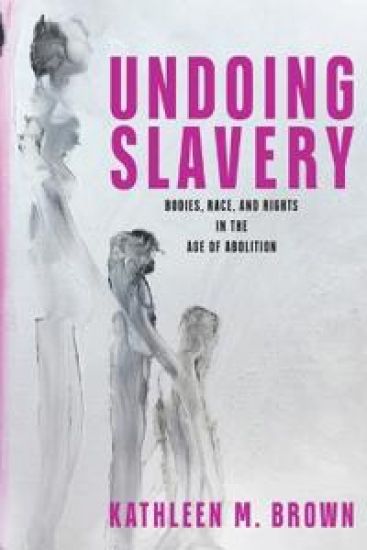
Undoing Slavery excavates cultural, political, medical, and legal history to understand the abolitionist focus on the body on its own terms. Motivated by their conviction that the physical form of the human body was universal and faced with the growing racism of eighteenth- and nineteenth-century science, abolitionists in North America and Britain focused on undoing slavery's harm to the bodies of the enslaved. Their pragmatic focus on restoring the bodily integrity and wellbeing of enslaved people threw up many unexpected challenges. This book explores those challenges. Slavery exploited the bodies of men and women differently: enslaved women needed to be acknowledged as mothers rather than as reproducers of slave property, and enslaved men needed to claim full adult personhood without triggering white fears about their access to male privilege. Slavery's undoing became more fraught by the 1850s, moreover, as federal Fugitive Slave Law and racist medicine converged. The reach of the federal government across the borders of free states and theories about innate racial difference collapsed the distinctions between enslaved and emancipated people of African descent, making militant action necessary. Escaping to so-called "free" jurisdictions, refugees from slavery demonstrated that a person could leave the life of slavery behind. But leaving behind the enslaved body, the fleshy archive of trauma and injury, proved impossible. Bodies damaged by slavery needed urgent physical care as well as access to medical knowledge untainted by racist science. As the campaign to end slavery revealed, legal rights alone, while necessary, were not sufficient either to protect or heal the bodies of African-descended people from the consequences of slavery and racism.
Undoing Slavery

Undoing Slavery

Kathleen M. Brown

UNIVERSITY OF PENNSYLVANIA PRESS
2023
sidottu
Undoing Slavery excavates cultural, political, medical, and legal history to understand the abolitionist focus on the body on its own terms. Motivated by their conviction that the physical form of the human body was universal and faced with the growing racism of eighteenth- and nineteenth-century science, abolitionists in North America and Britain focused on undoing slavery's harm to the bodies of the enslaved. Their pragmatic focus on restoring the bodily integrity and wellbeing of enslaved people threw up many unexpected challenges. This book explores those challenges. Slavery exploited the bodies of men and women differently: enslaved women needed to be acknowledged as mothers rather than as reproducers of slave property, and enslaved men needed to claim full adult personhood without triggering white fears about their access to male privilege. Slavery's undoing became more fraught by the 1850s, moreover, as federal Fugitive Slave Law and racist medicine converged. The reach of the federal government across the borders of free states and theories about innate racial difference collapsed the distinctions between enslaved and emancipated people of African descent, making militant action necessary. Escaping to so-called "free" jurisdictions, refugees from slavery demonstrated that a person could leave the life of slavery behind. But leaving behind the enslaved body, the fleshy archive of trauma and injury, proved impossible. Bodies damaged by slavery needed urgent physical care as well as access to medical knowledge untainted by racist science. As the campaign to end slavery revealed, legal rights alone, while necessary, were not sufficient either to protect or heal the bodies of African-descended people from the consequences of slavery and racism.
Preparing Future Leaders for Social Justice

Preparing Future Leaders for Social Justice

Kathleen M. Brown; Haim Shaked

Rowman Littlefield
2018
sidottu
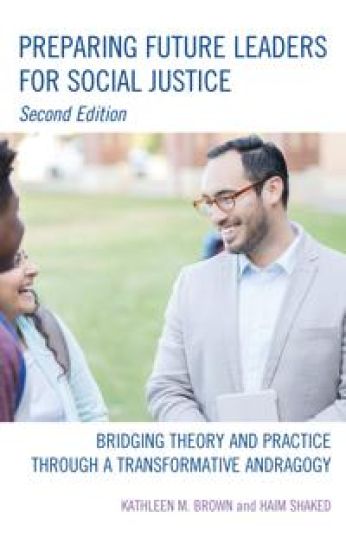
In today's Western school systems, white, straight, middle-class and physically-able students reach higher achievements, drop out less, and have a greater chance of learning in higher education institutions than their counterparts who do not possess these characteristics. While many agree that theory, research and practice should be intertwined to support the type of schooling (and society) that values rather than marginalizes, few scholars offer ground-breaking, pragmatic approaches to developing truly transformative leaders. The purpose of this book is to offer a practical, process-oriented model aimed at helping educational leaders to perceive social, political, and economic contradictions and then to take action against the oppressive elements of reality. To this end, this book utilizes transformative andragogy, which leads to a new way of seeing and a new way of being. It is the art and science of helping others to think critically and act responsibly, to examine beliefs, to accept, reject or modify values, and to engage in activism and advocacy with and for others. Therefore, this book is of great value to those who wish to prepare tomorrow's school leaders for their role as promoters of social justice and excellence.
Preparing Future Leaders for Social Justice

Preparing Future Leaders for Social Justice

Kathleen M. Brown; Haim Shaked

Rowman Littlefield
2018
nidottu
In today's Western school systems, white, straight, middle-class and physically-able students reach higher achievements, drop out less, and have a greater chance of learning in higher education institutions than their counterparts who do not possess these characteristics. While many agree that theory, research and practice should be intertwined to support the type of schooling (and society) that values rather than marginalizes, few scholars offer ground-breaking, pragmatic approaches to developing truly transformative leaders. The purpose of this book is to offer a practical, process-oriented model aimed at helping educational leaders to perceive social, political, and economic contradictions and then to take action against the oppressive elements of reality. To this end, this book utilizes transformative andragogy, which leads to a new way of seeing and a new way of being. It is the art and science of helping others to think critically and act responsibly, to examine beliefs, to accept, reject or modify values, and to engage in activism and advocacy with and for others. Therefore, this book is of great value to those who wish to prepare tomorrow's school leaders for their role as promoters of social justice and excellence.
Foul Bodies

Foul Bodies

Kathleen M. Brown

Yale University Press
2011
pokkari
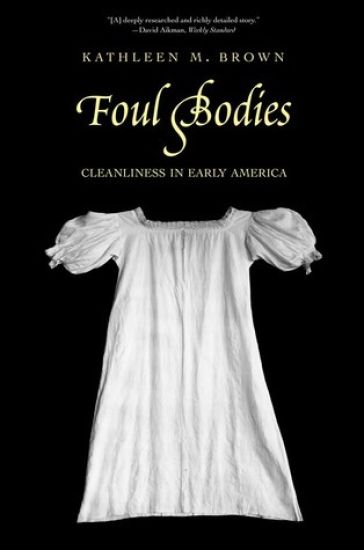
In colonial times few Americans bathed regularly; by the mid-1800s, a cleanliness “revolution” had begun. Why this change, and what did it signify? "It is the author's ability to appreciate and represent the almost tactile circumstantiality of life that makes Foul Bodies so special—and so readable."—Charles E. Rosenberg, author of Our Present Complaint: American Medicine, Then and Now "Brown has framed an intriguing new area of research and gathered a surprisingly rich source of textual evidence. Marvelous."—Laurel Thatcher Ulrich, author of A Midwife's Tale: The Life of Martha Ballard, Based on Her Diary, 1785-1812 A nation’s standards of private cleanliness reveal much about its ideals of civilization, fears of disease, and expectations for public life, says Kathleen Brown in this award-winning cultural history. Starting with the shake-up of European practices that coincided with Atlantic expansion, she traces attitudes toward “dirt” through the mid-nineteenth century, demonstrating that cleanliness—and the lack of it—had moral, religious, and often sexual implications. Brown contends that care of the body is not simply a private matter but an expression of cultural ideals that reflect the fundamental values of a society. The book explores early America’s evolving perceptions of cleanliness, along the way analyzing the connections between changing public expectations for appearance and manners, and the backstage work of grooming, laundering, and housecleaning performed by women. Brown provides an intimate view of cleanliness practices and how such forces as urbanization, immigration, market conditions, and concerns about social mobility influenced them. Broad in historical scope and imaginative in its insights, this book expands the topic of cleanliness to encompass much larger issues, including religion, health, gender, class, and race relations.
Quick Reference to Adult and Older Adult Forensics

Quick Reference to Adult and Older Adult Forensics

Kathleen M. Brown; Mary E. Muscari

Springer Publishing Co Inc
2010
nidottu
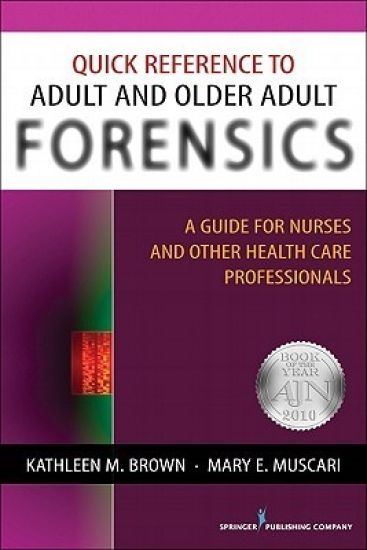
2010 AJN Book of the Year Award Winner in Gerontologic Nursing! "[This book] is a wonderful guide to adult and elder forensics, and an important reference for all health care providers who care for adults and the elderely... Highly recommended. --CHOICE It's about time this book was written! While excellent instructional texts exist, this book fills a niche for the nonspecialty health professional encountering victims of violence in the routine course of carevñThis book should not only be on the shelf in every ED, but also in the armamentarium of providers working in the outpatient setting; public health clinics; residential facilitiesvñand student health clinics." --AJN Nurses and other health care professionals who work with victims and perpetrators of violence are often confronted with issues that they may not have prior training in, such as identifying and managing victims of violent crime. This book is designed to serve as a quick resource for practicing health care providers treating adults and older adults, as well as students or practitioners new to the field. The book not only has full descriptions of principles of evidence, but also offers detailed guidelines on how to conduct a forensic assessment of adults and older adults. Additionally, the authors examine the concepts of competency and guardianship, and provide guidelines for navigating the justice system. The authors provide current, concise, and easy-to-use information in short chapters that assist practitioners with the prevention of crimes and the identification and management of both victims and offenders. Key features: Presents general principles of forensics, such as assessment and documentation, principles of evidence, and expert witness testimony Covers a wide range of classes of adult victims, including victims of intimate partner violence, human trafficking, stalking, and sexual assault Discusses various types of offenders, such as long-term offenders, those in correctional facilities, abusive parents, and female offenders Includes a section on unnatural deaths, covering suicide, homicide, and medicolegal death investigation