Kirjojen hintavertailu – 12 859 827 kirjaa ja 27 kauppaa

Kirjailija

Kathryn a Edwards

Kirjat ja teokset yhdessä paikassa: 8 kirjaa, julkaisuja vuosilta 2015–2024, suosituimpiin kuuluu Challenges and Opportunities for the Puerto Rico Economy. Vertaile teosten hintoja ja tarkista saatavuus suomalaisista kirjakaupoista.

Nimi esiintyy myös muodoissa: Kathryn A. Edwards

8 kirjaa

Kirjojen julkaisuvuodet: 2015–2024.

Everyday Magic in Early Modern Europe

Everyday Magic in Early Modern Europe

Kathryn A. Edwards

TAYLOR FRANCIS LTD
2024
nidottu
While pre-modern Europe is often seen as having an 'enchanted' or 'magical' worldview, the full implications of such labels remain inconsistently explored. Witchcraft, demonology, and debates over pious practices have provided the main avenues for treating those themes, but integrating them with other activities and ideas seen as forming an enchanted Europe has proven to be a much more difficult task. This collection offers one method of demystifying this world of everyday magic. Integrating case studies and more theoretical responses to the magical and preternatural, the authors here demonstrate that what we think of as extraordinary was often accepted as legitimate, if unusual, occurrences or practices. In their treatment of and attitudes towards spirit-assisted treasure-hunting, magical recipes, trials for sanctity, and visits by guardian angels, early modern Europeans showed more acceptance of and comfort with the extraordinary than modern scholars frequently acknowledge. Even witchcraft could be more pervasive and less threatening than many modern interpretations suggest. Magic was both mundane and mysterious in early modern Europe, and the witches who practiced it could in many ways be quite ordinary members of their communities. The vivid cases described in this volume should make the reader question how to distinguish the ordinary and extraordinary and the extent to which those terms need to be redefined for an early modern context. They should also make more immediate a world in which magic was an everyday occurrence.

Benchmarks for Success

Benchmarks for Success

Kathryn a Edwards

RAND
2021
nidottu
The National Guard Youth ChalleNGe program is a residential, quasi-military program for youths ages 16 to 18 who are experiencing difficulty in traditional high school. This research provides ChalleNGe sites with a set of population benchmarks of individual outcomes with which to compare their cadets. The author develops these benchmarks using data from large public datasets.
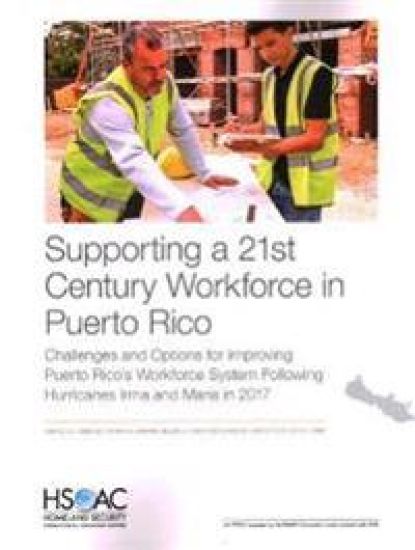
Supporting a 21st Century Workforce in Puerto Rico

Supporting a 21st Century Workforce in Puerto Rico

Gabriella C Gonzalez; Kathryn a Edwards; Melanie A Zaber; Megan Andrew; Aaron Strong; Craig A Bond

RAND
2020
nidottu
A strategic goal of the post-hurricane recovery plan for Puerto Rico is developing a modern workforce. Authors describe a course of action for a workforce development system that addresses workforce shortages and brings longer-term benefits to individuals, the community, and the economy. This system includes strong K through postsecondary education and career pathways, and aligns training with the evolving labor market and local business needs.
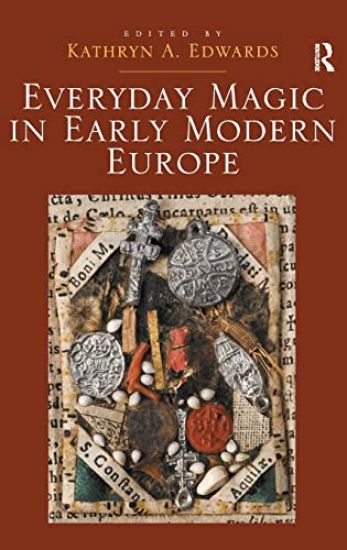
Everyday Magic in Early Modern Europe

Everyday Magic in Early Modern Europe

Kathryn A. Edwards

Routledge
2015
sidottu
While pre-modern Europe is often seen as having an 'enchanted' or 'magical' worldview, the full implications of such labels remain inconsistently explored. Witchcraft, demonology, and debates over pious practices have provided the main avenues for treating those themes, but integrating them with other activities and ideas seen as forming an enchanted Europe has proven to be a much more difficult task. This collection offers one method of demystifying this world of everyday magic. Integrating case studies and more theoretical responses to the magical and preternatural, the authors here demonstrate that what we think of as extraordinary was often accepted as legitimate, if unusual, occurrences or practices. In their treatment of and attitudes towards spirit-assisted treasure-hunting, magical recipes, trials for sanctity, and visits by guardian angels, early modern Europeans showed more acceptance of and comfort with the extraordinary than modern scholars frequently acknowledge. Even witchcraft could be more pervasive and less threatening than many modern interpretations suggest. Magic was both mundane and mysterious in early modern Europe, and the witches who practiced it could in many ways be quite ordinary members of their communities. The vivid cases described in this volume should make the reader question how to distinguish the ordinary and extraordinary and the extent to which those terms need to be redefined for an early modern context. They should also make more immediate a world in which magic was an everyday occurrence.