Kirjojen hintavertailu – 12 903 725 kirjaa ja 27 kauppaa

Kirjailija

Kathryn Sikkink

Kirjat ja teokset yhdessä paikassa: 6 kirjaa, julkaisuja vuosilta 2011–2021, suosituimpiin kuuluu International Norms, Moral Psychology, and Neuroscience. Vertaile teosten hintoja ja tarkista saatavuus suomalaisista kirjakaupoista.

6 kirjaa

Kirjojen julkaisuvuodet: 2011–2021.

International Norms, Moral Psychology, and Neuroscience

International Norms, Moral Psychology, and Neuroscience

Richard Price; Kathryn Sikkink

Cambridge University Press
2021
pokkari
Research on international norms has yet to answer satisfactorily some of our own most important questions about the origins of norms and the conditions under which some norms win out over others. The authors argue that international relations (IR) theorists should engage more with research in moral psychology and neuroscience to advance theories of norm emergence and resonance. This Element first provides an overview of six areas of research in neuroscience and moral psychology that hold particular promise for norms theorists and international relations theory more generally. It next surveys existing literature in IR to see how literature from moral psychology is already being put to use, and then recommends a research agenda for norms researchers engaging with this literature. The authors do not believe that this exchange should be a one-way street, however, and they discuss various ways in which the IR literature on norms may be of interest and of use to moral psychologists, and of use to advocacy communities.

The Hidden Face of Rights

The Hidden Face of Rights

Kathryn Sikkink

Yale University Press
2020
sidottu
Why we cannot truly implement human rights unless we also recognize human responsibilities When we debate questions in international law, politics, and justice, we often use the language of rights—and far less often the language of responsibilities. Human rights scholars and activists talk about state responsibility for rights, but they do not articulate clear norms about other actors’ obligations. In this book, Kathryn Sikkink argues that we cannot truly implement human rights unless we also recognize and practice the corresponding human responsibilities. Focusing on five areas—climate change, voting, digital privacy, freedom of speech, and sexual assault—and providing many examples of on-the-ground initiatives where people choose to embrace a close relationship between rights and responsibilities, Sikkink argues for the importance of responsibilities to any comprehensive understanding of political ethics and human rights.
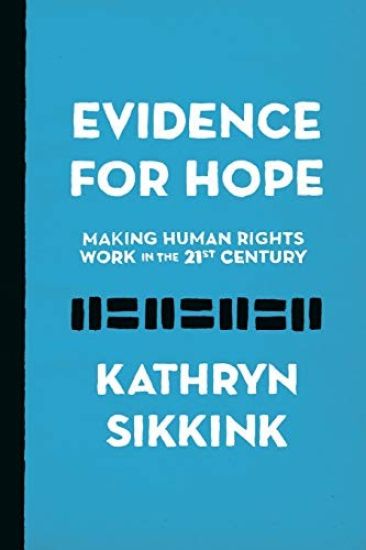
Evidence for Hope

Evidence for Hope

Kathryn Sikkink

Princeton University Press
2019
pokkari

Halvin toimitettuna 33,50 €

A history of the successes of the human rights movement and a case for why human rights workEvidence for Hope makes the case that yes, human rights work. Critics may counter that the movement is in serious jeopardy or even a questionable byproduct of Western imperialism. Guantánamo is still open and governments are cracking down on NGOs everywhere. But human rights expert Kathryn Sikkink draws on decades of research and fieldwork to provide a rigorous rebuttal to doubts about human rights laws and institutions. Past and current trends indicate that in the long term, human rights movements have been vastly effective. Exploring the strategies that have led to real humanitarian gains since the middle of the twentieth century, Evidence for Hope looks at how essential advances can be sustained for decades to come.
Evidence for Hope

Evidence for Hope

Kathryn Sikkink

PRINCETON UNIVERSITY PRESS
2017
sidottu

Halvin toimitettuna 43,20 €

A history of the successes of the human rights movement and a case for why human rights work Evidence for Hope makes the case that, yes, human rights work. Critics may counter that the movement is in serious jeopardy or even a questionable byproduct of Western imperialism. They point out that Guantanamo is still open, the Arab Spring protests have been crushed, and governments are cracking down on NGOs everywhere. But respected human rights expert Kathryn Sikkink draws on decades of research and fieldwork to provide a rigorous rebuttal to the pessimistic doubts about human rights laws and institutions. She demonstrates that change comes slowly and as the result of struggle, but in the long term, human rights movements have been vastly effective. Attacks on the human rights movement's credibility are based on the faulty premise that human rights ideas emerged in North America and Europe and were imposed on developing southern nations. Starting in the 1940s, Latin American leaders and activists were actually early advocates for the international protection of human rights. Sikkink shows that activists and scholars disagree about the efficacy of human rights because they use different yardsticks to measure progress. Comparing the present to the past, she shows that genocide and violence against civilians have declined over time, while access to healthcare and education has increased dramatically. Cognitive and news biases contribute to pervasive cynicism, but Sikkink's investigation into past and current trends indicates that human rights is not in its twilight. Instead, this is a period of vibrant activism that has made impressive improvements in human well-being. Exploring the strategies that have led to real humanitarian gains since the middle of the twentieth century, Evidence for Hope looks at how these essential advances can be supported and sustained for decades to come.
The Justice Cascade

The Justice Cascade

Kathryn Sikkink

WW Norton Co
2013
nidottu
Esteemed international relations scholar Kathryn Sikkink offers a landmark argument for human rights prosecutions as a powerful political tool. She shows how, in just three decades, state leaders in Latin America, Europe, and Africa have lost their immunity from any accountability for their human rights violations, becoming the subjects of highly publicized trials resulting in severe consequences. This shift is affecting the behavior of political leaders worldwide and may change the face of global politics as we know it. Sikkink presents her groundbreaking quantitative research to analyze the effects this “justice cascade” has had on democracy, conflict, and repression and reveals what political and social conditions are and aren’t required for human rights trials to be effective. Engaging, analytical, and prescient, The Justice Cascade is a perfect book for international relations and human rights courses.
The Justice Cascade

The Justice Cascade

Kathryn Sikkink

WW Norton Co
2011
sidottu
Grawemeyer Award winner Kathryn Sikkink offers a landmark argument for human rights prosecutions as a powerful political tool. She shows how, in just three decades, state leaders in Latin America, Europe, and Africa have lost their immunity from any accountability for their human rights violations, becoming the subjects of highly publicized trials resulting in severe consequences. This shift is affecting the behavior of political leaders worldwide and may change the face of global politics as we know it. Drawing on extensive research and illuminating personal experience, Sikkink reveals how the stunning emergence of human rights prosecutions has come about; what effect it has had on democracy, conflict, and repression; and what it means for leaders and citizens everywhere, from Uruguay to the United States. The Justice Cascade is a vital read for anyone interested in the future of world politics and human rights.