Kirjojen hintavertailu – 12 859 818 kirjaa ja 27 kauppaa

Kirjailija

Kathryn Sutherland

Kirjat ja teokset yhdessä paikassa: 13 kirjaa, julkaisuja vuosilta 1998–2025, suosituimpiin kuuluu Cara's Letters. Vertaile teosten hintoja ja tarkista saatavuus suomalaisista kirjakaupoista.

13 kirjaa

Kirjojen julkaisuvuodet: 1998–2025.

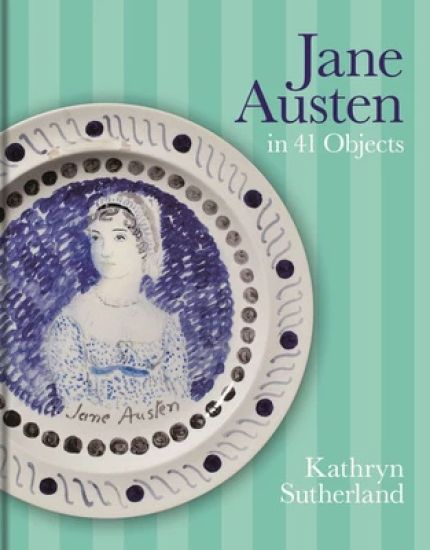
Jane Austen in 41 Objects

Jane Austen in 41 Objects

Kathryn Sutherland

BODLEIAN LIBRARY
2025
sidottu

Halvin toimitettuna 29,20 €

More than 200 years after Jane Austen’s death at the age of just forty-one, we are still looking for clues about this extraordinary writer’s life. What might we learn if we take a glimpse inside the biographies of objects that crossed her path in life and afterwards – things that she cherished or cast aside, or that furnished the world in which she moved, or that have themselves been inspired by her legacy? Among objects described in this book are a teenage notebook, a muslin shawl, a wallpaper fragment, a tea caddy, the theatrical poster for a play she attended and the dining-room grate at Chawton Cottage where she lived. Poignantly, the last manuscript page of her unfinished novel and a lock of hair kept by her devoted sister, Cassandra, are also featured. Objects contributing to Jane Austen’s rich cultural legacy include a dinner plate decorated by Bloomsbury artists Vanessa Bell and Duncan Grant, Grayson Perry’s commemorative pot from 2009 and Mr Darcy’s wet shirt, worn by Colin Firth in the 1995 BBC adaptation. This is a different kind of biography, in which objects with their own histories offer shifting entry points into Jane Austen’s life. Each object – illustrated in colour – invites us to meet Jane Austen at a particular moment when her life intersects with theirs, speaking eloquently of past lives and shedding new light on one of our best-loved authors.
Why Modern Manuscripts Matter

Why Modern Manuscripts Matter

Kathryn Sutherland

Oxford University Press
2022
sidottu
This is a study of the politics, the commerce, and the aesthetics of heritage culture in the shape of authors' manuscripts. Draft or working manuscripts survive in quantity from the eighteenth century when, with the rise of print, readers learnt to value 'the hand' as an index of individuality and the blotted page, criss-crossed by deletion and revision, as a sign of genius. Since then, collectors have fought over manuscripts, libraries have curated them, the rich have stashed them away in investment portfolios, students have squeezed meaning from them, and we have all stared at them behind exhibition glass. Why do we trade them, conserve them, and covet them? Most, after all, are just the stuff left over after the novel or book of poetry goes into print. Poised on the boundary where precious treasure becomes abject waste, litter, and mess, modern literary manuscripts hover between riches and rubbish. In a series of case studies, this book explores manuscript's expressive agency and its capacity to provoke passion--a capacity ever more to the fore in the twenty-first century now that books are assembled via word-processing software and authors no longer leave in such quantity those paper trails behind them. It considers manuscripts as residues of meaning that print is unable to capture: manuscript as fragment art, as property, as waste paper. It asks what it might mean to re-read print in the shadow of manuscript. Case studies of Samuel Johnson, James Boswell, Walter Scott, Frances Burney, and Jane Austen--writers from the first great period of manuscript survival--are interspersed with discussions of William Godwin's record keeping, the Cairo genizah, Katie Paterson's 'Future Library' project, Andy Warhol's and Muriel Spark's self-archiving, Cornelia Parker's reclamation art, and more.
Transferred Illusions

Transferred Illusions

Marilyn Deegan; Kathryn Sutherland

Routledge
2016
nidottu
This is a study of the forms and institutions of print - newspapers, books, scholarly editions, publishing, libraries - as they relate to and are changed by emergent digital forms and institutions. In the early 1990s hypertext was briefly hailed as a liberating writing tool for non-linear creation. Fast forward no more than a decade, and we are reading old books from screens. It is, however, the newspaper, for around two hundred years print's most powerful mass vehicle, whose economy persuasively shapes its electronic remediation through huge digitization initiatives, dominated by a handful of centralizing service providers, funded and wrapped round by online advertising. The error is to assume a culture of total replacement. The Internet is just another information space, sharing characteristics that have always defined such spaces - wonderfully effective and unstable, loaded with valuable resources and misinformation; that is, both good and bad. This is why it is important that writers, critics, publishers and librarians - in modern parlance, the knowledge providers - be critically engaged in shaping and regulating cyberspace, and not merely the passive instruments or unreflecting users of the digital tools in our hands.
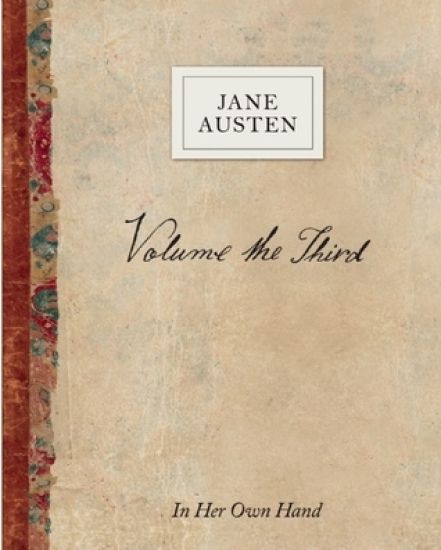
Volume the Third by Jane Austen

Volume the Third by Jane Austen

Jane Austen; Kathryn Sutherland

Abbeville Press Inc.,U.S.
2014
sidottu
Forever immortalised as the author of Pride and Prejudice, Jane Austen actually produced her first 'books' as a teenager. Taking their names from the inscriptions on their covers - Volume the First, Volume the Second, and Volume the Third - these brilliant little collections include the stories, playlets, verses, and moral fragments she wrote likely from the ages of 12 to 18. As a young author, Jane Austen delighted in language, employing it with great humour and surprising skill. She was adept at parodying the popular stories of her day and entertained her readers with outrageous plotlines and characters. Kathryn Sutherland places Austen's earliest works in context and explains how she mimicked even the style and manner in which this contemporary popular fiction was presented and arranged on the page. Volume the Third, written when Austen was 16, includes two stories: Evelyn and Kitty, or the Bower (or 'Catharine'). The manuscript is also held at the British Library. This volume includes text written by her niece, Anna Lefroy, who contributes an addition to Evelyn. None of her six famous novels survives in complete manuscript form. This is a unique opportunity to own likenesses of Jane Austen's notebooks as originally written - in her own hand. Learn more about the other books in the In Her Own Hand series: Volume the First and Volume the Second. All three volumes are also available in the In Her Own Hand series boxed set.
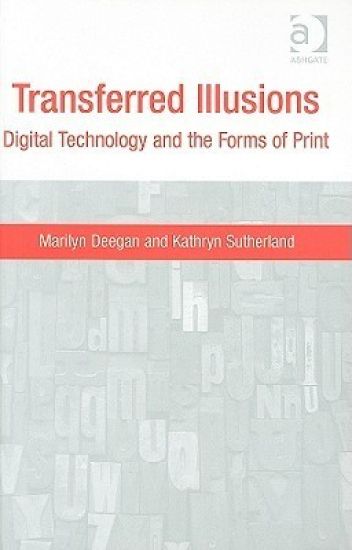
Transferred Illusions

Transferred Illusions

Marilyn Deegan; Kathryn Sutherland

Ashgate Publishing Limited
2009
sidottu
This is a study of the forms and institutions of print - newspapers, books, scholarly editions, publishing, libraries - as they relate to and are changed by emergent digital forms and institutions. In the early 1990s hypertext was briefly hailed as a liberating writing tool for non-linear creation. Fast forward no more than a decade, and we are reading old books from screens. It is, however, the newspaper, for around two hundred years print's most powerful mass vehicle, whose economy persuasively shapes its electronic remediation through huge digitization initiatives, dominated by a handful of centralizing service providers, funded and wrapped round by online advertising. The error is to assume a culture of total replacement. The Internet is just another information space, sharing characteristics that have always defined such spaces - wonderfully effective and unstable, loaded with valuable resources and misinformation; that is, both good and bad. This is why it is important that writers, critics, publishers and librarians - in modern parlance, the knowledge providers - be critically engaged in shaping and regulating cyberspace, and not merely the passive instruments or unreflecting users of the digital tools in our hands.
The Bully

The Bully

Kathryn Sutherland

Cengage Learning Australia
2001
nidottu
This story provides an opportunity for children to discuss how best to respond when being bullied. Cal, a new character to the PM Plus series, learns how to stand up for himself when he becomes the school bully's next victim.
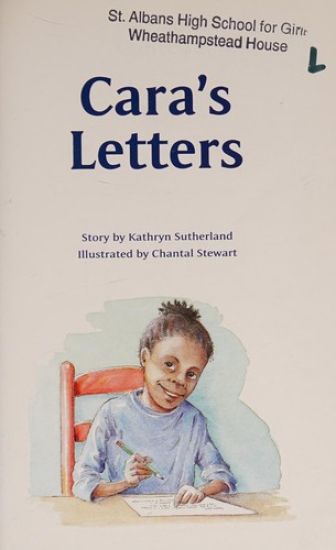
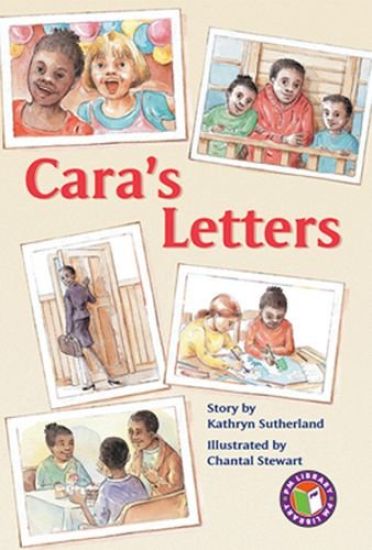
Cara's Letters

Cara's Letters

Kathryn Sutherland

Cengage Learning New Zealand
2001
nidottu
PM is a firm favourite amongst Primary Schools due to its reputation for reading success. Offering over 800 carefully levelled fiction and non-fiction books, PM builds confidence through gradual progression and step-by-step support.
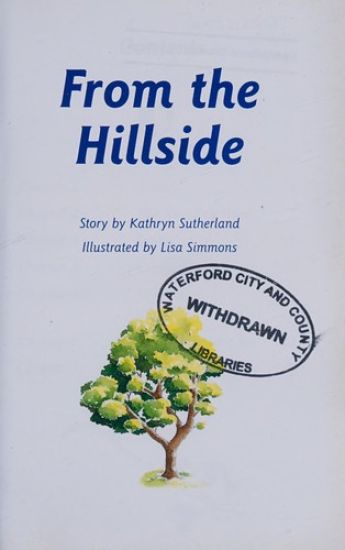
From the Hillside

From the Hillside

Kathryn Sutherland

Cengage Learning New Zealand
2001
nidottu
PM is a firm favourite amongst Primary Schools due to its reputation for reading success. Offering over 800 carefully levelled fiction and non-fiction books, PM builds confidence through gradual progression and step-by-step support.
To the Other Side

To the Other Side

Kathryn Sutherland

Cengage Learning New Zealand
2001
nidottu
PM is a firm favourite amongst Primary Schools due to its reputation for reading success. Offering over 800 carefully levelled fiction and non-fiction books, PM builds confidence through gradual progression and step-by-step support.
Swoop!

Swoop!

Kathryn Sutherland

Cengage Learning Australia
2000
nidottu
PM is a firm favourite amongst Primary Schools due to its reputation for reading success. Offering over 800 carefully levelled fiction and non-fiction books, PM builds confidence through gradual progression and step-by-step support.
Car Trouble

Car Trouble

Kathryn Sutherland

Cengage Learning New Zealand
1998
nidottu
PM is a firm favourite amongst Primary Schools due to its reputation for reading success. Offering over 800 carefully levelled fiction and non-fiction books, PM builds confidence through gradual progression and step-by-step support.