Kirjojen hintavertailu – 12 903 724 kirjaa ja 27 kauppaa

Kirjailija

Kathy A. Mills

Kirjat ja teokset yhdessä paikassa: 9 kirjaa, julkaisuja vuosilta 2010–2025, suosituimpiin kuuluu Critical Literacy in an AI World. Vertaile teosten hintoja ja tarkista saatavuus suomalaisista kirjakaupoista.

9 kirjaa

Kirjojen julkaisuvuodet: 2010–2025.

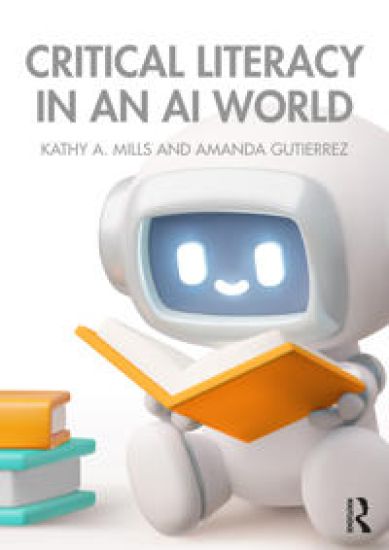
Critical Literacy in an AI World

Critical Literacy in an AI World

Kathy A. Mills; Amanda Gutierrez

TAYLOR FRANCIS LTD
2025
nidottu

Halvin toimitettuna 74,10 €

Critical Literacy in an AI World is an innovative book that uses critical literary perspectives to examine generative AI. It provides thought-provoking insights into advancements in artificial intelligence, which are increasingly entangled in human decision making across all spheres of society, profoundly reshaping literacy and media practices. Mills and Gutierrez analyse how these transformations affect and are affected by the evolving nature of human knowledge, consciousness, creativity, emotion, ethics, and aesthetics. They highlight the importance of critical literacy for understanding and even reclaiming the power dynamics operating in the social construction of the human experience within AI-driven texts and technologies. This book encourages readers to critically navigate computational algorithms and agents that mediate digital social practices and daily life. Blending theoretical frameworks and practical applications, it advances students’ critical AI-based digital reading and authoring skills, as well as teachers’ capabilities to use critical pedagogies, curricula, and assessment for reflective AI text environments. Critical Literacy in an AI World is essential reading for students and researchers in literacy and educational technology.
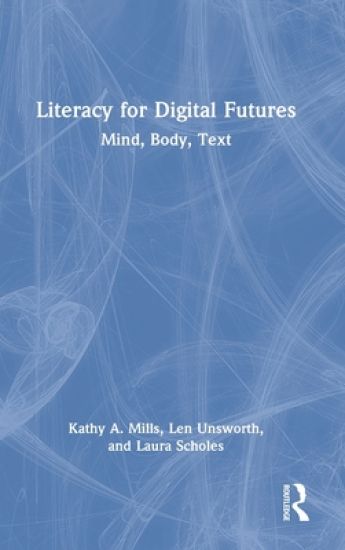
Literacy for Digital Futures

Literacy for Digital Futures

Kathy A. Mills; Len Unsworth; Laura Scholes

TAYLOR FRANCIS LTD
2022
sidottu
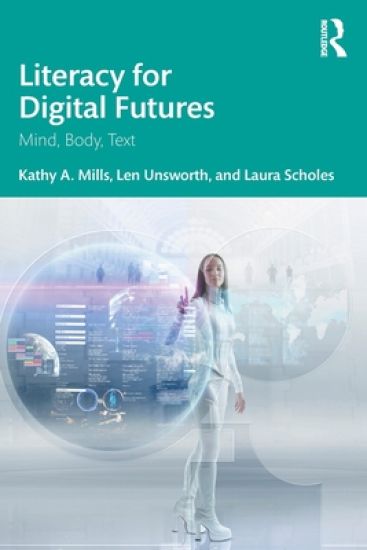
The unprecedented rate of global, technological, and societal change calls for a radical, new understanding of literacy. This book offers a nuanced framework for making sense of literacy by addressing knowledge as contextualised, embodied, multimodal, and digitally mediated. In today’s world of technological breakthroughs, social shifts, and rapid changes to the educational landscape, literacy can no longer be understood through established curriculum and static text structures. To prepare teachers, scholars, and researchers for the digital future, the book is organised around three themes – Mind and Materiality; Body and Senses; and Texts and Digital Semiotics – to shape readers’ understanding of literacy. Opening up new interdisciplinary themes, Mills, Unsworth, and Scholes confront emerging issues for next-generation digital literacy practices. The volume helps new and established researchers rethink dynamic changes in the materiality of texts and their implications for the mind and body, and features recommendations for educational and professional practice.
Literacy for Digital Futures

Literacy for Digital Futures

Kathy A. Mills; Len Unsworth; Laura Scholes

TAYLOR FRANCIS LTD
2022
nidottu
The unprecedented rate of global, technological, and societal change calls for a radical, new understanding of literacy. This book offers a nuanced framework for making sense of literacy by addressing knowledge as contextualised, embodied, multimodal, and digitally mediated. In today’s world of technological breakthroughs, social shifts, and rapid changes to the educational landscape, literacy can no longer be understood through established curriculum and static text structures. To prepare teachers, scholars, and researchers for the digital future, the book is organised around three themes – Mind and Materiality; Body and Senses; and Texts and Digital Semiotics – to shape readers’ understanding of literacy. Opening up new interdisciplinary themes, Mills, Unsworth, and Scholes confront emerging issues for next-generation digital literacy practices. The volume helps new and established researchers rethink dynamic changes in the materiality of texts and their implications for the mind and body, and features recommendations for educational and professional practice.
Big Data for Qualitative Research

Big Data for Qualitative Research

Kathy A. Mills

TAYLOR FRANCIS LTD
2022
nidottu
Big Data for Qualitative Research covers everything small data researchers need to know about big data, from the potentials of big data analytics to its methodological and ethical challenges. The data that we generate in everyday life is now digitally mediated, stored, and analyzed by web sites, companies, institutions, and governments. Big data is large volume, rapidly generated, digitally encoded information that is often related to other networked data, and can provide valuable evidence for study of phenomena. This book explores the potentials of qualitative methods and analysis for big data, including text mining, sentiment analysis, information and data visualization, netnography, follow-the-thing methods, mobile research methods, multimodal analysis, and rhythmanalysis. It debates new concerns about ethics, privacy, and dataveillance for big data qualitative researchers. This book is essential reading for those who do qualitative and mixed methods research, and are curious, excited, or even skeptical about big data and what it means for future research. Now is the time for researchers to understand, debate, and envisage the new possibilities and challenges of the rapidly developing and dynamic field of big data from the vantage point of the qualitative researcher.
Big Data for Qualitative Research

Big Data for Qualitative Research

Kathy A. Mills

Routledge
2019
sidottu
Big Data for Qualitative Research covers everything small data researchers need to know about big data, from the potentials of big data analytics to its methodological and ethical challenges. The data that we generate in everyday life is now digitally mediated, stored, and analyzed by web sites, companies, institutions, and governments. Big data is large volume, rapidly generated, digitally encoded information that is often related to other networked data, and can provide valuable evidence for study of phenomena. This book explores the potentials of qualitative methods and analysis for big data, including text mining, sentiment analysis, information and data visualization, netnography, follow-the-thing methods, mobile research methods, multimodal analysis, and rhythmanalysis. It debates new concerns about ethics, privacy, and dataveillance for big data qualitative researchers. This book is essential reading for those who do qualitative and mixed methods research, and are curious, excited, or even skeptical about big data and what it means for future research. Now is the time for researchers to understand, debate, and envisage the new possibilities and challenges of the rapidly developing and dynamic field of big data from the vantage point of the qualitative researcher.
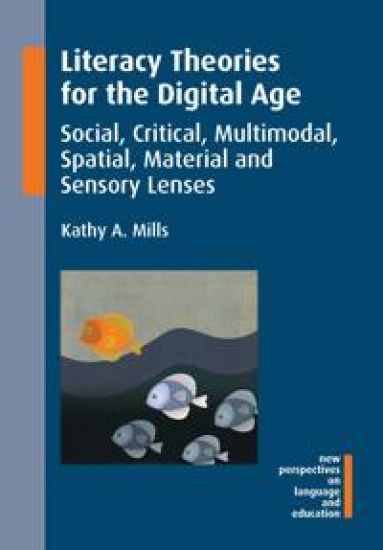
Literacy Theories for the Digital Age

Literacy Theories for the Digital Age

Kathy A. Mills

Multilingual Matters
2015
sidottu
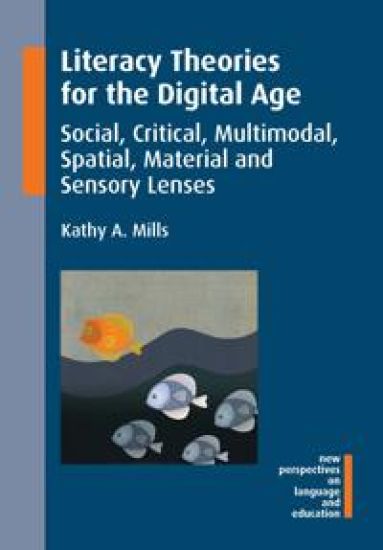
Winner of the 2017 Edward Fry Book Award from the Literacy Research Association. Literacy Theories for the Digital Age insightfully brings together six essential approaches to literacy research and educational practice. The book provides powerful and accessible theories for readers, including Socio-cultural, Critical, Multimodal, Socio-spatial, Socio-material and Sensory Literacies. The brand new Sensory Literacies approach is an original and visionary contribution to the field, coupled with a provocative foreword from leading sensory anthropologist David Howes. This dynamic collection explores a legacy of literacy research while showing the relationships between each paradigm, highlighting their complementarity and distinctions. This highly relevant compendium will inspire researchers and teachers to explore new frontiers of thought and practice in times of diversity and technological change.
Literacy Theories for the Digital Age

Literacy Theories for the Digital Age

Kathy A. Mills

Multilingual Matters
2015
nidottu
Winner of the 2017 Edward Fry Book Award from the Literacy Research Association. Literacy Theories for the Digital Age insightfully brings together six essential approaches to literacy research and educational practice. The book provides powerful and accessible theories for readers, including Socio-cultural, Critical, Multimodal, Socio-spatial, Socio-material and Sensory Literacies. The brand new Sensory Literacies approach is an original and visionary contribution to the field, coupled with a provocative foreword from leading sensory anthropologist David Howes. This dynamic collection explores a legacy of literacy research while showing the relationships between each paradigm, highlighting their complementarity and distinctions. This highly relevant compendium will inspire researchers and teachers to explore new frontiers of thought and practice in times of diversity and technological change.
The Multiliteracies Classroom

The Multiliteracies Classroom

Kathy A. Mills

Multilingual Matters
2010
nidottu
The multiliteracies approach to literacy education has become established as an accessible and effective paradigm for classroom practice in the 21st century. The Multiliteracies Classroom enlivens this theory with its vivid description of events in a real classroom. Teachers will identify with the lively transcripts of classroom interactions, and be inspired to widen students’ access to new literacy practices in an increasingly digital and globalised world. The possibilities and constraints that can be encountered when implementing multiliteracies are explored in detail. Educators know from experience that students begin their classroom journey with entirely unequal opportunities for literacy success. The Multiliteracies Classroom does not ignore this reality, highlighting the influence of society’s patterns of power on literacy learning in the digital age. Its key themes provide a blueprint for the future of literacy research and practice.
The Multiliteracies Classroom

The Multiliteracies Classroom

Kathy A. Mills

Multilingual Matters
2010
sidottu
The multiliteracies approach to literacy education has become established as an accessible and effective paradigm for classroom practice in the 21st century. The Multiliteracies Classroom enlivens this theory with its vivid description of events in a real classroom. Teachers will identify with the lively transcripts of classroom interactions, and be inspired to widen students’ access to new literacy practices in an increasingly digital and globalised world. The possibilities and constraints that can be encountered when implementing multiliteracies are explored in detail. Educators know from experience that students begin their classroom journey with entirely unequal opportunities for literacy success. The Multiliteracies Classroom does not ignore this reality, highlighting the influence of society’s patterns of power on literacy learning in the digital age. Its key themes provide a blueprint for the future of literacy research and practice.