

Kirjailija
Katrina Brown
Kirjat ja teokset yhdessä paikassa: 11 kirjaa, julkaisuja vuosilta 1994–2026, suosituimpiin kuuluu Cat School. Vertaile teosten hintoja ja tarkista saatavuus suomalaisista kirjakaupoista.
11 kirjaa
Kirjojen julkaisuvuodet: 1994–2026.
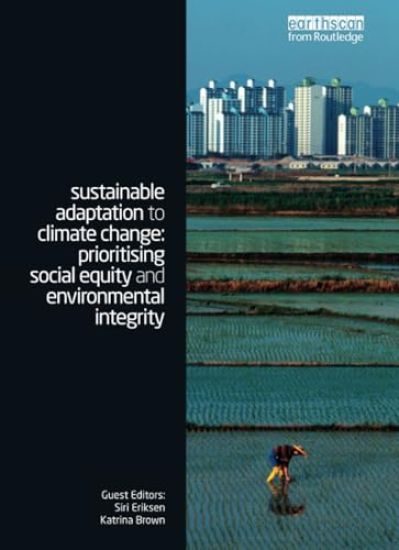
Sustainable Adaptation to Climate Change
Katrina Brown; Siri Eriksen
TAYLOR FRANCIS LTD
2024
nidottu
This book sets out how to ensure that adaptation efforts are socially and environmentally sustainable, contributing to poverty reduction as well as confronting the processes driving vulnerability. Over $100 billion a year is pledged to help finance adaptation projects via the The Climate Adaptation Fund. These projects and their funding played a central role in the latest climate talks in Cancun, Mexico, ensuring that adaptation to climate change will be an international priority over the next few decades. Many existing adaptation projects are however, not environmentally or socially sustainable. Adaptation projects that focus on reducing specific climate sensitivities can, even if bringing benefits, adversely affect vulnerable groups and create social inequity, or even unintentionally undermine environmental integrity. Sustainable Adaptation to Climate Change examines how adaptation to climate change (types of measures, policy frameworks, and local household strategies) interacts with social and environmental sustainability. A mixture of conceptual and case study-based papers draw on research from Europe, Asia and Africa. It will be of interest to all researchers and policymakers in climate change adaptation and development.
A definition of sustainable development is that of the Brundtland Commission - ...development which meets the needs of the current generation without jeopardizing the needs of future generations. This volume seeks to analyze the economic basis for this definition, and to look at the critiques of the economic approach - which have their basis in growing disquiet over the role of the productive normative science driving technological change and economic transformation. The discussion is followed by studies of the application of the criteria of sustainability to rural problems in South Asia, Kenya, Nepal, and Latin America and to urban/industrial problems in Jamaica, Chile and Vietnam.
Resilience is currently infusing policy debates and public discourses, widely promoted as a normative goal in fields as diverse as the economy, national security, personal development and well-being. Resilience thinking provides a framework for understanding dynamics of complex, inter-connected social, ecological and economic systems. The book critically analyzes the multiple meanings and applications of resilience ideas in contemporary society and to suggests where, how and why resilience might cause us to re-think global change and development, and how this new approach might be operationalized. The book shows how current policy discourses on resilience promote business-as-usual rather than radical responses to change. But it argues that resilience can help understand and respond to the challenges of the contemporary age. These challenges are characterized by high uncertainty; globalized and interconnected systems; increasing disparities and limited choices. Resilience thinking can overturn orthodox approaches to international development dominated by modernization, aid dependency and a focus on economic growth and to global environmental change – characterized by technocratic approaches, market environmentalism and commoditization of ecosystem services. Resilience, Development and Global Change presents a sophisticated, theoretically informed synthesis of resilience thinking across disciplines. It applies resilience ideas specifically to international development and relates resilience to core theories in development and shows how a radical, resilience-based approach to development might transform responses to climate change, to the dilemmas of managing forests and ecosystems, and to rural and urban poverty in the developing world. The book provides fresh perspectives for scholars of international development, environmental studies and geography and add new dimensions for those studying broader fields of ecology and society.
Resilience is currently infusing policy debates and public discourses, widely promoted as a normative goal in fields as diverse as the economy, national security, personal development and well-being. Resilience thinking provides a framework for understanding dynamics of complex, inter-connected social, ecological and economic systems. The book critically analyzes the multiple meanings and applications of resilience ideas in contemporary society and to suggests where, how and why resilience might cause us to re-think global change and development, and how this new approach might be operationalized. The book shows how current policy discourses on resilience promote business-as-usual rather than radical responses to change. But it argues that resilience can help understand and respond to the challenges of the contemporary age. These challenges are characterized by high uncertainty; globalized and interconnected systems; increasing disparities and limited choices. Resilience thinking can overturn orthodox approaches to international development dominated by modernization, aid dependency and a focus on economic growth and to global environmental change – characterized by technocratic approaches, market environmentalism and commoditization of ecosystem services. Resilience, Development and Global Change presents a sophisticated, theoretically informed synthesis of resilience thinking across disciplines. It applies resilience ideas specifically to international development and relates resilience to core theories in development and shows how a radical, resilience-based approach to development might transform responses to climate change, to the dilemmas of managing forests and ecosystems, and to rural and urban poverty in the developing world. The book provides fresh perspectives for scholars of international development, environmental studies and geography and add new dimensions for those studying broader fields of ecology and society.
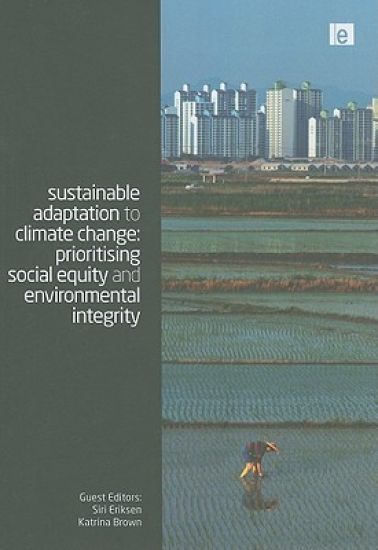
This book sets out how to ensure that adaptation efforts are socially and environmentally sustainable, contributing to poverty reduction as well as confronting the processes driving vulnerability. Over $100 billion a year is pledged to help finance adaptation projects via the The Climate Adaptation Fund. These projects and their funding played a central role in the latest climate talks in Cancun, Mexico, ensuring that adaptation to climate change will be an international priority over the next few decades. Many existing adaptation projects are however, not environmentally or socially sustainable. Adaptation projects that focus on reducing specific climate sensitivities can, even if bringing benefits, adversely affect vulnerable groups and create social inequity, or even unintentionally undermine environmental integrity. Sustainable Adaptation to Climate Change examines how adaptation to climate change (types of measures, policy frameworks, and local household strategies) interacts with social and environmental sustainability. A mixture of conceptual and case study-based papers draw on research from Europe, Asia and Africa. It will be of interest to all researchers and policymakers in climate change adaptation and development.

This text demonstrates new methods for the management of natural resources, showing how to integrate conservation goals with development. The methods are applied to coastal zones - where population and economic pressues often conflict acutely with fragile and diverse ecosystems.

Coastal zones are critical multiple-use resources, under pressure from constant demands from different sources - conservation, economic growth and social welfare. This book identifies the dilemmas of managing conservation and development in coastal areas. It offers important information on the management, conservation and social implications of coastal resources. The authors present a variety of participatory methods and techniques that can be used to show the success or otherwise of the different uses and how they affect the users. Their interdisciplinary analysis draws upon scientific knowledge as well as the latest social science insights on property rights and governance. The book is intended for researchers and students in geography, development studies and environmental planning, and also for practitioners in natural resource management and coastal zone management.

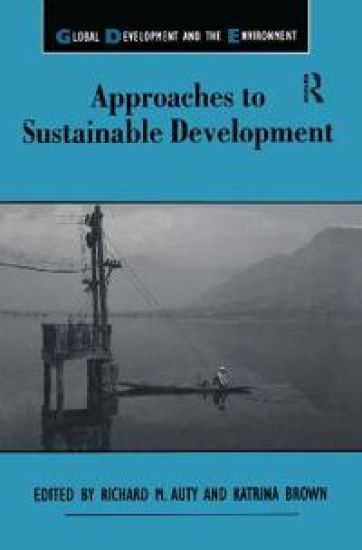
A definition of sustainable development is that of the Brundtland Commission - ...development which meets the needs of the current generation without jeopardizing the needs of future generations. This volume seeks to analyze the economic basis for this definition, and to look at the critiques of the economic approach - which have their basis in growing disquiet over the role of the productive normative science driving technological change and economic transformation. The discussion is followed by studies of the application of the criteria of sustainability to rural problems in South Asia, Kenya, Nepal, and Latin America and to urban/industrial problems in Jamaica, Chile and Vietnam.
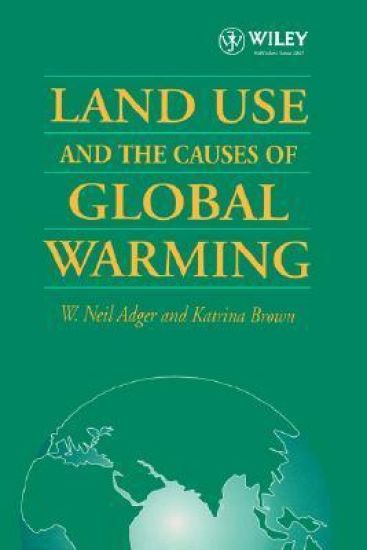
Land Use and the Causes of Global Warming
W. Neil Adger; Katrina Brown
John Wiley Sons Inc
1994
sidottu
Global watming through the enhanced greehouse effect is one of themajor and most uncertain forces of global environmental changepresently facing the earth. This book is a guide to the scientificand policy debate concerning the roles of agriculture, forestry andother activities leading to global warming. The influence of landuse on the greehouse effect is important, not only in terms of netemissions of greenhouse gases, but also in the potential to reduceemissions through changing land use policies. Land Use and the Causes of Global Warming reviews the globalemissions of greenhouse gases from land use sources, highlightingthe undertainties in estimating both the magnitude of the fluxesand the scale of land use change. Policies of afforestation,policies to encourage the halting of deforestation and changingmanagement pravctices in agriculture are all examined from theperspectives of feasibility, cost and equity. The authorsillustrate how all land use policies are multi-objective but thatthe reduction of grenhouse gas emissions must be a key element inforestry and agriculture policy on a global bais. This is aninvaluable book for all thoe in the climate change researchcommunity, environmental scientits, economists and social scientitsin research institutions.