Kirjojen hintavertailu – 12 903 742 kirjaa ja 27 kauppaa

Kirjailija

Kay Lehman Schlozman

Kirjat ja teokset yhdessä paikassa: 9 kirjaa, julkaisuja vuosilta 1981–2025, suosituimpiin kuuluu What's Happened to the Gender Gap in Political Activity?. Vertaile teosten hintoja ja tarkista saatavuus suomalaisista kirjakaupoista.

9 kirjaa

Kirjojen julkaisuvuodet: 1981–2025.

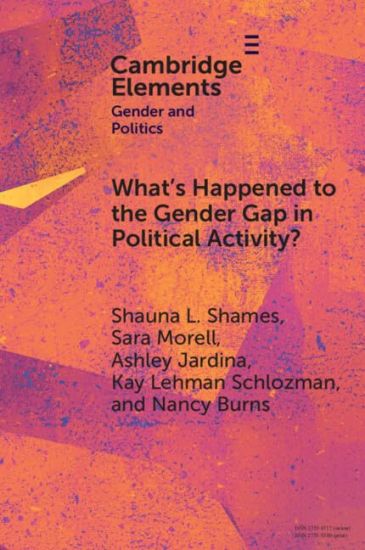
What's Happened to the Gender Gap in Political Activity?

What's Happened to the Gender Gap in Political Activity?

Shauna L. Shames; Sara Morell; Ashley Jardina; Kay Lehman Schlozman; Nancy Burns

Cambridge University Press
2025
pokkari
This Element considers recent changes to the long-standing pattern in US politics that women are less politically active than men. On one hand, the gender gap in political activity beyond voting has disappeared. On the other, the disparity remains when it comes to political money. What is the explanation? The Element begins with politics – both the long-term increase in women occupying political positions and the way that trends/events like MeToo, the defeat of Hillary Clinton, and Donald Trump's performative masculinity made gender salient. It then turns to social structural changes, examining in particular women's relative gains in income and, especially, education. Paying consistent attention to intersectional differences among men and among women, whether based on political party, race, or ethnicity, the authors find the explanation of these trends to be rooted not in politics, but rather in social structure. This title is also available as Open Access on Cambridge Core.
What's Happened to the Gender Gap in Political Activity?

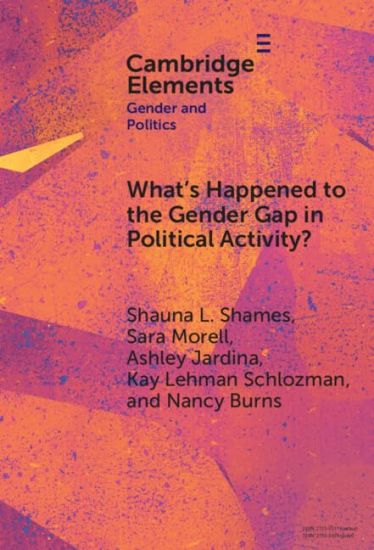
What's Happened to the Gender Gap in Political Activity?

Shauna L. Shames; Sara Morell; Ashley Jardina; Kay Lehman Schlozman; Nancy Burns

Cambridge University Press
2025
sidottu
This Element considers recent changes to the long-standing pattern in US politics that women are less politically active than men. On one hand, the gender gap in political activity beyond voting has disappeared. On the other, the disparity remains when it comes to political money. What is the explanation? The Element begins with politics – both the long-term increase in women occupying political positions and the way that trends/events like MeToo, the defeat of Hillary Clinton, and Donald Trump's performative masculinity made gender salient. It then turns to social structural changes, examining in particular women's relative gains in income and, especially, education. Paying consistent attention to intersectional differences among men and among women, whether based on political party, race, or ethnicity, the authors find the explanation of these trends to be rooted not in politics, but rather in social structure. This title is also available as Open Access on Cambridge Core.
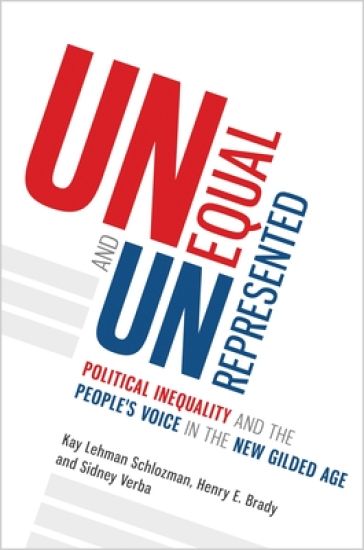
Unequal and Unrepresented

Unequal and Unrepresented

Kay Lehman Schlozman; Henry E. Brady; Sidney Verba

Princeton University Press
2020
pokkari
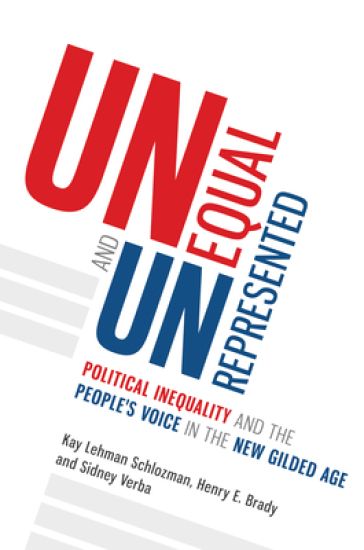
How American political participation is increasingly being shaped by citizens who wield more resourcesThe Declaration of Independence proclaims equality as a foundational American value. However, Unequal and Unrepresented finds that political voice in America is not only unequal but also unrepresentative. Those who are well educated and affluent carry megaphones. The less privileged speak in a whisper. Relying on three decades of research and an enormous wealth of information about politically active individuals and organizations, Kay Schlozman, Henry Brady, and Sidney Verba offer a concise synthesis and update of their groundbreaking work on political participation. The authors consider the many ways that citizens in American democracy can influence public outcomes through political voice: by voting, getting involved in campaigns, communicating directly with public officials, participating online or offline, acting alone and in organizations, and investing their time and money. Socioeconomic imbalances characterize every form of political voice, but the advantage to the advantaged is especially pronounced when it comes to any form of political expression--for example, lobbying legislators or making campaign donations—that relies on money as an input. With those at the top of the ladder increasingly able to spend lavishly in politics, political action anchored in financial investment weighs ever more heavily in what public officials hear. Citing real-life examples and examining inequalities from multiple perspectives, Unequal and Unrepresented shows how disparities in political voice endanger American democracy today.
Unequal and Unrepresented

Unequal and Unrepresented

Kay Lehman Schlozman; Henry E. Brady; Sidney Verba

PRINCETON UNIVERSITY PRESS
2018
sidottu
How American political participation is increasingly being shaped by citizens who wield more resourcesThe Declaration of Independence proclaims equality as a foundational American value. However, Unequal and Unrepresented finds that political voice in America is not only unequal but also unrepresentative. Those who are well educated and affluent carry megaphones. The less privileged speak in a whisper. Relying on three decades of research and an enormous wealth of information about politically active individuals and organizations, Kay Schlozman, Henry Brady, and Sidney Verba offer a concise synthesis and update of their groundbreaking work on political participation. The authors consider the many ways that citizens in American democracy can influence public outcomes through political voice: by voting, getting involved in campaigns, communicating directly with public officials, participating online or offline, acting alone and in organizations, and investing their time and money. Socioeconomic imbalances characterize every form of political voice, but the advantage to the advantaged is especially pronounced when it comes to any form of political expression--for example, lobbying legislators or making campaign donations—that relies on money as an input. With those at the top of the ladder increasingly able to spend lavishly in politics, political action anchored in financial investment weighs ever more heavily in what public officials hear. Citing real-life examples and examining inequalities from multiple perspectives, Unequal and Unrepresented shows how disparities in political voice endanger American democracy today.
The Unheavenly Chorus

The Unheavenly Chorus

Kay Lehman Schlozman; Sidney Verba; Henry E. Brady

Princeton University Press
2013
pokkari
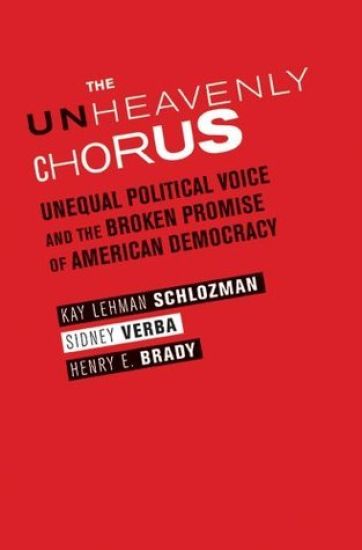
Politically active individuals and organizations make huge investments of time, energy, and money to influence everything from election outcomes to congressional subcommittee hearings to local school politics, while other groups and individual citizens seem woefully underrepresented in our political system. The Unheavenly Chorus is the most comprehensive and systematic examination of political voice in America ever undertaken--and its findings are sobering. The Unheavenly Chorus is the first book to look at the political participation of individual citizens alongside the political advocacy of thousands of organized interests--membership associations such as unions, professional associations, trade associations, and citizens groups, as well as organizations like corporations, hospitals, and universities. Drawing on numerous in-depth surveys of members of the public as well as the largest database of interest organizations ever created--representing more than thirty-five thousand organizations over a twenty-five-year period--this book conclusively demonstrates that American democracy is marred by deeply ingrained and persistent class-based political inequality. The well educated and affluent are active in many ways to make their voices heard, while the less advantaged are not. This book reveals how the political voices of organized interests are even less representative than those of individuals, how political advantage is handed down across generations, how recruitment to political activity perpetuates and exaggerates existing biases, how political voice on the Internet replicates these inequalities--and more. In a true democracy, the preferences and needs of all citizens deserve equal consideration. Yet equal consideration is only possible with equal citizen voice. The Unheavenly Chorus reveals how far we really are from the democratic ideal and how hard it would be to attain it.
The Unheavenly Chorus

The Unheavenly Chorus

Kay Lehman Schlozman; Sidney Verba; Henry E. Brady

Princeton University Press
2012
sidottu
Politically active individuals and organizations make huge investments of time, energy, and money to influence everything from election outcomes to congressional subcommittee hearings to local school politics, while other groups and individual citizens seem woefully underrepresented in our political system. The Unheavenly Chorus is the most comprehensive and systematic examination of political voice in America ever undertaken--and its findings are sobering. The Unheavenly Chorus is the first book to look at the political participation of individual citizens alongside the political advocacy of thousands of organized interests--membership associations such as unions, professional associations, trade associations, and citizens groups, as well as organizations like corporations, hospitals, and universities. Drawing on numerous in-depth surveys of members of the public as well as the largest database of interest organizations ever created--representing more than thirty-five thousand organizations over a twenty-five-year period--this book conclusively demonstrates that American democracy is marred by deeply ingrained and persistent class-based political inequality. The well educated and affluent are active in many ways to make their voices heard, while the less advantaged are not. This book reveals how the political voices of organized interests are even less representative than those of individuals, how political advantage is handed down across generations, how recruitment to political activity perpetuates and exaggerates existing biases, how political voice on the Internet replicates these inequalities--and more. In a true democracy, the preferences and needs of all citizens deserve equal consideration. Yet equal consideration is only possible with equal citizen voice. The Unheavenly Chorus reveals how far we really are from the democratic ideal and how hard it would be to attain it.
The Private Roots of Public Action

The Private Roots of Public Action

Nancy Burns; Kay Lehman Schlozman; Sidney Verba

Harvard University Press
2001
nidottu
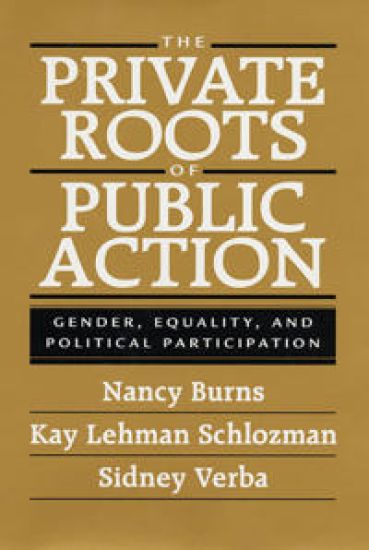
Why, after several generations of suffrage and a revival of the women's movement in the late 1960s, do women continue to be less politically active than men? Why are they less likely to seek public office or join political organizations? The Private Roots of Public Action is the most comprehensive study of this puzzle of unequal participation. The authors develop new methods to trace gender differences in political activity to the nonpolitical institutions of everyday life--the family, school, workplace, nonpolitical voluntary association, and church. Different experiences with these institutions produce differences in the resources, skills, and political orientations that facilitate participation--with a cumulative advantage for men. In addition, part of the solution to the puzzle of unequal participation lies in politics itself: where women hold visible public office, women citizens are more politically interested and active. The model that explains gender differences in participation is sufficiently general to apply to participatory disparities among other groups--among the young, the middle-aged, and the elderly or among Latinos, African-Americans and Anglo-Whites.
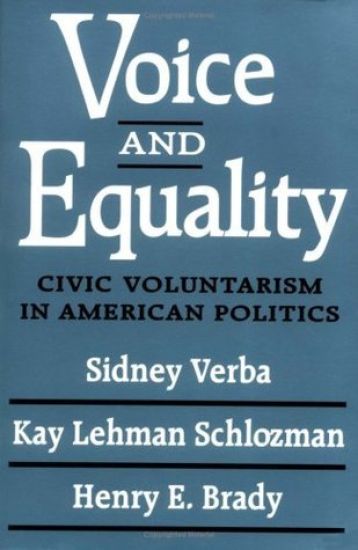
Voice and Equality

Voice and Equality

Sidney Verba; Kay Lehman Schlozman; Henry E. Brady

Harvard University Press
1995
nidottu
This book confirms Alexis de Tocqueville’s idea, dating back a century and a half, that American democracy is rooted in civil society. Citizens’ involvement in family, school, work, voluntary associations, and religion has a significant impact on their participation as voters, campaigners, donors, community activists, and protesters. The authors focus on the central issues of involvement: how people come to be active and the issues they raise when they do. They find fascinating differences along cultural lines, among African-Americans, Latinos, and Anglo-Whites, as well as between the religiously observant and the secular. They observe family activism moving from generation to generation, and they look into the special role of issues that elicit involvement, including abortion rights and social welfare. This far-reaching analysis, based on an original survey of 15,000 individuals, including 2,500 long personal interviews, shows that some individuals have a greater voice in politics than others, and that this inequality results not just from varying inclinations toward activity, but also from unequal access to vital resources such as education. Citizens’ voices are especially unequal when participation depends on contributions of money rather than contributions of time. This deeply researched study brilliantly illuminates the many facets of civic consciousness and action and confirms their quintessential role in American democracy.
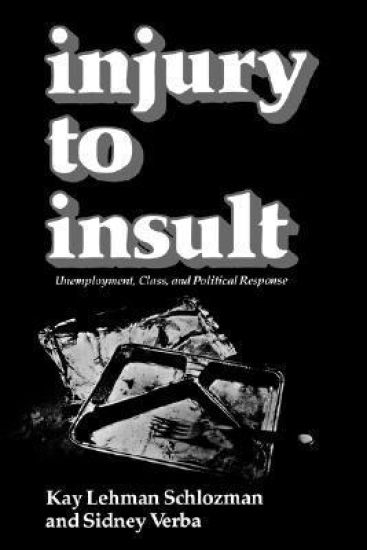
Injury to Insult

Injury to Insult

Kay Lehman Schlozman; Sidney Verba

Harvard University Press
1981
nidottu
It is commonplace in contemporary American politics for those who experience economic strain to join together and ask the government for help. The unemployed, by and large, have not done so. In their study, Kay Lehman Schlozman and Sidney Verba look closely at the unemployed and ask why not. Using the results of a large-scale survey supplemented by intensive interviews, the authors consider the political attitudes and behavior of the unemployed: how much hardship they feel, how they interpret their joblessness, what they do about it, how they view the American social order, and how they vote or otherwise take part in politics. The analysis is placed in the context of several larger concerns: the relationship between stress in private life and conduct in public life, the circumstances under which the disadvantaged are mobilized for politics, the changing role of social class in America, and the links between politics and macroeconomic conditions.