Kirjojen hintavertailu – 12 903 725 kirjaa ja 27 kauppaa

Kirjailija

Kean Fan Lim

Kirjat ja teokset yhdessä paikassa: 6 kirjaa, julkaisuja vuosilta 2017–2026, suosituimpiin kuuluu Economic Geography: The Basics. Vertaile teosten hintoja ja tarkista saatavuus suomalaisista kirjakaupoista.

6 kirjaa

Kirjojen julkaisuvuodet: 2017–2026.

Economic Geography: The Basics

Economic Geography: The Basics

Julie MacLeavy; Kean Fan Lim; Allan Watson

TAYLOR FRANCIS LTD
2026
nidottu
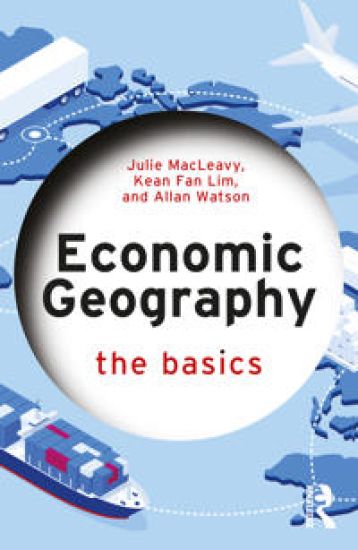
Through a concise and accessible overview, Economic Geography: The Basics examines how geographical concepts – place, space, territory, networks, and scale – enable the study of economic phenomena from a spatial perspective. Readers will develop an understanding of the diverse theoretical frameworks and methodological approaches that define Economic Geography. The book highlights how economies constitute and are constituted by their geographical contexts. The five chapters will cover the internal complexities and contradictions of the field, its fluid boundaries, and its diverse contexts. Methodologically, it addresses critical challenges, such as the bias towards national-level analysis that neglects regional and local nuances, and the tendency to oversimplify diverse groups, treating them as uniform entities and ignoring internal complexities. The book also underscores the importance of considering inherent power dynamics between the researcher and their ‘subjects’. These critical reflections collectively underscore the importance of economic-geographical research for explaining how economies function. Designed for undergraduate and postgraduate students in Geography, Business, Economics, Sociology, and Politics, Economic Geography: The Basics equips students with the spatial analytical tools to explore a wide range of economic activities and their broader societal implications, including but not limited to markets, state interventions, industrialisation processes, the organisation of labour, and the dynamics of social reproduction.
Economic Geography: The Basics

Economic Geography: The Basics

Julie MacLeavy; Kean Fan Lim; Allan Watson

TAYLOR FRANCIS LTD
2026
sidottu
Through a concise and accessible overview, Economic Geography: The Basics examines how geographical concepts – place, space, territory, networks, and scale – enable the study of economic phenomena from a spatial perspective. Readers will develop an understanding of the diverse theoretical frameworks and methodological approaches that define Economic Geography. The book highlights how economies constitute and are constituted by their geographical contexts. The five chapters will cover the internal complexities and contradictions of the field, its fluid boundaries, and its diverse contexts. Methodologically, it addresses critical challenges, such as the bias towards national-level analysis that neglects regional and local nuances, and the tendency to oversimplify diverse groups, treating them as uniform entities and ignoring internal complexities. The book also underscores the importance of considering inherent power dynamics between the researcher and their ‘subjects’. These critical reflections collectively underscore the importance of economic-geographical research for explaining how economies function. Designed for undergraduate and postgraduate students in Geography, Business, Economics, Sociology, and Politics, Economic Geography: The Basics equips students with the spatial analytical tools to explore a wide range of economic activities and their broader societal implications, including but not limited to markets, state interventions, industrialisation processes, the organisation of labour, and the dynamics of social reproduction.
On Shifting Foundations

On Shifting Foundations

Kean Fan Lim

Wiley-Blackwell
2019
nidottu
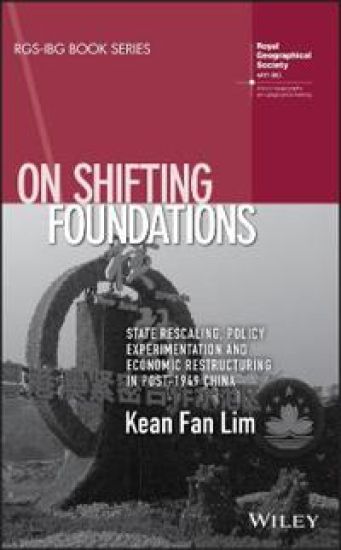
This book introduces readers to the current social and economic state of China since its restructuring in 1949. Provides insights into the targeted institutional change that is occurring simultaneously across the entire countryPresents context-rich accounts of how and why these changes connect to (if not contradict) regulatory logics established during the Mao-eraA new analytical framework that explicitly considers the relationship between state rescaling, policy experimentation, and path dependencyPrompts readers to think about how experimental initiatives reflect and contribute to the ‘national strategy’ of Chinese developmentAn excellent extension of ongoing theoretical work examining the entwinement of subnational regulatory reconfiguration, place-specific policy experimentation, and the reproduction of national economic advantage
On Shifting Foundations

On Shifting Foundations

Kean Fan Lim

Wiley-Blackwell
2019
sidottu
This book introduces readers to the current social and economic state of China since its restructuring in 1949. Provides insights into the targeted institutional change that is occurring simultaneously across the entire countryPresents context-rich accounts of how and why these changes connect to (if not contradict) regulatory logics established during the Mao-eraA new analytical framework that explicitly considers the relationship between state rescaling, policy experimentation, and path dependencyPrompts readers to think about how experimental initiatives reflect and contribute to the ‘national strategy’ of Chinese developmentAn excellent extension of ongoing theoretical work examining the entwinement of subnational regulatory reconfiguration, place-specific policy experimentation, and the reproduction of national economic advantage
An East Asian Challenge to Western Neoliberalism

An East Asian Challenge to Western Neoliberalism

Niv Horesh; Kean Fan Lim

Routledge
2019
nidottu
Analysts generally agree that, in the long term, the biggest challenge to American hegemony is not military, but rather China’s economic rise. This perception is spread in no small measure because Xi Jinping has – in the face of patent military inferiority – conducted himself much more boldly on the world stage than Hu Jintao. Meanwhile, China has also begun conjuring up an alternative vision for global leadership, now widely termed as the ‘China model’. This book therefore offers a critical and comprehensive explanation of the China model and its origins. Using a range of case studies, covering varying historical and geographical approaches, it debates whether the Chinese experience in the last three decades of economic reform should be interpreted as an answer to the reigning hegemony of neoliberalism, or rather a further reinforcement of it. To answer these questions, it provides an investigation into what China may have learned from its East Asian neighbours’ earlier economic successes. It also examines how it is responding to and might even reconfigure the world political-economic system as it develops fresh and potentially more powerful regulatory capacities. Providing a multi-dimensional analysis of the ‘China model’, the book will be of interest to students and scholars of Chinese Economics, Economic Geography and Chinese Studies.
An East Asian Challenge to Western Neoliberalism

An East Asian Challenge to Western Neoliberalism

Niv Horesh; Kean Fan Lim

Routledge
2017
sidottu
Analysts generally agree that, in the long term, the biggest challenge to American hegemony is not military, but rather China’s economic rise. This perception is spread in no small measure because Xi Jinping has – in the face of patent military inferiority – conducted himself much more boldly on the world stage than Hu Jintao. Meanwhile, China has also begun conjuring up an alternative vision for global leadership, now widely termed as the ‘China model’. This book therefore offers a critical and comprehensive explanation of the China model and its origins. Using a range of case studies, covering varying historical and geographical approaches, it debates whether the Chinese experience in the last three decades of economic reform should be interpreted as an answer to the reigning hegemony of neoliberalism, or rather a further reinforcement of it. To answer these questions, it provides an investigation into what China may have learned from its East Asian neighbours’ earlier economic successes. It also examines how it is responding to and might even reconfigure the world political-economic system as it develops fresh and potentially more powerful regulatory capacities. Providing a multi-dimensional analysis of the ‘China model’, the book will be of interest to students and scholars of Chinese Economics, Economic Geography and Chinese Studies.