Kirjojen hintavertailu – 12 859 824 kirjaa ja 27 kauppaa

Kirjailija

Kee Cheok Cheong

Kirjat ja teokset yhdessä paikassa: 10 kirjaa, julkaisuja vuosilta 2018–2022, suosituimpiin kuuluu Governing Corporate Tax Management. Vertaile teosten hintoja ja tarkista saatavuus suomalaisista kirjakaupoista.

Nimi esiintyy myös muodoissa: Kee-Cheok Cheong

10 kirjaa

Kirjojen julkaisuvuodet: 2018–2022.

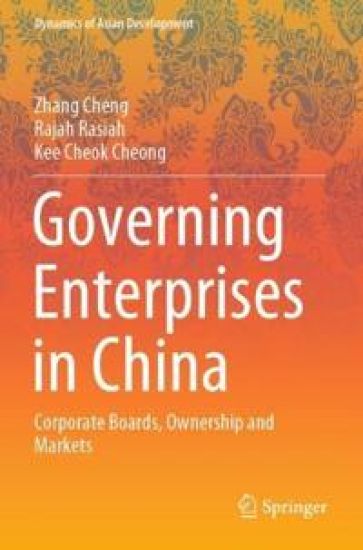
Governing Enterprises in China

Governing Enterprises in China

Zhang Cheng; Rajah Rasiah; Kee Cheok Cheong

SPRINGER VERLAG, SINGAPORE
2022
nidottu
This book examines the nature of the marketization of corporate boards following the introduction of the split share reform, corporate board and shareholder relations, corporate performance, and risk-taking conduct in China. The chapters cover topics such as determinants of corporate board size and independence, corporate risk-taking conduct under different controlling shareholder types. The book deepens our understanding of corporate governance mechanisms as most previous studies have limited their findings using mainstream perspectives grounded on neoclassical theory. It outlines that China’s corporate board composition is determined by the board’s scope of operation, monitoring, bargaining power, and other governance mechanisms and regulations. It also offers a comparison between China’s experience with other economies in general and other transition economies in particular. As such, the book represents an essential overview of thecurrent concerns regarding corporate governance in China. It is of great interest to legal researchers, policymakers, and legal practitioners working with business investments in China.
China in Malaysia

China in Malaysia

Edmund Terence Gomez; Siew Yean Tham; Ran Li; Kee Cheok Cheong

SPRINGER VERLAG, SINGAPORE
2021
nidottu
This book examines state-state relations and new forms of state business relations that have emerged with an increase in China’s foreign direct investments in Malaysia. Focusing on investments in the industrial sector and through in-depth case studies, this book adopts a novel framework to analyse these different types of state-business relations. These new forms of state-business relations are created from the different modes of negotiations between different key actors in each of the cases. Diverse outcomes were found, reflecting the disparate forms of power relationships and state cohesiveness with unique institutional architectures formed in each case. The book identifies a major shift in structural power in these new forms of state-business relations as China’s large multinational state-owned enterprises increasingly invest in Malaysia. A well-constructed institutional architecture is needed, not just in Malaysia but for other Southeast Asian countries, if foreign investments areto be harnessed to promote effective industrial development.
Governing Enterprises in China

Governing Enterprises in China

Zhang Cheng; Rajah Rasiah; Kee Cheok Cheong

Springer Verlag, Singapore
2021
sidottu
This book examines the nature of the marketization of corporate boards following the introduction of the split share reform, corporate board and shareholder relations, corporate performance, and risk-taking conduct in China. The chapters cover topics such as determinants of corporate board size and independence, corporate risk-taking conduct under different controlling shareholder types. The book deepens our understanding of corporate governance mechanisms as most previous studies have limited their findings using mainstream perspectives grounded on neoclassical theory. It outlines that China’s corporate board composition is determined by the board’s scope of operation, monitoring, bargaining power, and other governance mechanisms and regulations. It also offers a comparison between China’s experience with other economies in general and other transition economies in particular. As such, the book represents an essential overview of thecurrent concerns regarding corporate governance in China. It is of great interest to legal researchers, policymakers, and legal practitioners working with business investments in China.
City Development and Internationalization in China

City Development and Internationalization in China

Qianyi Wang; Kee Cheok Cheong; Ran Li

Springer Verlag, Singapore
2020
nidottu
This book explores how history shapes city development, assesses the role of government at national and sub-national levels through case studies of three secondary cities, Quanzhou, Yiwu and Nannin, and provides a link between city development and internationalization. In doing so, the book highlights alternative paths to development and internationalization that have received little attention in mainstream discussions. The case studies in the book provide insights into the development and internationalization of cities, linking them to historical, social, institutional and economic factors—narratives that bridge the two themes of city development and internationalization. Strong analyses are accompanied by photographs and charts that allow the reader to learn about Chinese cities beyond the major urban areas in China, garner better understanding of the role of the Chinese state, and appreciate the relevance of “city-specific assets” forcity planning.
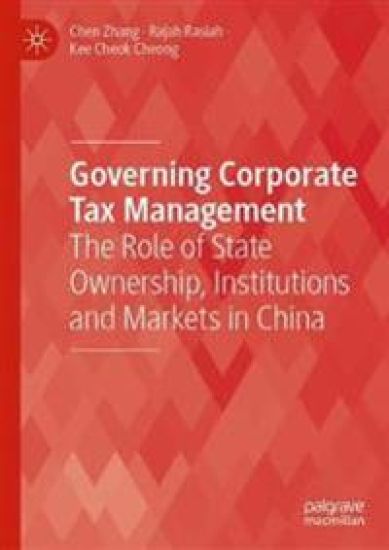
Governing Corporate Tax Management

Governing Corporate Tax Management

Chen Zhang; Rajah Rasiah; Kee Cheok Cheong

Springer Verlag, Singapore
2020
nidottu
This book focuses on corporate sector development in the context of transition economies, such as China. In doing so, the book uses quantitative methods to test several hypotheses that are salient to the Chinese economic situation. Topics covered in the book include the relationship between tax management and firm performance, the extent to which a short-term focus on tax management can lead to long-term vulnerabilities, the impact of government ownership on tax management impact, and the link between the co-evolution of marketization and corruption, and institutional change and tax management. With that the book offers rich empirical evidence to examine tax management, firm performance and corruption in a broad context, while permitting comparison between the Chinese experience and the market economies.
China in Malaysia

China in Malaysia

Edmund Terence Gomez; Siew Yean Tham; Ran Li; Kee Cheok Cheong

Springer Verlag, Singapore
2020
sidottu
This book examines state-state relations and new forms of state business relations that have emerged with an increase in China’s foreign direct investments in Malaysia. Focusing on investments in the industrial sector and through in-depth case studies, this book adopts a novel framework to analyse these different types of state-business relations. These new forms of state-business relations are created from the different modes of negotiations between different key actors in each of the cases. Diverse outcomes were found, reflecting the disparate forms of power relationships and state cohesiveness with unique institutional architectures formed in each case. The book identifies a major shift in structural power in these new forms of state-business relations as China’s large multinational state-owned enterprises increasingly invest in Malaysia. A well-constructed institutional architecture is needed, not just in Malaysia but for other Southeast Asian countries, if foreign investments areto be harnessed to promote effective industrial development.
City Development and Internationalization in China

City Development and Internationalization in China

Qianyi Wang; Kee Cheok Cheong; Ran Li

Springer Verlag, Singapore
2019
sidottu
This book explores how history shapes city development, assesses the role of government at national and sub-national levels through case studies of three secondary cities, Quanzhou, Yiwu and Nannin, and provides a link between city development and internationalization. In doing so, the book highlights alternative paths to development and internationalization that have received little attention in mainstream discussions. The case studies in the book provide insights into the development and internationalization of cities, linking them to historical, social, institutional and economic factors—narratives that bridge the two themes of city development and internationalization. Strong analyses are accompanied by photographs and charts that allow the reader to learn about Chinese cities beyond the major urban areas in China, garner better understanding of the role of the Chinese state, and appreciate the relevance of “city-specific assets” forcity planning.
Governing Corporate Tax Management

Governing Corporate Tax Management

Chen Zhang; Rajah Rasiah; Kee Cheok Cheong

Springer Verlag, Singapore
2019
sidottu
This book focuses on corporate sector development in the context of transition economies, such as China. In doing so, the book uses quantitative methods to test several hypotheses that are salient to the Chinese economic situation. Topics covered in the book include the relationship between tax management and firm performance, the extent to which a short-term focus on tax management can lead to long-term vulnerabilities, the impact of government ownership on tax management impact, and the link between the co-evolution of marketization and corruption, and institutional change and tax management. With that the book offers rich empirical evidence to examine tax management, firm performance and corruption in a broad context, while permitting comparison between the Chinese experience and the market economies.
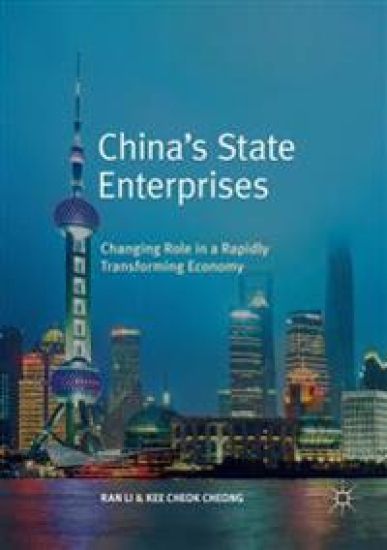
China’s State Enterprises

China’s State Enterprises

Ran Li; Kee Cheok Cheong

Springer Verlag, Singapore
2018
nidottu
This book focuses on the nature and significance of China’s state enterprises which have undergone substantial changes since China’s economic liberalization in 1978. It argues that much of the criticism is based on mistaken premises, where even the term ‘state-owned enterprises’ is a misnomer given that the emphasis is much less on ownership than on control. Using numerous case studies, this book highlights the extent to which these enterprises have evolved in response to reforms, and provides an in-depth analysis of their role in China’s outward investment strategy in the “Belt and Road” initiative. This role speaks to their growing influence as China expands her global footprint.
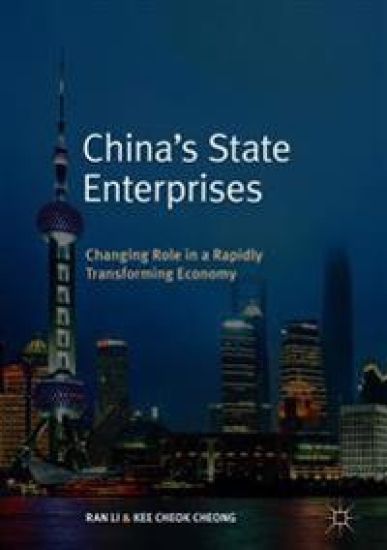
China’s State Enterprises

China’s State Enterprises

Ran Li; Kee-Cheok Cheong

Springer Verlag, Singapore
2018
sidottu
This book focuses on the nature and significance of China’s state enterprises which have undergone substantial changes since China’s economic liberalization in 1978. It argues that much of the criticism is based on mistaken premises, where even the term ‘state-owned enterprises’ is a misnomer given that the emphasis is much less on ownership than on control. Using numerous case studies, this book highlights the extent to which these enterprises have evolved in response to reforms, and provides an in-depth analysis of their role in China’s outward investment strategy in the “Belt and Road” initiative. This role speaks to their growing influence as China expands her global footprint.