Kirjojen hintavertailu – 12 859 818 kirjaa ja 27 kauppaa

Kirjailija

Kees van Kersbergen

Kirjat ja teokset yhdessä paikassa: 6 kirjaa, julkaisuja vuosilta 1995–2016, suosituimpiin kuuluu Expansion and Fragmentation. Vertaile teosten hintoja ja tarkista saatavuus suomalaisista kirjakaupoista.

6 kirjaa

Kirjojen julkaisuvuodet: 1995–2016.

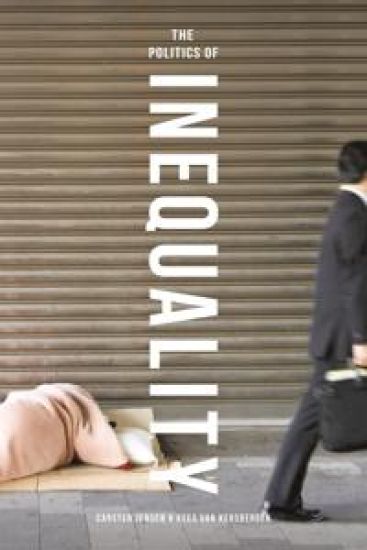
The Politics of Inequality

The Politics of Inequality

Carsten Jensen; Kees Van Kersbergen

Red Globe Press
2016
sidottu
Contemporary democracies vary greatly in how much income inequality they tolerate. Some, like the United States and the United Kingdom, have seen high and rising levels for decades, while others, such as the Nordic countries, are much more equal. This comprehensive text draws on a wealth of cutting-edge theories and empirical data to examine the political and economic causes and consequences of income inequality around the globe. It is organized around a set of key questions, including: - Is there something morally wrong with inequality? - Is inequality good or bad for economic growth? - How does inequality affect political participation and engagement? - Who decides in the politics of inequality? Systematic and accessible, this is the perfect book for students with an interest in the connections between politics and inequality.
The Politics of Inequality

The Politics of Inequality

Carsten Jensen; Kees Van Kersbergen

Red Globe Press
2016
nidottu
Contemporary democracies vary greatly in how much income inequality they tolerate. Some, like the United States and the United Kingdom, have seen high and rising levels for decades, while others, such as the Nordic countries, are much more equal. This comprehensive text draws on a wealth of cutting-edge theories and empirical data to examine the political and economic causes and consequences of income inequality around the globe. It is organized around a set of key questions, including: - Is there something morally wrong with inequality? - Is inequality good or bad for economic growth? - How does inequality affect political participation and engagement? - Who decides in the politics of inequality? Systematic and accessible, this is the perfect book for students with an interest in the connections between politics and inequality.

Social Capitalism

Social Capitalism

Kees van Kersbergen

Routledge
2016
nidottu
Christian democracy has been the most successful political movement in post-war Western Europe yet its crucial impact on the development of the modern European welfare state has been critically neglected. In this study Kees van Kersbergen demonstrates the precise nature of the links between Christian democracy and the welfare state. Using a variety of sources the author describes the origin and development of the Christian democratic movement and presents comparative accounts of the varying degrees of political entrenchment of national christian democratic parties. Drawing upon cross-national indicators of welfare state development he identifies and explains the existence of a distinctively Christian democratic (as opposed to a liberal or social democratic) welfare state regime which he labels `social capitalism'. This book compares the different national contexts under which christian democratic social theory has been turned into political action. Kees van Keersbergen shows how the different social policy performances of crucial cases, (Germany, Italy and the Netherlands) have been affected not just by prevalent power structures but also by the coalitional strategies and political abilities of christian democratic parties.
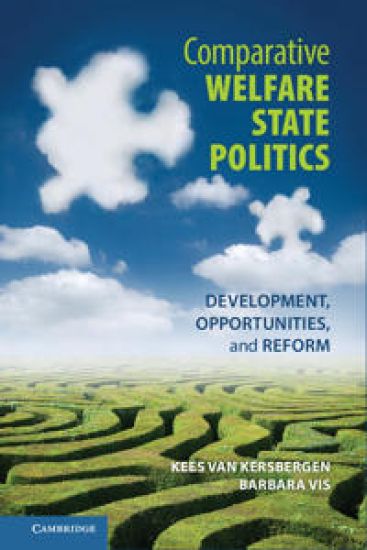
Comparative Welfare State Politics

Comparative Welfare State Politics

Kees van Kersbergen; Barbara Vis

Cambridge University Press
2013
sidottu
Welfare state reform occurs in all advanced capitalist democracies, but it does not occur in identical ways, to the same degree or with similar consequences. In Comparative Welfare State Politics, Kees van Kersbergen and Barbara Vis explain the political opportunities and constraints of welfare state reform by asking 'big' questions. Why did we need a welfare state in the first place? How did we get it? Why did we get different worlds of welfare and do we still have them? What does the welfare state actually do? Why do we need to reform the welfare state? Why is reform so difficult, but why does it nevertheless happen? Can and will the welfare state survive the Great Recession? This book informs the reader comprehensively about the welfare state, while contributing to the ongoing debate on the politics of welfare state reform.
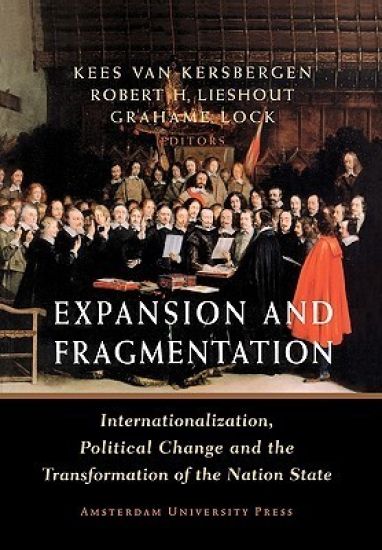
Expansion and Fragmentation

Expansion and Fragmentation

Lock Grahame; Kees van Kersbergen; Robert (Bob) Lieshout

Amsterdam University Press
1999
nidottu
Is the end of the nation-state approaching, now that the international economy takes less and less notice of borders between countries and the European Union has already acquired so much political power? What does national autonomy mean when governments delegate any number of powers to international organizations? Internationalization leads to political change, and the position of the nation-state appears to be undergoing a radical process of erosion. The surprising conclusion of this book is that the political significance of the state will not be lost. The analyses show that both expansion and fragmentation of political power are characteristics of fundamental political change. While it is true that the state is delegating authority and that internationalization is limiting autonomy, the state is also finding new forms of cooperation and coordination, both nationally and internationally, to preserve and even to strengthen its power and autonomy. Contrary to widely held assumptions, the idea of a progressive weakening of the nationstate does not prove tenable.
Social Capitalism

Social Capitalism

Kees van Kersbergen

Routledge
1995
sidottu
Christian democracy has been the most successful political movement in post-war Western Europe yet its crucial impact on the development of the modern European welfare state has been critically neglected. In this study Kees van Kersbergen demonstrates the precise nature of the links between Christian democracy and the welfare state. Using a variety of sources the author describes the origin and development of the Christian democratic movement and presents comparative accounts of the varying degrees of political entrenchment of national christian democratic parties. Drawing upon cross-national indicators of welfare state development he identifies and explains the existence of a distinctively Christian democratic (as opposed to a liberal or social democratic) welfare state regime which he labels `social capitalism'. This book compares the different national contexts under which christian democratic social theory has been turned into political action. Kees van Keersbergen shows how the different social policy performances of crucial cases, (Germany, Italy and the Netherlands) have been affected not just by prevalent power structures but also by the coalitional strategies and political abilities of christian democratic parties.