
Kirjailija
Keijiro Otsuka
Kirjat ja teokset yhdessä paikassa: 7 kirjaa, julkaisuja vuosilta 2007–2026, suosituimpiin kuuluu A Primer on Development Economics. Vertaile teosten hintoja ja tarkista saatavuus suomalaisista kirjakaupoista.
7 kirjaa
Kirjojen julkaisuvuodet: 2007–2026.
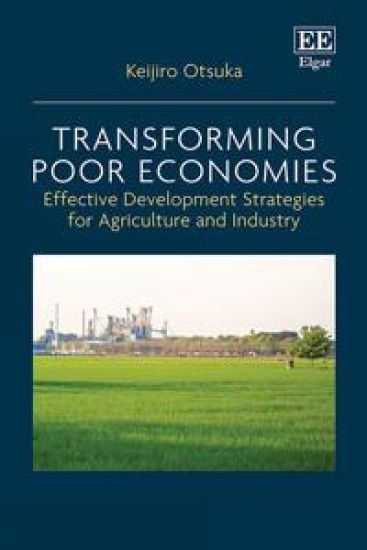
Transforming Poor Economies expertly proposes effective strategies for the development of agriculture and industry within lower income countries in Africa and Asia using insightful case studies to illustrate key findings. Kei Otsuka focuses on how to achieve the first and second Sustainable Development Goals (SDGs), using detailed analysis of how agriculture and industry have developed to eradicate poverty and hunger. Otsuka demonstrates that ultimately success is driven by technological and managerial innovation based on learning from abroad, and investment in human capital so that major decision-makers such as farmers and enterprise managers can facilitate innovation. Otsuka further argues that the use of welfare programs to support the livelihoods of these countries are unlikely to have transformative impacts and that agricultural and industrial development results in proven poverty reduction. Scholars of economics and development will find the book’s case studies both invaluable and informative. Practitioners and policymakers in development assistance and planning, particularly in Africa and Asia, will also find this an excellent resource for future planning.

Applying the Kaizen in Africa
Tetsushi Sonobe; Kimiaki Jin; Keijiro Otsuka
Saint Philip Street Press
2020
sidottu
At present, how to develop industries is a burning issue in Africa, where population growth remains high and economic development has thus far failed to provide sufficient jobs for many, especially young people and women. The creation of productive jobs through industrial development ought to be a central issue in steering economic activity across the continent. The authors of this book, consisting of two development economists and five practitioners, argue that the adoption of Kaizen management practices, which originated in Japan and have become widely used by manufacturers in advanced and emerging economies, is decisively the most effective first step for industrial development in Africa. This open access book discusses what Kaizen management is, why it is applicable to Africa, and why it can provide Africa with a springboard for sustainable economic growth and employment generation. This work was published by Saint Philip Street Press pursuant to a Creative Commons license permitting commercial use. All rights not granted by the work's license are retained by the author or authors.
Applying the Kaizen in Africa
Tetsushi Sonobe; Kimiaki Jin; Keijiro Otsuka
Saint Philip Street Press
2020
pokkari
At present, how to develop industries is a burning issue in Africa, where population growth remains high and economic development has thus far failed to provide sufficient jobs for many, especially young people and women. The creation of productive jobs through industrial development ought to be a central issue in steering economic activity across the continent. The authors of this book, consisting of two development economists and five practitioners, argue that the adoption of Kaizen management practices, which originated in Japan and have become widely used by manufacturers in advanced and emerging economies, is decisively the most effective first step for industrial development in Africa. This open access book discusses what Kaizen management is, why it is applicable to Africa, and why it can provide Africa with a springboard for sustainable economic growth and employment generation. This work was published by Saint Philip Street Press pursuant to a Creative Commons license permitting commercial use. All rights not granted by the work's license are retained by the author or authors.
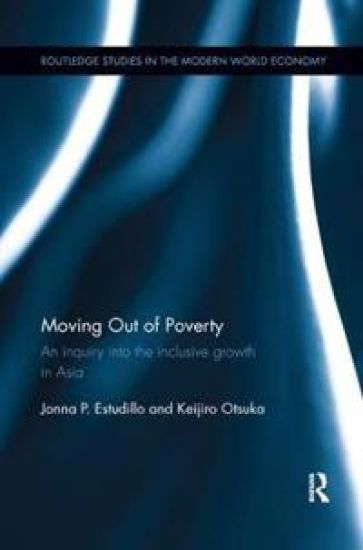
The words of US President John F. Kennedy, "the rising tide lifts all boats," can be applied to inclusive growth in contemporary Asia, where the poor are able to participate in and benefit from economic growth. Moving Out of Poverty explores three channels through which economic growth confers gains to the poor and improves the status of women. The first is creation of productive employment, as labor is typically the most abundant asset of the poor, and economic growth has created jobs in labor-intensive sectors. The second is investment in schooling which, coupled with increased opportunities to earn income, has elevated womens' status in society. The third is increased availability of improved infrastructure, which directly impacts increasing household income from wage work and self-employment activities. This book will be of great value to development economists, students and researchers interested in rural economies in Asia, and policymakers engaged in poverty reduction.
The words of US President John F. Kennedy, "the rising tide lifts all boats," can be applied to inclusive growth in contemporary Asia, where the poor are able to participate in and benefit from economic growth. Moving Out of Poverty explores three channels through which economic growth confers gains to the poor and improves the status of women. The first is creation of productive employment, as labor is typically the most abundant asset of the poor, and economic growth has created jobs in labor-intensive sectors. The second is investment in schooling which, coupled with increased opportunities to earn income, has elevated womens' status in society. The third is increased availability of improved infrastructure, which directly impacts increasing household income from wage work and self-employment activities. This book will be of great value to development economists, students and researchers interested in rural economies in Asia, and policymakers engaged in poverty reduction.
Contributions of Agricultural Economics to Critical Policy Issues
Keijiro Otsuka; Kaliappa Kalirajan
Wiley-Blackwell (an imprint of John Wiley Sons Ltd)
2007
nidottu
This book is a collection of plenary sessions papers and selected invited panel papers presented in the 26th International Conference of Agricultural Economists held at Gold Coast, Australia, from 12th to 18th August 2006. Beginning with the presidential address by Prabhu Pingali and the Elmhirst lecture by Hans Binswanger dealing with global issues of agricultural growth, economic development, and empowerment of the rural poor, leading agricultural economists address such emerging and critical issues as the economics of natural disasters, international trade and marketing, food safety and health, and transformation of unfavorable poor areas, among other issues.