Kirjojen hintavertailu – 12 859 819 kirjaa ja 27 kauppaa

Kirjailija

Keith Davies

Kirjat ja teokset yhdessä paikassa: 7 kirjaa, julkaisuja vuosilta 2008–2024, suosituimpiin kuuluu Single Best Answer Questions for the Final FFICM. Vertaile teosten hintoja ja tarkista saatavuus suomalaisista kirjakaupoista.

7 kirjaa

Kirjojen julkaisuvuodet: 2008–2024.

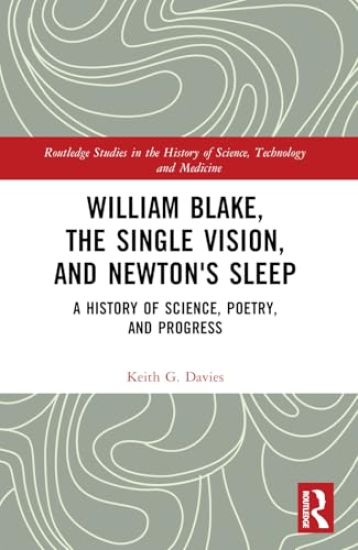
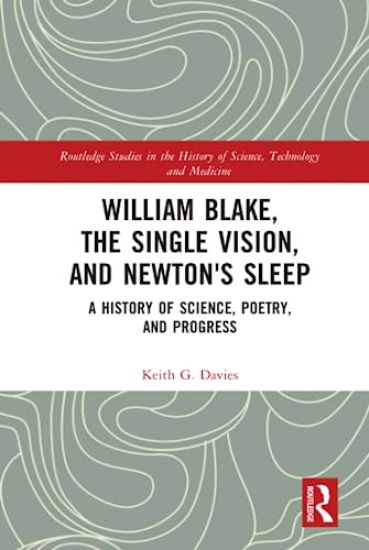
William Blake, the Single Vision, and Newton's Sleep
The history and philosophy of scientific ideas and the role poiesis and imagination play in our understanding of science and progress are widely explored in this book. By examining the views of William Blake and other poets in the context of twentieth-century philosophers Hannah Arendt, Jacob Bronowski, Martin Heidegger, Bruno Latour and Karl Popper, amongst others, the book takes an eclectic approach drawing on examples from biology, history, literature, philosophy and economics, arguing for the reestablishment of imagination as a central attribute of science that may help to resolve some of our most pressing ecological problems as seen in the context of science and technology studies and what is loosely developing into the discipline of environmental humanities. Today, influential scientists looking at consciousness dismiss imagination regarding it at best as a mere epiphenomenon, a ghost in the machine, or at worst non-existent and to be denied. In this book, Keith G. Davies, who sees C. P. Snow’s debate on the separation of the arts and sciences as alive and well, traces the schism back to Plato but more importantly to the seventeenth century and David Hume’s removal of imagination in the conjunction between our observation of causes and their effects. Through extensive research and use of poetry, this book offers an alternate understanding of science with imagination and its continued significance in today’s world. This book is an excellent reference book for postgraduate students, professional researchers, William Blake scholars and the pejoratively labelled interested laymen with concerns in ecology and environmental humanities through offering a new perspective on the history of science and the role of imagination within this field.
William Blake, the Single Vision, and Newton's Sleep
The history and philosophy of scientific ideas and the role poiesis and imagination play in our understanding of science and progress are widely explored in this book. By examining the views of William Blake and other poets in the context of twentieth-century philosophers Hannah Arendt, Jacob Bronowski, Martin Heidegger, Bruno Latour and Karl Popper, amongst others, the book takes an eclectic approach drawing on examples from biology, history, literature, philosophy and economics, arguing for the reestablishment of imagination as a central attribute of science that may help to resolve some of our most pressing ecological problems as seen in the context of science and technology studies and what is loosely developing into the discipline of environmental humanities. Today, influential scientists looking at consciousness dismiss imagination regarding it at best as a mere epiphenomenon, a ghost in the machine, or at worst non-existent and to be denied. In this book, Keith G. Davies, who sees C. P. Snow’s debate on the separation of the arts and sciences as alive and well, traces the schism back to Plato but more importantly to the seventeenth century and David Hume’s removal of imagination in the conjunction between our observation of causes and their effects. Through extensive research and use of poetry, this book offers an alternate understanding of science with imagination and its continued significance in today’s world. This book is an excellent reference book for postgraduate students, professional researchers, William Blake scholars and the pejoratively labelled interested laymen with concerns in ecology and environmental humanities through offering a new perspective on the history of science and the role of imagination within this field.

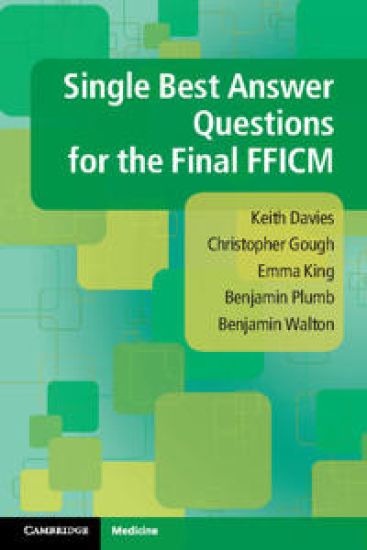
Single Best Answer Questions for the Final FFICM

Single Best Answer Questions for the Final FFICM

Keith Davies; Christopher Gough; Emma King; Benjamin Plumb; Benjamin Walton

Cambridge University Press
2016
pokkari
This is the first dedicated revision aid for the Single Best Answer component of the Final FFICM, added to the written examination in July 2014. It contains 240 SBA practice questions, divided into eight papers covering the Faculty of Intensive Care Medicine curriculum. Each answer consists of a short explanation, allowing a quick review of the correct answer, and a long explanation, providing a more in-depth discussion of the question topic. All answers are also fully referenced, encouraging further reading and providing sources for more detailed study. In combination with the companion volume, Multiple True False Questions for the Final FFICM, this guide allows readers to access full written mock exams in the style and format of the official FFICM examination, and is an invaluable resource for trainees in intensive care medicine.
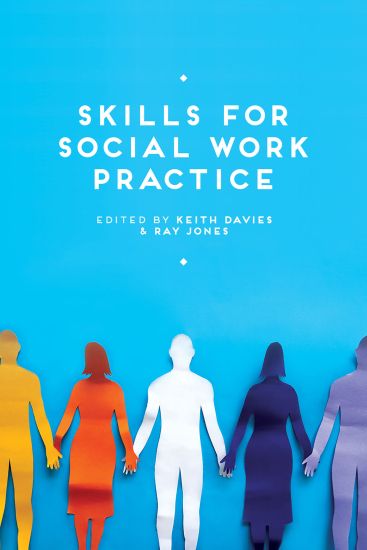
Skills for Social Work Practice

Skills for Social Work Practice

Keith Davies; Ray Jones

Red Globe Press
2015
nidottu
Skills lie at the heart of all actions of a social worker, and inform all aspects of practice – from drawing on vital theoretical and ethical frameworks to applying the law and research findings to particular situations. This user-friendly and logically organised text book brings together in one place all the vital skill sets which students need to acquire in order to qualify as social workers. It reflects current practice frameworks and addresses a wide range of skills including communication and relationship building, professional writing, ethical practice, assessment and reflection. his engaging and practical book is essential reading for social work students taking skills and practice modules as well as being a critical tool for practitioners looking to enhance their skills in social work practice.
Multiple True False Questions for the Final FFICM

Multiple True False Questions for the Final FFICM

Emma Bellchambers; Keith Davies; Abigail Ford; Benjamin Walton

Cambridge University Press
2014
pokkari
Following the introduction in 2013 of the FFICM exam for trainees in intensive care, this book provides candidates with practice materials for the MCQ section. Written by a team of specialists in intensive care medicine, including senior trainees who have recently passed the new exam and authors of the popular FRCAQ website, the book contains 270 multiple true-false questions that cover the breadth of the current Faculty of Intensive Care Medicine curriculum. These are presented as three 90-question practice papers, providing candidates with a faithful simulation of the style, standard and format of the questions they will encounter. With short and long explanations for each question, presented with up-to-date references for extended reading, this book is both an ideal tool for in-depth exam preparation, and an excellent resource for practising consultants in intensive care medicine. It is also suitable for candidates taking the EDIC and other intensive care exams worldwide.