Kirjojen hintavertailu – 12 859 818 kirjaa ja 27 kauppaa

Kirjailija

Keith Hart

Kirjat ja teokset yhdessä paikassa: 8 kirjaa, julkaisuja vuosilta 1982–2022, suosituimpiin kuuluu Self in the World. Vertaile teosten hintoja ja tarkista saatavuus suomalaisista kirjakaupoista.

8 kirjaa

Kirjojen julkaisuvuodet: 1982–2022.

Self in the World

Self in the World

Keith Hart

BERGHAHN BOOKS
2022
sidottu

Halvin toimitettuna 175,00 €

Eminent anthropologist Keith Hart draws on the humanities, popular culture and his own experiences to help readers explore their own place in history. We each embark on two life journeys – one out into the world, the other inward to the self. With these journeys in mind, anthropologist, amateur economist and globetrotter Keith Hart reflects on a life of learning, sharing and remembering to offer readers the means of connecting life’s extremes – individual and society, local and global, personal and impersonal dimensions of existence and explores what it is that makes us fully human. “This is a work of great originality. Keith Hart has had an unorthodox academic career and it has liberated him in many ways from academic pieties. His background in African ethnography gives him a fascinating angle on all sorts of things, not least the possibility of a more African-influenced global future. The book is full of surprises and mind-shifting observations. I actually couldn't put it down.”—Sherry B. Ortner, UCLA From the introduction: People have many sides, but I will focus here on two. Each of us is a biological organism with a historical personality that together make us a unique individual. But we cannot live outside society which shapes us in unfathomable ways. Human beings must learn to be self-reliant (not self-interested) in small and large ways: no-one will brush your teeth for you or save you from being run over while crossing the street. We each must also learn to belong to others, merging personal identity in a plethora of social relations and categories. Modern ideology insists that being individual and mutual is problematic. The culture of capitalist societies anticipates a conflict between them. Yet they are inseparable aspects of human nature.

Self in the World

Self in the World

Keith Hart

BERGHAHN BOOKS
2022
nidottu

Halvin toimitettuna 31,30 €

Eminent anthropologist Keith Hart draws on the humanities, popular culture and his own experiences to help readers explore their own place in history. We each embark on two life journeys – one out into the world, the other inward to the self. With these journeys in mind, anthropologist, amateur economist and globetrotter Keith Hart reflects on a life of learning, sharing and remembering to offer readers the means of connecting life’s extremes – individual and society, local and global, personal and impersonal dimensions of existence and explores what it is that makes us fully human. “This is a work of great originality. Keith Hart has had an unorthodox academic career and it has liberated him in many ways from academic pieties. His background in African ethnography gives him a fascinating angle on all sorts of things, not least the possibility of a more African-influenced global future. The book is full of surprises and mind-shifting observations. I actually couldn't put it down.”—Sherry B. Ortner, UCLA From the introduction: People have many sides, but I will focus here on two. Each of us is a biological organism with a historical personality that together make us a unique individual. But we cannot live outside society which shapes us in unfathomable ways. Human beings must learn to be self-reliant (not self-interested) in small and large ways: no-one will brush your teeth for you or save you from being run over while crossing the street. We each must also learn to belong to others, merging personal identity in a plethora of social relations and categories. Modern ideology insists that being individual and mutual is problematic. The culture of capitalist societies anticipates a conflict between them. Yet they are inseparable aspects of human nature.
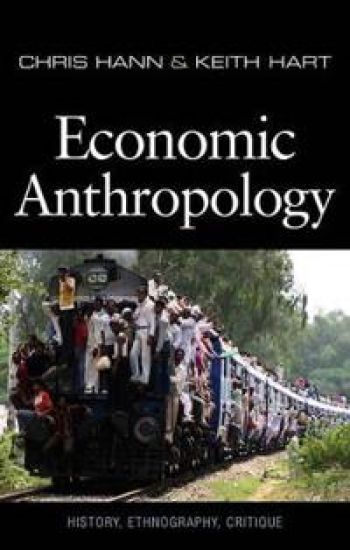
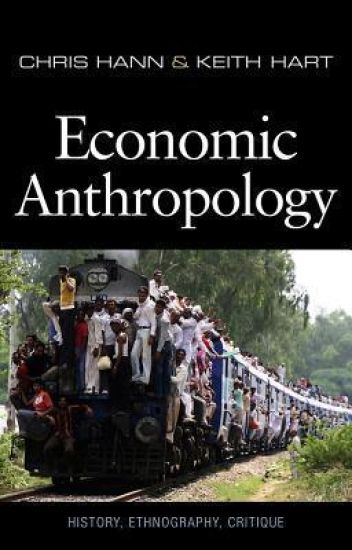
Economic Anthropology

Economic Anthropology

Chris Hann; Keith Hart

Polity Press
2011
nidottu
This book is a new introduction to the history and practice of economic anthropology by two leading authors in the field. They show that anthropologists have contributed to understanding the three great questions of modern economic history: development, socialism and one-world capitalism. In doing so, they connect economic anthropology to its roots in Western philosophy, social theory and world history. Up to the Second World War anthropologists tried and failed to interest economists in their exotic findings. They then launched a vigorous debate over whether an approach taken from economics was appropriate to the study of non-industrial economies. Since the 1970s, they have developed a critique of capitalism based on studying it at home as well as abroad. The authors aim to rejuvenate economic anthropology as a humanistic project at a time when the global financial crisis has undermined confidence in free market economics. They argue for the continued relevance of predecessors such as Marcel Mauss and Karl Polanyi, while offering an incisive review of recent work in this field. Economic Anthropology is an excellent introduction for social science students at all levels, and it presents general readers with a challenging perspective on the world economy today. Selected by Choice as a 2013 Outstanding Academic Title
Economic Anthropology

Economic Anthropology

Chris Hann; Keith Hart

Polity Press
2011
sidottu
This book is a new introduction to the history and practice of economic anthropology by two leading authors in the field. They show that anthropologists have contributed to understanding the three great questions of modern economic history: development, socialism and one-world capitalism. In doing so, they connect economic anthropology to its roots in Western philosophy, social theory and world history. Up to the Second World War anthropologists tried and failed to interest economists in their exotic findings. They then launched a vigorous debate over whether an approach taken from economics was appropriate to the study of non-industrial economies. Since the 1970s, they have developed a critique of capitalism based on studying it at home as well as abroad. The authors aim to rejuvenate economic anthropology as a humanistic project at a time when the global financial crisis has undermined confidence in free market economics. They argue for the continued relevance of predecessors such as Marcel Mauss and Karl Polanyi, while offering an incisive review of recent work in this field. Economic Anthropology is an excellent introduction for social science students at all levels, and it presents general readers with a challenging perspective on the world economy today. Selected by Choice as a 2013 Outstanding Academic Title
The Human Economy

The Human Economy

Keith Hart; Jean-Louis Laville; Antonio David Cattani

Polity Press
2010
sidottu
The global financial crisis has renewed concern about whether capitalist markets are the best way of organizing economic life. Would it not be better if we were to treat the economy as something made and remade by people themselves, rather than as an impersonal machine? The object of a human economy is the reproduction of human beings and of whatever sustains life in general. Such an economy would express human variety in its local particulars as well as the interests of all humanity. The editors have assembled here a citizen’s guide to building a human economy. This project is not a dream but is part of a collective effort that began a decade ago at the first World Social Forum in Porto Alegre, Brazil, and has gathered pace ever since. Over thirty original essays address topics that range from globalization, community participation and microcredit to corporate social responsibility and alternative energy. Each offers a critical guide to further reading. The Human Economy builds on decades of engaged research to bring a new economic vision to general readers and a comprehensive guide for all students of the contemporary world.
The Human Economy

The Human Economy

Keith Hart; Jean-Louis Laville; Antonio David Cattani

Polity Press
2010
nidottu
The global financial crisis has renewed concern about whether capitalist markets are the best way of organizing economic life. Would it not be better if we were to treat the economy as something made and remade by people themselves, rather than as an impersonal machine? The object of a human economy is the reproduction of human beings and of whatever sustains life in general. Such an economy would express human variety in its local particulars as well as the interests of all humanity. The editors have assembled here a citizen’s guide to building a human economy. This project is not a dream but is part of a collective effort that began a decade ago at the first World Social Forum in Porto Alegre, Brazil, and has gathered pace ever since. Over thirty original essays address topics that range from globalization, community participation and microcredit to corporate social responsibility and alternative energy. Each offers a critical guide to further reading. The Human Economy builds on decades of engaged research to bring a new economic vision to general readers and a comprehensive guide for all students of the contemporary world.
The Hit Man's Dilemma

The Hit Man's Dilemma

Keith Hart

Prickly Paradigm Press, LLC
2005
nidottu
"It's not personal; it's just business," says the professional killer to his victim. But business is always personal, and even though modern business corporations have been granted the legal status of persons, they are still part of the impersonal engines of society that operate far beyond human reach. Keith Hart explores here in his thought-provoking pamphlet how we have never been more conscious of ourselves as unique personalities, but we live in a society increasingly ruled by faceless corporate forces. He ultimately asks: What place is there for the humanity of individual persons in the dehumanized social and economic frameworks we live within? This is the hitman's dilemma, and it is ours as well.
The Political Economy of West African Agriculture

The Political Economy of West African Agriculture

Keith Hart

Cambridge University Press
1982
pokkari
West Africa's agriculture has, for 150 years, been heavily geared toward export, yet the region is one of the world's poorest. Keith Hart examines this question, focusing particularly on how this situation has affected the indigenous peoples of West Africa. Commerce has grown impressively, but productivity remains low and capital accumulation is retarded. The reasons exist primarily in internal conditions shaping social institutions. Before, during, and since colonialism, the particular problems of these preindustrial states have shaped agricultural development more than the pressure supposedly emanating from the 'world system' of international capitalism. This book, following the classical economists as well as Marx and Lenin, argues for the necessity of rapid capitalist penetration into West African agriculture. The book is also a readable introduction to the history and ethnography of the region as a whole.