Kirjojen hintavertailu – 12 903 735 kirjaa ja 27 kauppaa

Kirjailija

Keith Howard

Kirjat ja teokset yhdessä paikassa: 13 kirjaa, julkaisuja vuosilta 2002–2025, suosituimpiin kuuluu Songs for "Great Leaders". Vertaile teosten hintoja ja tarkista saatavuus suomalaisista kirjakaupoista.

13 kirjaa

Kirjojen julkaisuvuodet: 2002–2025.

SamulNori: Korean Percussion for a Contemporary World
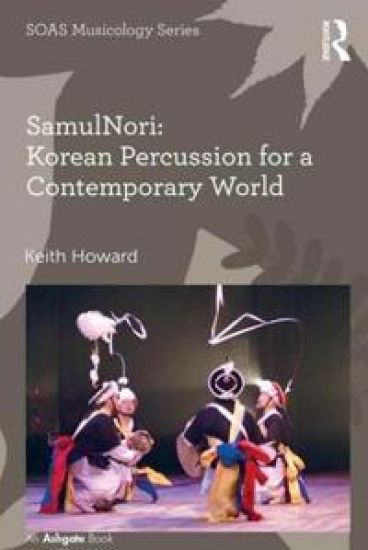
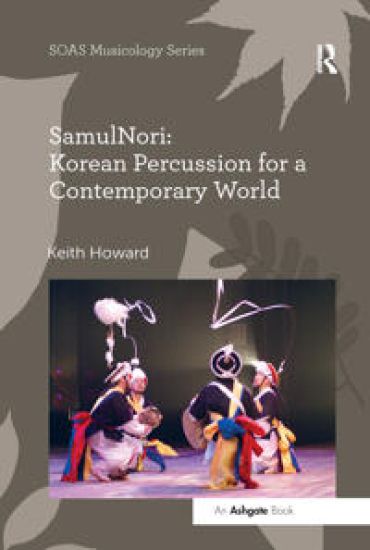
SamulNori is a percussion quartet which has given rise to a genre, of the same name, that is arguably Korea’s most successful ’traditional’ music of recent times. Today, there are dozens of amateur and professional samulnori groups. There is a canon of samulnori pieces, closely associated with the first founding quartet but played by all, and many creative evolutions on the basic themes, made by the rapidly growing number of virtuosic percussionists. And the genre is the focus of an abundance of workshops, festivals and contests. Samulnori is taught in primary and middle schools; it is part of Korea’s national education curriculum. It has dedicated institutes, and there are a number of workbooks devoted to helping wannabe ’samulnorians’. It is a familiar part of Korean performance culture, at home and abroad, in concerts but also in films and theatre productions. SamulNori uses four instruments: kkwaenggwari and ching small and large gongs, and changgo and puk drums. These are the instruments of local percussion bands and itinerant troupes that trace back many centuries, but samulnori is a recent development of these older traditions: it was first performed in February 1978. This volume explores this vibrant percussion genre, charting its origins and development, the formation of the canon of pieces, teaching and learning strategies, new evolutions and current questions relating to maintaining, developing, and sustaining samulnori in the future.

Coding + Math

Coding + Math

Nicol R. Howard; Keith Howard

International Society for Technology in Education
2020
nidottu
How-to books related to computer science (CS) and teaching CS in K–12 environments are often either step-by-step guides or reference books, with little or no connection to pedagogy. By contrast, Coding Math offers the analytical foundation teachers need to inform their practice, specifically in mathematics. This book will serve as a deep dive into CS integration for elementary teachers, providing guidelines for designing integrated CS/math curricula through case studies and practical examples. Grounded in research, the book’s mini-lessons contrast visual-based coding with text-based programming and provide guidance in the selection and creation of lessons, instructional materials and CS platforms to help educators prepare students for the careers of the future.
Songs for "Great Leaders"

Songs for "Great Leaders"

Keith Howard

Oxford University Press Inc
2020
sidottu
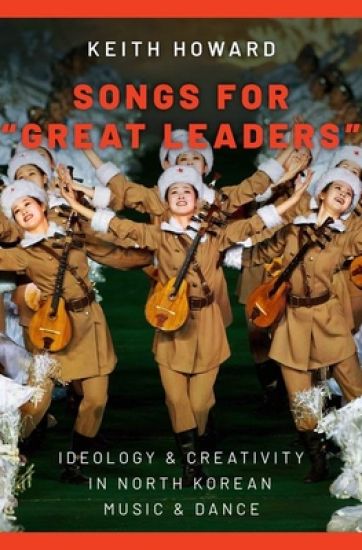
Famously reclusive and secretive, North Korea can be seen as a theatre that projects itself through music and performance. The first book-length account of North Korean music and dance in any language other than Korean, Songs for "Great Leaders" pulls back the curtain on this theatre for the first time. Renowned ethnomusicologist Keith Howard moves from the first songs written in the northern part of the divided Korean peninsula in 1946 to the performances in February 2018 by a North Korean troupe visiting South Korea for the Pyeongchang Winter Olympic Games. Through an exceptionally wide range of sources and a perspective of deep cultural competence, Howard explores old revolutionary songs and new pop songs, developments of Korean instruments, the creation of revolutionary operas, and massspectacles, as well as dance and dance notation, and composers and compositions. The result is a nuanced and detailed account of how song, together with other music and dance production, forms the soundtrack to the theater of daily life, embedding messages that tell the official history, the exploitsof leaders, and the socialist utopia yet-to-come. Based on fieldwork, interviews, and resources in private and public archives and libraries in North Korea, South Korea, China, North America and Europe, Songs for "Great Leaders" opens up the North Korean regime in a way never before attempted or possible.
Shadowshine

Shadowshine

Keith Howard

Tsl Publications
2019
pokkari
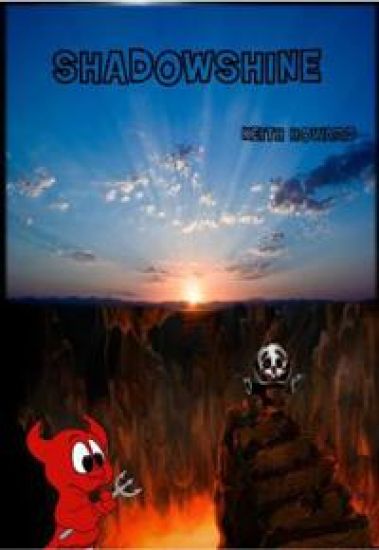
If the Shadowshine Reincarnation Centre exists it is merely a staging post on the way to Higher Things. A celestial sorting house with about the same efficiency (or lack of it) as any earthly administrative concern. Like a spider in his web, deep within the Shadowshine Auditorium, the Soul Searcher awaits the souls which bide their time in stasis cells, awaiting his summons. Each soul is decharacterized of its former mortal identity and sent packing for another lifetime of trial and tribulation. Without ceasing, the Soul Searcher reviews the endless procession of souls with unerring accuracy. This time they are mortals from Twentieth Century Earth ...
Theory and Method in Historical Ethnomusicology
Historical ethnomusicology is increasingly acknowledged as a significant emerging subfield of ethnomusicology due to the fact that historical research requires a different set of theories and methods than studies of contemporary practices and many historiographic techniques are rapidly transforming as a result of new technologies. In 2005, Bruno Nettl observed that “the term ‘historical ethnomusicology’ has begun to appear in programs of conferences and in publications” (Nettl 2005, 274), and as recently as 2012 scholars similarly noted “an increasing concern with the writing of musical histories in ethnomusicology” (Ruskin and Rice 2012, 318). Relevant positions recently advanced by other authors include that historical musicologists are “all ethnomusicologists now” and that “all ethnomusicology is historical” (Stobart, 2008), yet we sense that such arguments—while useful, and theoretically correct—may ultimately distract from careful consideration of the kinds of contemporary theories and rigorous methods uniquely suited to historical inquiry in the field of music. In Theory and Method in Historical Ethnomusicology, editors Jonathan McCollum and David Hebert, along with contributors Judah Cohen, Chris Goertzen, Keith Howard, Ann Lucas, Daniel Neuman, and Diane Thram systematically demonstrate various ways that new approaches to historiography––and the related application of new technologies––impact the work of ethnomusicologists who seek to meaningfully represent music traditions across barriers of both time and space. Contributors specializing in historical musics of Armenia, Iran, India, Japan, southern Africa, American Jews, and southern fiddling traditions of the United States describe the opening of new theoretical approaches and methodologies for research on global music history. In the Foreword, Keith Howard offers his perspective on historical ethnomusicology and the importance of reconsidering theories and methods applicable to this field for the enhancement of musical understandings in the present and future.
SamulNori: Korean Percussion for a Contemporary World
SamulNori is a percussion quartet which has given rise to a genre, of the same name, that is arguably Korea’s most successful ’traditional’ music of recent times. Today, there are dozens of amateur and professional samulnori groups. There is a canon of samulnori pieces, closely associated with the first founding quartet but played by all, and many creative evolutions on the basic themes, made by the rapidly growing number of virtuosic percussionists. And the genre is the focus of an abundance of workshops, festivals and contests. Samulnori is taught in primary and middle schools; it is part of Korea’s national education curriculum. It has dedicated institutes, and there are a number of workbooks devoted to helping wannabe ’samulnorians’. It is a familiar part of Korean performance culture, at home and abroad, in concerts but also in films and theatre productions. SamulNori uses four instruments: kkwaenggwari and ching small and large gongs, and changgo and puk drums. These are the instruments of local percussion bands and itinerant troupes that trace back many centuries, but samulnori is a recent development of these older traditions: it was first performed in February 1978. This volume explores this vibrant percussion genre, charting its origins and development, the formation of the canon of pieces, teaching and learning strategies, new evolutions and current questions relating to maintaining, developing, and sustaining samulnori in the future.
Perspectives on Korean Music

Perspectives on Korean Music

Keith Howard

Ashgate Publishing Limited
2006
sidottu
As Korea has developed and modernized, music has come to play a central role as a symbol of national identity. Nationalism has been stage managed by scholars, journalists and, from the beginning of the 1960s, by the state, as music genres have been documented, preserved and promoted as 'Intangible Cultural Properties'. Practitioners have been appointed 'holders' or, in everyday speech, 'Human Cultural Properties', to maintain, perform and teach exemplary versions of tradition. Over the last few years, the Korean preservation system has become a model for UNESCO's 'Living Human Treasures' and 'Masterpieces of the Oral and Intangible Heritage of Mankind'. In this volume, Keith Howard provides the first comprehensive analysis in English of the system. He documents court music and dance, Confucian and shaman ritual music, folksongs, the professional folk-art genres of p'ansori ('epic storytelling through song') and sanjo ('scattered melodies'), and more, as well as instrument making, food preparation and liquor distilling - a good performance, after all, requires wine to flow. The extensive documentation reflects considerable fieldwork, discussion and questioning carried out over a 25-year period, and blends the voices of scholars, government officials, performers, craftsmen and the general public. By interrogating both contemporary and historical data, Howard negotiates the debates and critiques that surround this remarkable attempt to protect local and national music and other performance arts and crafts. An accompanying downloadable resource illustrates many of the music genres considered, featuring many master musicians including some who have now died. The preservation of music and other performance arts and crafts is part of the contemporary zeitgeist, yet occupies contested territory. This is particularly true when the concept of 'tradition' is invoked. Within Korea, the recognition of the fragility of indigenous music inherited from earlier times is balanced by an awareness of the need to maintain identity as lifestyles change in response to modernization and globalization. Howard argues that Korea, and the world, is a better place when the richness of indigenous music is preserved and promoted.
Perspectives on Korean Music

Perspectives on Korean Music

Keith Howard

Ashgate Publishing Limited
2006
sidottu
With the rise of nationalism in the Republic of Korea, music has come to play a central role in the discourse of identity. This volume asks what Koreans consider makes music Korean, and how meaning is ascribed to musical creation. Keith Howard explores specific aspects of creativity that are designed to appeal to a new audience that is increasingly westernized yet proud of its indigenous heritage - updates of tradition, compositions, and collaborative fusions. He charts the development of the Korean music scene over the last 25 years and interprets the debates, claims and statistics by incorporating the voices of musicians, composers, scholars and critics. Koreanness is a brand identity with a discourse founded on heritage, hence Howard focuses on music that is claimed to link to tradition, and on music compositions where indigenous identity is consciously incorporated. The volume opens with SamulNori, a percussion quartet known throughout the world that was formed in 1978 but is rooted in local and itinerant bands stretching back many centuries. Parallel developments in vocal genres, folksongs and p'ansori ('epic storytelling through song') are considered, then three chapters explore compositions written both for western instruments and for Korean instruments, and designed both for Korean and international audiences. Over time, Howard shows how the two musical worlds - kugak, traditional music, and yangak, western music - have collided, and how fusions have emerged. This volume documents how identity has been negotiated by musicians, composers and audiences. Until recently, references to tradition were common and, by critics and musicologists, required. Western music increasingly encroached on the market for Korean music and doubts were raised about the future of any music identifiably Korean. Today, Korean musical production exudes a resurgent confidence as it amalgamates Korean and western elements, as it arranges and incorporates the old in the new, and as it creates a music suitable for the contemporary world.
The Management of a Student Research Project

The Management of a Student Research Project

John A Sharp; John Peters; Keith Howard

Gower Publishing Ltd
2002
nidottu
The third edition of this popular book has been extensively revised to reflect the changes that have affected student research in higher education in recent years. The ability to carry out research successfully has come to be seen as a 'key transferable skill' required of all higher education students - and The Management of a Student Research Project addresses directly the skill element of this. Furthermore the research process, at all levels, is far more systematized than in the past. The single largest change since the second edition came out in 1996 has been the impact of the World Wide Web on student research. The third edition has been thoroughly rewritten and developed in response to this. In particular, Chapter 4, 'Literature Searching', has been structured around a sample online search. Throughout, the comments and thoughts of readers of previous editions have been taken into account in framing this third edition. Its aims remain the same - to provide a clear, comprehensive and useful guide to students undertaking research projects in order to improve their chances of a successful outcome.