Kirjojen hintavertailu – 12 903 729 kirjaa ja 27 kauppaa

Kirjailija

Keith J. Volanto

Kirjat ja teokset yhdessä paikassa: 3 kirjaa, julkaisuja vuosilta 2004–2022, suosituimpiin kuuluu Texas and Texans in World War II. Vertaile teosten hintoja ja tarkista saatavuus suomalaisista kirjakaupoista.

3 kirjaa

Kirjojen julkaisuvuodet: 2004–2022.

Texas and Texans in World War II

Texas and Texans in World War II

Randolph B. Campbell; Joseph G. Dawson; Bernadette Pruitt; Michael Hurd; Katherine Sharp Landdeck; Arnoldo De León; Zachary Montz; Houston Faust Mount II; Stephen M. Sloan; Henry C. Dethloff; Kelly E. Crager; Keith J. Volanto

Texas A M University Press
2022
sidottu
Texans in World War II offers an informative look at the challenges and changes faced by Texans on the home front during the Second World War. This collection of essays by leading scholars of Texas history covers topics from the African American and Tejano experience to organized labor, from the expanding opportunities for women to the importance of oil and agriculture. Texans in World War II makes local the frequently studied social history of wartime, bringing it home to Texas. An eye-opening read for Texans eager to learn more about this defining era in their state's history, this book will also prove deeply informative for scholars, students, and general readers seeking detailed, definitive information about World War II and its implications for daily life, economic growth, and social and political change in the Lone Star State.
Texas, Cotton, and the New Deal

Texas, Cotton, and the New Deal

Keith J. Volanto

Texas A M University Press
2015
nidottu
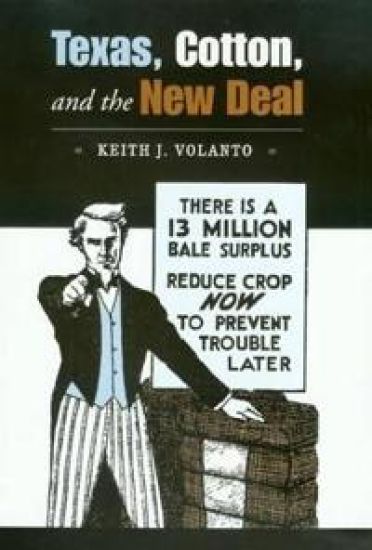
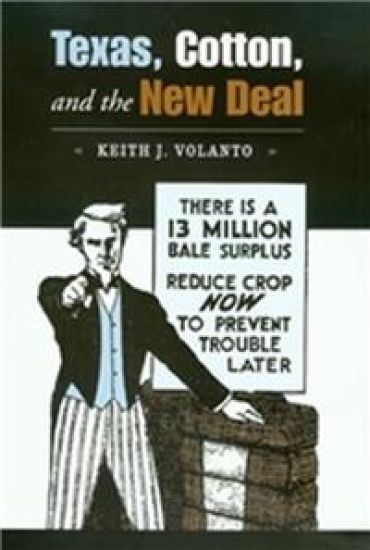
Cotton supplied the Native Americans with clothing fibers before the Spanish ever entered Texas. It drew Southern settlers fleeing U. S. antislavery trends during the Mexican Republic in the 1820s. By the early 1930s, cotton was produced in 223 of the 254 counties in Texas and was a central element in the Texas economy. The Great Depression created a major disruption that threatened to destabilize the entire Lone Star State. In this book, Keith J. Volanto relates the story of the New Deal's efforts to aid Texas cotton farmers, specifically with the production-control policies introduced by the Agricultural Adjustment Administration (AAA). He explores the reasons the AAA cotton programs in Texas were instituted, the implementation problems the AAA encountered and how they were resolved, and the results of the programs. He draws conclusions concerning how well Texans benefited from the AAA cotton programs and about those who were actually harmed by them. In addition, he also examines the role of Texas politicians and bureaucrats in formulating the policies in Washington and the importance of Texas to New Deal cotton policy broadly. Volanto's study of the AAA cotton programs in Texas is a study not only of agriculture policy but also of the New Deal itself. The AAA provides an example of how the New Deal attempted to solve a natural problem in a largely experimental fashion. The experience of the AAA the political, economic, and legal constraints it faced provides new insight into the (Back Flap) nature of New Deal commodity programs. It also demonstrates how the New Deal's typical broker state priorities tended to address the concerns of organized groups, often to the detriment of unaffiliated individuals. From the initial farm subsidy programs and their impact on Texas during the 1930s to the AAA's cotton programs that were implemented at the state level, very little has previously been written on this important period in Texas history. Texas, Cotton, and the New Deal fills this void.
Texas, Cotton, and the New Deal

Texas, Cotton, and the New Deal

Keith J. Volanto

Texas A M University Press
2004
sidottu
In the early 1930s, cotton was produced in 223 of the 254 countries in Texas and was a central element in the state's economy. The Great Depression created a major distruption that threatened to destabilize the entire Lone Star State. Keith J. Volanto relates the story of the New Deal's efforts to aid Texas cotton farmers, specifically with the production-control policies introduced by the Agricultural Adjustment Administration (AAA). He explores the reasons the AAA cotton programs in Texas were instituted, the implementation problems the AAA encountered and how they were resolved, and the results of the programs. He draws conclusions concerning how well Texans benefited from the AAA cotton programs and about those who were actually harmed by them. In addition, Volanto also examines the role of Texas politicians and bureaucrats in formulating the policies in Washington and the importance of Texas to New Deal cotton policy broadly. Volanto's account of the AAA cotton programs in Texas is a study not only of agriculture policy but also of the New Deal itself. The experience of the AAA - the political, economic, and legal constraints it faced - provides new insight into the nature of New Deal commodity programs. Very little has previously been written on farm subsidy programs and their impact on Texas during the 1930s and the AAA's cotton programs that were implemented at the state level. Texas, Cotton, and the New Deal fills this void.