Kirjojen hintavertailu – 12 859 819 kirjaa ja 27 kauppaa

Kirjailija

Keith Jeffery

Kirjat ja teokset yhdessä paikassa: 8 kirjaa, julkaisuja vuosilta 1996–2016, suosituimpiin kuuluu The Secret History of MI6, 1909-1949. Vertaile teosten hintoja ja tarkista saatavuus suomalaisista kirjakaupoista.

8 kirjaa

Kirjojen julkaisuvuodet: 1996–2016.

1916

1916

Keith Jeffery

Bloomsbury
2016
pokkari
A fascinating examination of the First World War beyond the Western Front told through the significant global events of 1916, which dramatically altered the fate of many nations.
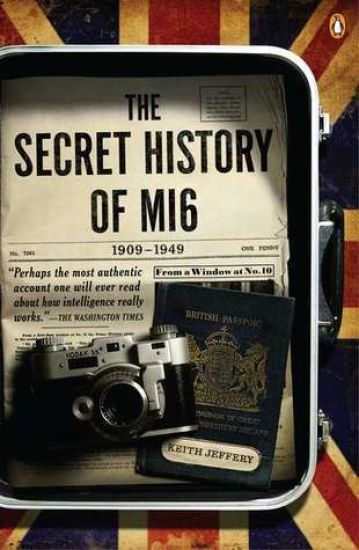
The Secret History of MI6, 1909-1949

The Secret History of MI6, 1909-1949

Keith Jeffery

PENGUIN BOOKS
2011
nidottu
The authorized history of the world's oldest and most storied foreign intelligence service, drawing extensively on hitherto secret documents. Britain's Special Intelligence Service, commonly called MI6, is not only the oldest and most storied foreign intelligence unit in the world--it is also the only one to open its archives to an outside researcher. The result, in this authorized history, is an unprecedented and revelatory look at an organization that essentially created, over the course of two world wars, the modern craft of spying. Here are the true stories that inspired Ian Fleming's James Bond's novels and John le Carr George Smiley novels. Examining innovations from invisible ink and industrial-scale cryptography to dramatic setbacks like the Nazi sting operations to bag British operatives, this groundbreaking history is as engrossing as any thriller--and much more revealing.
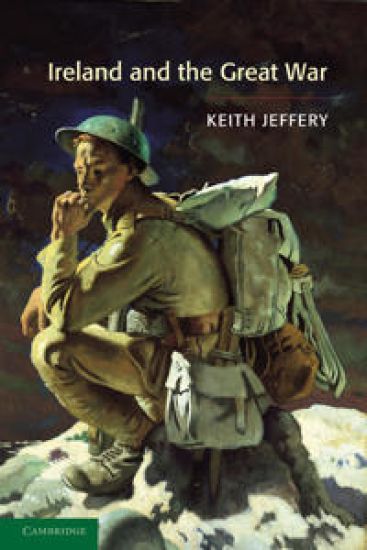
Ireland and the Great War

Ireland and the Great War

Keith Jeffery

Cambridge University Press
2011
pokkari
This book explores the impact, both immediate and in its longer historical perspective, of the First World War upon Ireland across the broadest range of experience - nationalist, unionist, Catholic, Protestant - and in civilian social, economic and cultural terms, as well as purely military. Underscoring the work is a belief that the Great War is the single most central experience in twentieth-century Ireland and that the events of the war years, whether at home in Dublin during the Easter Rising or at the European battlefront, constitute a 'seamless robe' of Irish experience. The book also explores cultural responses to the war and its commemoration since 1918, up to the dedication of the Irish 'Peace Tower' in Belgium in November 1998. It argues that identifying and exploring the Irish Great War experience can contribute to the contemporary Irish peace process.
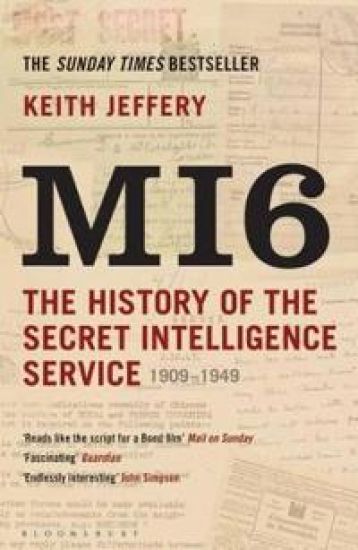
MI6

MI6

Keith Jeffery

Bloomsbury Publishing PLC
2011
nidottu
'Reads like the script for a Bond film' Mail on SundayA groundbreaking book, this unprecedented study is the authoritative account of the best-known intelligence organisation in the world. Essential reading for anyone interested in the history of espionage, the two world wars, modern British government and the conduct of international relations in the first half of the twentieth century, MI6: The History of the Secret Intelligence Service 1909-1949 is a uniquely important examination of the role and significance of intelligence in the modern world.
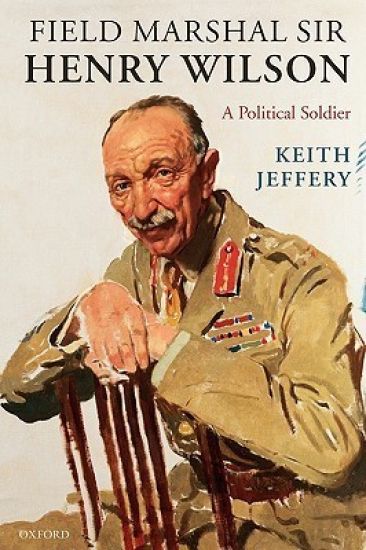
Field Marshal Sir Henry Wilson

Field Marshal Sir Henry Wilson

Keith Jeffery

Oxford University Press
2008
nidottu
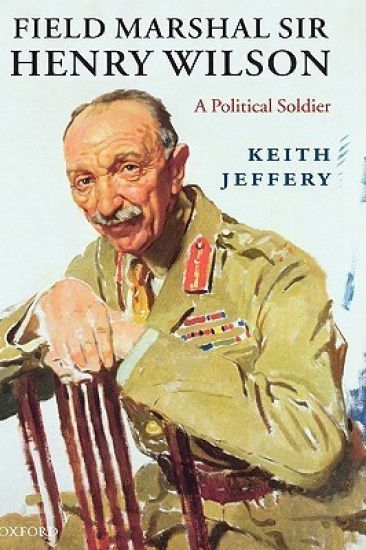
Field Marshal Sir Henry Wilson, an Irishman who in June 1922 was assassinated on his doorstep in London by Irish republicans, was one of the most controversial British soldiers of the modern age. Before 1914 he did much to secure the Anglo-French alliance and was responsible for the planning which saw the British Expeditionary Force successfully despatched to France after the outbreak of war with Germany. A passionate Irish unionist, he gained a reputation as an intensely 'political' soldier, especially during the 'Curragh crisis' of 1914 when some officers resigned their commisssions rather than coerce Ulster unionists into a Home Rule Ireland. During the war he played a major role in Anglo-French liaison, and ended up as Chief of the Imperial General Staff, professional head of the army, a post he held until February 1922. After Wilson retired from the army, he became an MP and was chief security adviser to the new Northern Ireland government. As such, he became a target for nationalist Irish militants, being identified with the security policies of the Belfast regime, though wrongly with Protestant sectarian attacks on Catholics. He is remembered today in unionist Northern Ireland as a kind of founding martyr for the state. Wilson's reputation was ruined in 1927 with the publication of an official biography, which quoted extensively and injudiciously from his entertaining, indiscreet, and wildly opinionated diaries, giving the impression that he was some sort of Machiavellian monster. In this first modern biography, using a wide variety of official and private sources for the first time, Keith Jeffery reassesses Wilson's life and career and places him clearly in his social, national, and political context.

Field Marshal Sir Henry Wilson

Field Marshal Sir Henry Wilson

Keith Jeffery

Oxford University Press
2006
sidottu
Field Marshal Sir Henry Wilson, an Irishman who in June 1922 was assassinated on his doorstep in London by Irish republicans, was one of the most controversial British soldiers of the modern age. Before 1914 he did much to secure the Anglo-French alliance and was responsible for the planning which saw the British Expeditionary Force successfully despatched to France after the outbreak of war with Germany. A passionate Irish unionist, he gained a reputation as an intensely 'political' soldier, especially during the 'Curragh crisis' of 1914 when some officers resigned their commisssions rather than coerce Ulster unionists into a Home Rule Ireland. During the war he played a major role in Anglo-French liaison, and ended up as Chief of the Imperial General Staff, professional head of the army, a post he held until February 1922. After Wilson retired from the army, he became an MP and was chief security adviser to the new Northern Ireland government. As such, he became a target for nationalist Irish militants, being identified with the security policies of the Belfast regime, though wrongly with Protestant sectarian attacks on Catholics. He is remembered today in unionist Northern Ireland as a kind of founding martyr for the state. Wilson's reputation was ruined in 1927 with the publication of an official biography, which quoted extensively and injudiciously from his entertaining, indiscreet, and wildly opinionated diaries, giving the impression that he was some sort of Machiavellian monster. In this first modern biography, using a wide variety of official and private sources for the first time, Keith Jeffery reassesses Wilson's life and career and places him clearly in his social, national, and political context.
Ireland and the Great War

Ireland and the Great War

Keith Jeffery

Cambridge University Press
2000
sidottu
This book explores the impact, both immediate and in its longer historical perspective, of the First World War upon Ireland across the broadest range of experience - nationalist, unionist, Catholic, Protestant - and in civilian social, economic and cultural terms, as well as purely military. Underscoring the work is a belief that the Great War is the single most central experience in twentieth-century Ireland and that the events of the war years, whether at home in Dublin during the Easter Rising or at the European battlefront, constitute a ‘seamless robe’ of Irish experience. The book also explores cultural responses to the war and its commemoration since 1918, up to the dedication of the Irish ‘Peace Tower’ in Belgium in November 1998. It argues that identifying and exploring the Irish Great War experience can contribute to the contemporary Irish peace process.
Northern Ireland Since 1968

Northern Ireland Since 1968

Keith Jeffery; Paul Arthur

Blackwell Publishers
1996
nidottu
This second edition of Northern Ireland since 1968 provides a concise, thematic overview of the Northern Ireland conflict and its proposed solutions from the beginnings of the 'Troubles' up to the present day. Updated and expanded to include coverage of recent developments such as the publication of the Joint Declaration of 1993 and the Framework Documents of 1995, the book offers a clear analysis of the latest initiatives in the peace process and the local and international contexts within which these have evolved. The new edition includes an updated chronology of events and guide to further reading as well as an expanded list of dramatis personae making it the ideal introduction to the history of this most troubled region. It will be essential reading for students of contemporary history, politics and international relations.