Kirjojen hintavertailu – 12 903 724 kirjaa ja 27 kauppaa

Kirjailija

Keith S. Dobson

Kirjat ja teokset yhdessä paikassa: 7 kirjaa, julkaisuja vuosilta 2011–2024, suosituimpiin kuuluu Evidence-Based Practice of Cognitive-Behavioral Therapy, Second Edition. Vertaile teosten hintoja ja tarkista saatavuus suomalaisista kirjakaupoista.

Nimi esiintyy myös muodoissa: Keith S Dobson

7 kirjaa

Kirjojen julkaisuvuodet: 2011–2024.

Clinical Depression

Clinical Depression

Keith S. Dobson

AMERICAN PSYCHOLOGICAL ASSOCIATION
2024
pokkari
This book offers integrative treatments for clinical depression based on the biopsychosocial model. Keith Dobson synthesizes decades of research and professional experience in this comprehensive guide that follows the therapy process from beginning to end. He starts with a theoretical overview of depression, including its associated features, risk and resiliency factors, and offers a comparative evaluation of various models of depression. Clinical chapters review the intake process, from the initial interview, to formulating an early case conceptualization and ensuring the client amp rsquo s involvement. Dobson then presents an organizational model to determine which issues to focus on in therapy, and the optimal interventions to address them. He also describes common strategies to target problematic behaviors and cognitions, develop problem-solving skills, and modify maladaptive thoughts and schemas. Guidelines for ending therapy and preventing relapse are also provided, as are considerations related to comorbid disorders, clients amp rsquo relationships with significant others, and in-person vs. distance treatment. Recurring case examples with two hypothetical clients help to demonstrate the entire process for assessing, conceptualizing, and treating clinical depression.

de Therapeutische Relatie Bij Cognitieve Gedragstherapie

de Therapeutische Relatie Bij Cognitieve Gedragstherapie

Nikolaos Kazantzis; Frank M Dattilio; Keith S Dobson

Bohn Stafleu Van Loghum
2019
pokkari
Dit boek laat zien hoe de therapeutische relatie in de cognitieve gedragstherapie (CGT) kan worden ingezet om verandering te weeg te brengen. Het beschrijft onder andere hoe casusconceptualisatie gebruikt kan worden om te beslissen wanneer relatieproblemen moeten worden aangepakt, welke specifieke strategie n moeten worden gebruikt (bijvoorbeeld het uiten van empathie of het vragen van feedback aan cli nten) en hoe therapeuten kunnen omgaan met hun eigen emotionele reacties tijdens een therapiesessie. De therapeutische relatie bij cognitieve gedragstherapie legt daarnaast uit hoe samenwerking, empirisme en de socratische dialoog kunnen worden versterkt en de resultaten kunnen worden verbeterd. Speciale onderwerpen die aan bod komen zijn onder andere het verbeteren van de therapeutische relatie bij paren, gezinnen, groepen, kinderen en adolescenten. De therapeutische relatie bij cognitieve gedragstherapie is toegankelijk geschreven, biedt praktische klinische aanbevelingen, veel casu stiek, werkbladen en een groot aantal oefeningen.
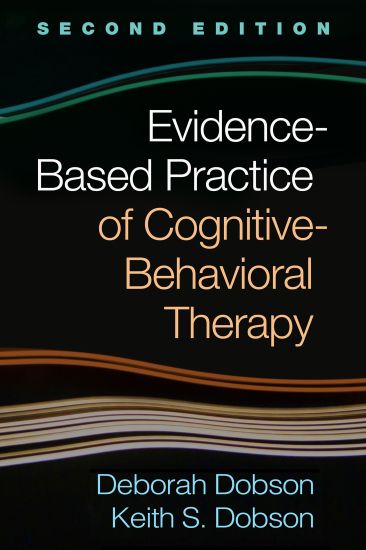
Evidence-Based Practice of Cognitive-Behavioral Therapy, Second Edition
From an experienced clinician and a prominent psychotherapy researcher, this book synthesizes the evidence base for cognitive-behavioral therapy (CBT) and translates it into practical clinical guidelines. Therapists and students learn how to implement core CBT techniques, why and how they work, and what to do when faced with gaps in scientific knowledge. Vivid case examples illustrate what evidence-based strategies look like in action with real-world clients who may have multiple presenting problems. The authors also separate CBT myths from facts and discuss ways to manage common treatment challenges. New to This Edition *Revised throughout to incorporate the latest research, including key meta-analytic studies. *Chapters on clinical techniques have been restructured to be more concise and digestible. *New content on sleep difficulties, reducing avoidance, and motivational interviewing. *A new extended case example runs throughout the book.
The Therapeutic Relationship in Cognitive-Behavioral Therapy

The Therapeutic Relationship in Cognitive-Behavioral Therapy

Nikolaos Kazantzis; Frank M. Dattilio; Keith S. Dobson

Guilford Press
2017
sidottu
From leading cognitive-behavioral therapy (CBT) experts, this book describes ways to tailor empirically supported relationship factors that can strengthen collaboration, empiricism, and Socratic dialogue and improve outcomes. In an accessible style, it provides practical clinical recommendations accompanied by rich case examples and self-reflection exercises. The book shows how to use a strong case conceptualization to decide when to target relationship issues, what specific strategies to use (for example, expressing empathy or requesting client feedback), and how to navigate the therapist's own emotional responses in session. Special topics include enhancing the therapeutic relationship with couples, families, groups, and children and adolescents. Reproducible worksheets can be downloaded and printed in a convenient 8 1/2" x 11" size. See also Doing CBT, Second Edition, by David F. Tolin, which lucidly explains the full range of CBT techniques, and Experiencing CBT from the Inside Out, by James Bennett-Levy, Richard Thwaites, Beverly Haarhoff, and Helen Perry, a unique self-practice/self-reflection workbook.
Evidence-Based Practice of Cognitive-Behavioral Therapy, Second Edition
From an experienced clinician and a prominent psychotherapy researcher, this book synthesizes the evidence base for cognitive-behavioral therapy (CBT) and translates it into practical clinical guidelines. Therapists and students learn how to implement core CBT techniques, why and how they work, and what to do when faced with gaps in scientific knowledge. Vivid case examples illustrate what evidence-based strategies look like in action with real-world clients who may have multiple presenting problems. The authors also separate CBT myths from facts and discuss ways to manage common treatment challenges. New to This Edition *Revised throughout to incorporate the latest research, including key meta-analytic studies. *Chapters on clinical techniques have been restructured to be more concise and digestible. *New content on sleep difficulties, reducing avoidance, and motivational interviewing. *A new extended case example runs throughout the book.
Cognitive Behavioral Therapy Techniques and Strategies

Cognitive Behavioral Therapy Techniques and Strategies

Amy Wenzel; Keith S. Dobson; Pamela A. Hays

American Psychological Association
2016
sidottu
Featuring illustrative hypothetical cases and discussion of cutting-edge research, this volume will give therapists a rich understanding of the various methods, approaches, and ideas that drive modern CBT. Intended as a stand-alone companion to the APA video series of the same title, this volume brings together three esteemed leaders and trainers in the field of cognitive behavioral therapy (CBT) to elucidate the key principles, frameworks, and therapeutic processes that are practiced by effective cognitive behavior therapists. In engaging language, this slim and approachable volume follows the typical sequence of delivering CBT to a client, with chapters focusing on assessment, case conceptualization, core beliefs, behavioral strategies, problem-solving strategies, cultural responsiveness, and techniques to address distorted thinking.
Cognitive Therapy

Cognitive Therapy

Keith S. Dobson

American Psychological Association
2011
nidottu
This edition in the Theories of Psychotherapy series provides a brief and accessible survey of this popular, time-limited form of psychotherapy for specific functional problems. The author provides a historical overview of the approach; an outline of the cognitive therapeutic model and its central tenets, such as maladaptive schemas, automatic thoughts and cognitive distortions (e.g., maximization/minimization, fortune-telling, catastrophization); and an overview of evidence-based strategies, as well as “collaborative empiricism” in the therapeutic alliance. Cognitive Therapy examines the therapy’s process, evaluates its evidence base and effectiveness, and suggests future directions in the development of the therapy.