

Kirjailija
Keith Sutherland
Kirjat ja teokset yhdessä paikassa: 6 kirjaa, julkaisuja vuosilta 2004–2013, suosituimpiin kuuluu A Pledge of loyalty. Vertaile teosten hintoja ja tarkista saatavuus suomalaisista kirjakaupoista.
6 kirjaa
Kirjojen julkaisuvuodet: 2004–2013.

If you want to read a crime thriller, why not try one written by a once notorious criminal who was incarcerated in some maximum-security establishments in Britain? The reader will quickly begin to realise that the material used by this writer is just not the product of a writer's imagination but material that could only have been gained by experience. The book "FOR THE LOVE OF A BROTHER" is an action packed crime novel in which our man Lawson during the final weeks of his prison sentence has been blackmailed into helping a dangerous killer and international drug dealer escape from Albany Prison on the Isle of Wight. The book sees many action scenes, love, fear, and revenge being played out and includes involvement of the American CIA. Whilst the reader will feel sorry for Lawson and want him to triumph, he both wins and loses in the end. The story rewards his commitment and love for his brother.
A People's Parliament/A Citizen Legislature
Ernest Callenbach; Michael Phillips; Keith Sutherland
Imprint Academic
2008
pokkari
Two essays, printed back to back in a single volume, offer complementary solutions to the democratic deficit in Britain and the USA. In his book The Party's Over: Blueprint for a Very English Revolution (2004), Keith Sutherland questioned the role of the party in the post-ideological age and concluded that it would be better for government ministers to be appointed by headhunters and held to account by a people's parliament selected by lot. This completely revised and updated edition includes a study of the recent literature on deliberative polling. The American founders proposed that their legislature should be 'an exact portrait, in miniature, of the people at large’. Whether or not this was true at the time, the exponential growth of the population, skyrocketing campaign funding, the power of pressure groups, the grease of the pork-barrel and the dominance of charisma and demagoguery means that the US Constitution could now better be described as a kleptocracy. This pioneering essay proposes selecting Congressional members by random lot (leaving the Senate and Presidency unchanged) to 'restore a direct, powerful voice in Washington to the whole of America’. Originally published in 1985, this new edition includes an introduction by political scientist Peter Stone.
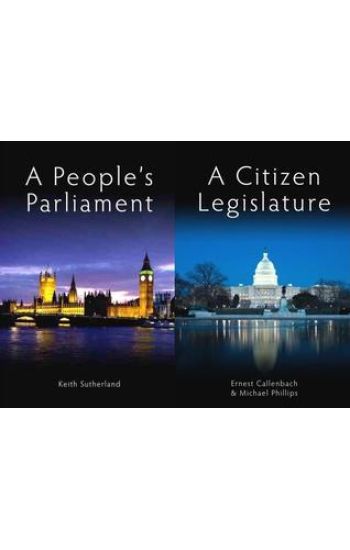
A People's Parliament/A Citizen Legislature
Ernest Callenbach; Michael Phillips; Keith Sutherland
Imprint Academic
2008
sidottu
Two essays, printed back to back in a single volume, offer complementary solutions to the democratic deficit in Britain and the USA. In his book The Party's Over: Blueprint for a Very English Revolution (2004), Keith Sutherland questioned the role of the party in the post-ideological age and concluded that it would be better for government ministers to be appointed by headhunters and held to account by a people's parliament selected by lot. This completely revised and updated edition includes a study of the recent literature on deliberative polling. The American founders proposed that their legislature should be 'an exact portrait, in miniature, of the people at large'. Whether or not this was true at the time, the exponential growth of the population, skyrocketing campaign funding, the power of pressure groups, the grease of the pork-barrel and the dominance of charisma and demagoguery means that the US Constitution could now better be described as a kleptocracy. This pioneering essay proposes selecting Congressional members by random lot (leaving the Senate and Presidency unchanged) to 'restore a direct, powerful voice in Washington to the whole of America'. Originally published in 1985, this new edition includes an introduction by political scientist Peter Stone.
Consider the following paradox: As the leaders of both of the main British political parties subscribed to the neoconservative doctrine on Iraq, everybody else in the birthplace of parliamentary democracy was effectively disenfranchised. Yet one of the rationales supporting the deployment of UK forces in Iraq was the wish to export democracy to the Middle East. The Emperor would appear to have mislaid his clothes (see Gordon Graham's Case Against the Democratic State). Judging from the lack of ministerial resignations in the wake of the Butler enquiry, Britain is no longer a parliamentary democracy. The classical doctrine of joint and several ministerial responsibility is revealed to be a fiction, and Lord Hailsham's verdict of 'elective dictatorship' is a better assessment of the British constitution. By contrast unelected bodies like the BBC are now far more accountable for their actions. The reason of this paradox is the monopoly power of the ruling party, controlled by the Prime Minister. The UK political party started off as a loose association of like-minded MPs. However, in recent years the tail has been wagging the dog — politicians now have no alternative but to choose and then fall in line behind a strong leader with the charisma to win elections. This book examines the historical forces that gave rise to the modern political party and questions its role in the post-ideological age. If we all now share the liberal market consensus, then what is the function of the party? Parties in America are a lot weaker, so the book considers Graham Allen's argument to emulate the US system of checks and balances, but concludes that we would be better off reinterpreting our own constitution more literally. When the Chancellor really was a minister of the crown, every line of the budget was meticulously scrutinized. The key to the changes advocated in the book is the replacement of the Victorian ballot-box with a modern system of representation, based on the jury-selection principle.
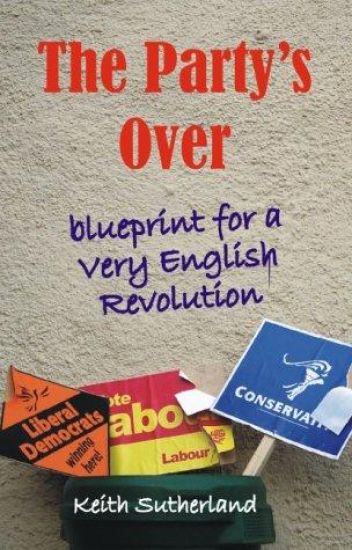
Consider the following paradox: As the leaders of both of the main British political parties subscribed to the neoconservative doctrine on Iraq, everybody else in the birthplace of parliamentary democracy was effectively disenfranchised. Yet one of the rationales supporting the deployment of UK forces in Iraq was the wish to export democracy to the Middle East. The Emperor would appear to have mislaid his clothes (see Gordon Graham's Case Against the Democratic State). Judging from the lack of ministerial resignations in the wake of the Butler enquiry, Britain is no longer a parliamentary democracy. The classical doctrine of joint and several ministerial responsibility is revealed to be a fiction, and Lord Hailsham's verdict of 'elective dictatorship' is a better assessment of the British constitution. By contrast unelected bodies like the BBC are now far more accountable for their actions. The reason of this paradox is the monopoly power of the ruling party, controlled by the Prime Minister. The UK political party started off as a loose association of like-minded MPs. However, in recent years the tail has been wagging the dog — politicians now have no alternative but to choose and then fall in line behind a strong leader with the charisma to win elections. This book examines the historical forces that gave rise to the modern political party and questions its role in the post-ideological age. If we all now share the liberal market consensus, then what is the function of the party? Parties in America are a lot weaker, so the book considers Graham Allen's argument to emulate the US system of checks and balances, but concludes that we would be better off reinterpreting our own constitution more literally. When the Chancellor really was a minister of the crown, every line of the budget was meticulously scrutinized. The key to the changes advocated in the book is the replacement of the Victorian ballot-box with a modern system of representation, based on the jury-selection principle.