Kirjojen hintavertailu – 12 903 742 kirjaa ja 27 kauppaa

Kirjailija

Kellee S. Tsai

Kirjat ja teokset yhdessä paikassa: 4 kirjaa, julkaisuja vuosilta 2004–2026, suosituimpiin kuuluu Fronesis 90-91. Staten. Vertaile teosten hintoja ja tarkista saatavuus suomalaisista kirjakaupoista.

4 kirjaa

Kirjojen julkaisuvuodet: 2004–2026.

Fronesis 90-91. Staten

Fronesis 90-91. Staten

Branko Milanovic; Philip Abrams; James C. Scott; Ilias Alami; Adam D. Dixon; Margaret Pearson; Meg Rithmire; Kellee S. Tsai; Evelina Johansson Wilén; Hugo Lundberg; Mikael Omstedt; Vanja Carlsson; Andreas Asplén Lundstedt

Arkiv förlag/A-Z förlag
2026
Vihko
Samhällskriser som pandemin, inflationschocker, en alltmer ansträngd välfärd och geopolitiska spänningar har under de senaste åren omförhandlat relationen mellan staten och andra samhällsaktörer. Nyliberalismen ifrågasätts och statliga interventioner ökar, men inte genom utbyggd välfärd. I stället växer den repressiva statsapparaten och satsningar på försvar, polis och gränskontroll expanderar snabbt. Globaliseringens tillbakagång och stormakters omfattande stöd till inhemska företag markerar samtidigt nationalstatens återkomst. Internationella institutioner som FN och WTO försvagas, medan tech- och finanssektorns politiska inflytande snarare har stärkts. Dagens politiska konflikter handlar därför allt mindre om valet mellan offentligt och privat. I stället har motsättningarna flyttat in i staten själv: det råder bred samsyn om att staten bör spela en stark roll, men oenighet om vad denna roll ska innebära. Frågan är inte längre om staten ska vara stark, utan hur. I Fronesis nummer 90–91 riktas blicken mot denna utveckling och mot de motsägelsefulla riktningar den tar. Statens förändrade roller undersöks ur två övergripande perspektiv. Det ena rör statens kapacitet att organisera, kontrollera och forma vardagslivet. Det andra gäller statens natur och relation till kapitalismen. Sedan den globala finanskrisen 2008 har intresset för statens roll, kapacitet och begränsningar vuxit inom såväl samhällsdebatt som forskning. Med detta nummer vill Fronesis bidra till den pågående renässansen för diskussioner om staten och kapitalet genom texter som ur historiska och samtida perspektiv utforskar statens räckvidd, dess gränser och dess relation till ekonomi, lag och folk. Den serbisk-amerikanske ekonomen Branko Milanovic analyserar övergången från nyliberal globalisering till en mer merkantilistisk världsordning. De amerikanska statsvetarna Margaret Pearson, Meg Rithmire och Kellee S. Tsai undersöker Kinas politiska ekonomi som en auktoritär form av statskapitalism. Förvaltningsforskaren Andreas Asplén Lundstedt analyserar folkbokföringens historia som både välfärdsinstrument och kontrollverktyg i den moderna staten. Genusvetaren Evelina Johansson Wilén undersöker hur samtidens debatt om låga födelsetal präglas av moral, skuld och politiska konflikter kring reproduktion. Juristen Hugo Lundberg diskuterar staten som en historiskt specifik form för kapitalismens sociala relationer. I numret medverkar även James C. Scott, Mikael Omstedt, Ilias Alami, Adam D. Dixon, Vanja Carlsson och Philip Abrams.
Capitalism Without Democracy

Capitalism Without Democracy

Kellee S. Tsai

Cornell University Press
2007
sidottu
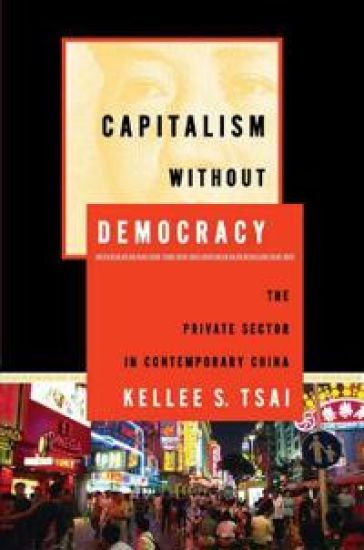
Over the past three decades, China has undergone a historic transformation. Once illegal, its private business sector now comprises 30 million businesses employing more than 200 million people and accounting for half of China's Gross Domestic Product. Yet despite the optimistic predictions of political observers and global business leaders, the triumph of capitalism has not led to substantial democratic reforms. In Capitalism without Democracy, Kellee S. Tsai focuses on the activities and aspirations of the private entrepreneurs who are driving China's economic growth. The famous images from 1989 of China's new capitalists supporting the students in Tiananmen Square are, Tsai finds, outdated and misleading. Chinese entrepreneurs are not agitating for democracy. Most are working eighteen-hour days to stay in business, while others are saving for their one child's education or planning to leave the country. Many are Communist Party members. "Remarkably," Tsai writes, "most entrepreneurs feel that the system generally works for them." Tsai regards the quotidian activities of Chinese entrepreneurs as subtler and possibly more effective than voting, lobbying, and protesting in the streets. Indeed, major reforms in China's formal institutions have enhanced the private sector's legitimacy and security in the absence of mobilization by business owners. In discreet collaboration with local officials, entrepreneurs have created a range of adaptive informal institutions, which in turn, have fundamentally altered China's political and regulatory landscape. Based on years of research, hundreds of field interviews, and a sweeping nationwide survey of private entrepreneurs funded by the National Science Foundation, Capitalism without Democracy explodes the conventional wisdom about the relationship between economic liberalism and political freedom.
Capitalism Without Democracy

Capitalism Without Democracy

Kellee S. Tsai

Cornell University Press
2007
pokkari
Over the past three decades, China has undergone a historic transformation. Once illegal, its private business sector now comprises 30 million businesses employing more than 200 million people and accounting for half of China's Gross Domestic Product. Yet despite the optimistic predictions of political observers and global business leaders, the triumph of capitalism has not led to substantial democratic reforms. In Capitalism without Democracy, Kellee S. Tsai focuses on the activities and aspirations of the private entrepreneurs who are driving China's economic growth. The famous images from 1989 of China's new capitalists supporting the students in Tiananmen Square are, Tsai finds, outdated and misleading. Chinese entrepreneurs are not agitating for democracy. Most are working eighteen-hour days to stay in business, while others are saving for their one child's education or planning to leave the country. Many are Communist Party members. "Remarkably," Tsai writes, "most entrepreneurs feel that the system generally works for them." Tsai regards the quotidian activities of Chinese entrepreneurs as subtler and possibly more effective than voting, lobbying, and protesting in the streets. Indeed, major reforms in China's formal institutions have enhanced the private sector's legitimacy and security in the absence of mobilization by business owners. In discreet collaboration with local officials, entrepreneurs have created a range of adaptive informal institutions, which in turn, have fundamentally altered China's political and regulatory landscape. Based on years of research, hundreds of field interviews, and a sweeping nationwide survey of private entrepreneurs funded by the National Science Foundation, Capitalism without Democracy explodes the conventional wisdom about the relationship between economic liberalism and political freedom.
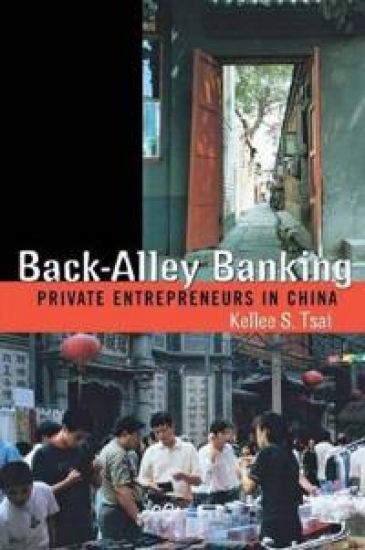
Back-Alley Banking

Back-Alley Banking

Kellee S. Tsai

Cornell University Press
2004
pokkari
Chinese entrepreneurs have founded more than thirty million private businesses since Beijing instituted economic reforms in the late 1970s. Most of these private ventures, however, have been denied access to official sources of credit. State banks continue to serve state-owned enterprises, yet most private financing remains illegal. How have Chinese entrepreneurs managed to fund their operations? In defiance of the national banking laws, small business owners have created a dizzying variety of informal financing mechanisms, including rotating credit associations and private banks disguised as other types of organizations. Back-Alley Banking includes lively biographical sketches of individual entrepreneurs; telling quotations from official documents, policy statements, and newspaper accounts; and interviews with a wide variety of women and men who give vivid narratives of their daily struggles, accomplishments, and hopes for future prosperity. Kellee S. Tsai's book draws upon her unparalleled fieldwork in China's world of shadow finance to challenge conventional ideas about the political economy of development. Business owners in China, she shows, have mobilized local social and political resources in innovative ways despite the absence of state-directed credit or a well-defined system of private property rights. Entrepreneurs and local officials have been able to draw on the uncertainty of formal political and economic institutions to enhance local prosperity.