Kirjojen hintavertailu – 12 903 733 kirjaa ja 27 kauppaa

Kirjailija

Kelly Kindscher

Kirjat ja teokset yhdessä paikassa: 4 kirjaa, julkaisuja vuosilta 1987–2024, suosituimpiin kuuluu Edible Wild Plants of the Prairie. Vertaile teosten hintoja ja tarkista saatavuus suomalaisista kirjakaupoista.

4 kirjaa

Kirjojen julkaisuvuodet: 1987–2024.

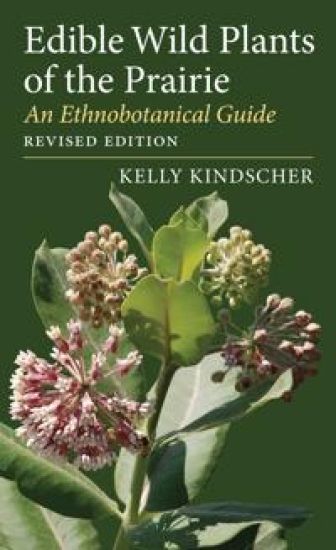
Edible Wild Plants of the Prairie

Edible Wild Plants of the Prairie

Kelly Kindscher

UNIVERSITY PRESS OF KANSAS
2024
nidottu
The wild plants in this book tell stories of land, people, and food. As renowned botanist Kelly Kindscher guides us through over one hundred edible plants in this beautiful field guide, we find that foraging has always been an important part of prairie life. Before colonization, Native American women were the primary gatherers of wild plants, which were an abundant, sustainable, and delicious feature of Indigenous diets. Colonizers reduced the significance of wild plants in prairie life as they relocated Native peoples and imposed their agrarian culture on the land, but these Indigenous foodways were never truly lost. In the recent past, foraging has become a tremendously popular way for many peoples to connect with the earth, promote sustainability, and revive and honor cultural food traditions. In this beautifully illustrated new edition, Kindscher explores 117 wild plants of the prairie, offering information about habitat, food use, and cultivation. Color photos and maps make this stunning book a useful foraging guide for anyone to take out into the prairie. A must-have for enthusiasts and professionals alike, Edible Wild Plants of the Prairie gives us the great opportunity to engage with the land we live in.
Field Guide to the Trees of the Gila Region of New Mexico

Field Guide to the Trees of the Gila Region of New Mexico

Richard Stephen Felger; James Thomas Verrier; Kelly Kindscher; Xavier Raj Herbst Khera

University of New Mexico Press
2021
nidottu
Field Guide to the Trees of the Gila Region of New Mexico is the definitive guide for field botanists, researchers, students, and avid nature lovers who wish to explore the natural history of native and introduced tree species across the Gila. The book documents over seventy-five tree species in the first wilderness area in the United States--and the largest in New Mexico--known for its wildness, remoteness, and significant recreation opportunities. Drawing on extensive fieldwork, the authors feature detailed individual species accounts and special ecological and ethnobotanical information, providing full dichotomous keys to the families, genera, and species of all trees in the region. Color photographs of the species provide diagnostic clarity for easy identification, showing the whole tree, trunk, and foliage as well as macro photos of the flowers, fruits, or cones and other significant features. This comprehensive and user-friendly guide will be welcomed by residents and visitors studying and discovering the diverse trees of the Gila Region.
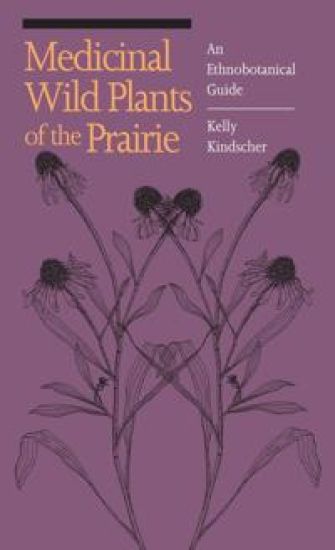
Medicinal Wild Plants of the Prairie

Medicinal Wild Plants of the Prairie

Kelly Kindscher

University Press of Kansas
1992
nidottu
The Plains Indians found medicinal value in more than 200 species of native prairie plants. Unfortunately, modern American culture has not paid much attention. White settlers did learn a few plant-based remedies from the Indians, and a few prairie plants were prescribed by frontier doctors. A couple dozen prairie species were listed as drugs in the ""US Pharmacopeia"" at one time or another, and one or two, like the Purple Coneflower, found their way into the bottles of patent medicine. But in both the number of species used and the varieties of treatments administered, Indians were far more proficient than white settlers. Their familiarity with the plants of the prairie was comprehensive - they recognized more varieties of some species of prairie plants than scientists do today. Their knowledge was refined and exact enough that they could successfully administer medicinal doses of plants that are poisonous. All of the species used by frontier doctors were used first by Indians. In ""Medicinal Wild Plants of the Prairie"", ethnobotanist Kelly Kindscher documents the medicinal use of 203 native prairie plants by the Plains Indians. Using information gleaned from archival materials, interviews and fieldwork, Kindscher describes plant-based treatments for ailments ranging from hyperactivity to syphillis, from arthritis to worms. He also explains the use of internal and external medications, smoke treatments, moxa (the burning of a medicinal substance on the skin), and the doctrine of signatures (the belief that the form or characteristics of a plant are signatures of signs that reveal its medicinal uses). He adds information on recent pharmacological findings to further illuminate the medicinal nature of these plants. Kindscher's study encompasses the entire Prairie Bioregion, a one-million-square-mile area bounded by Texas on the south, Canada on the north, the Rocky Mountains on the west and the deciduous forests of Missouri, Indiana and Wisconsin in the east. Along with information on the medicinal uses of prairie plants by the Indians, Kindscher also lists Indian, common and scientific names and describes Anglo folk uses, medical uses, scientific research and cultivation. Descriptions of the plants are supplemented by 44 line drawings and over 100 range maps.
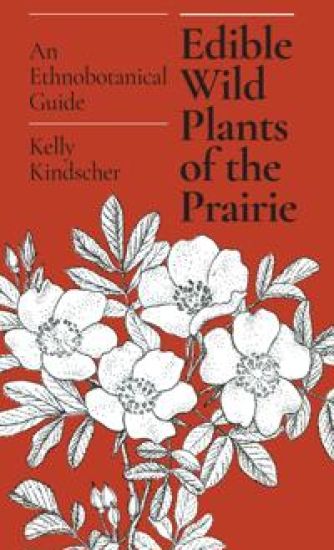
Edible Wild Plants of the Prairie

Edible Wild Plants of the Prairie

Kelly Kindscher

University Press of Kansas
1987
nidottu
Long before sunflower seeds became a popular snack food, they were a foodstuff valued by Native Americans. For some 10,000 years, from the end of the Pleistocene to the 1800s, the indigenous peoples of the plains regarded edible native plants, like the sunflower, as an important source of food. Not only did plants provide sustenance during times of scarcity, but they also added variety to what otherwise would have been a monotonous diet of game. Nevertheless, the use of native plants as food sharply declined when white men settled the Great Plains and imposed their own culture with its differing notions of what was fit to eat. Those notions tended to excluded from the accepted diet such plants as soapweed, labsquarter, ground cherry, prairie turnip, and prickly pear. Today it is strange to think of eating chokecherries, which were a key ingredient in that staple of the Indian diet, permmican. Based on plant lore documented by historical and achaeological evidence, Edible Wild Plants of the Prairie related how 122 plant species were once used as food by the native and immigrant residents on the prairie. Written for a broad audience of amateur naturalists, botanists, ethnologists, anthropologists, and agronomists, this guide is intended to educate the reader about wild plants as food sources, to synthesize information on the potential use of native flora as new food crops, and to encourage the conservation and cultivation of prairie plants. By writing about the edible flora of the American prairie Kelly Kindscher has provided us with the first edible plant book devoted to the region that Walt Whitman called "North America's characteristic landscape" and the Willa Cather called "the floor of the sky." In describing how plants were used for food, he has drawn upon information concerning tribes that inhabited the prairie bioregion. As a consequence, his book serves as a handy compendium for readers seeking to learn more about historical uses of plants by Native Americans. The book is organized into fifty-one chapters arranged alphabetically by scientific name. For those who are interested in finding and identifying the plants, the book provides line drawings, distribution maps, and botanical and habitat descriptions. The ethnobotanical accounts of food use form the major portion of the text, but the reader will also find information on the parts of the plants used, harvesting, propagation (for home gardeners), and the preparation and taste of wild food plants.