
Kirjailija
Ken Coates
Kirjat ja teokset yhdessä paikassa: 32 kirjaa, julkaisuja vuosilta 1982–2022, suosituimpiin kuuluu Money Troubles ... War Crimes. Vertaile teosten hintoja ja tarkista saatavuus suomalaisista kirjakaupoista.
32 kirjaa
Kirjojen julkaisuvuodet: 1982–2022.


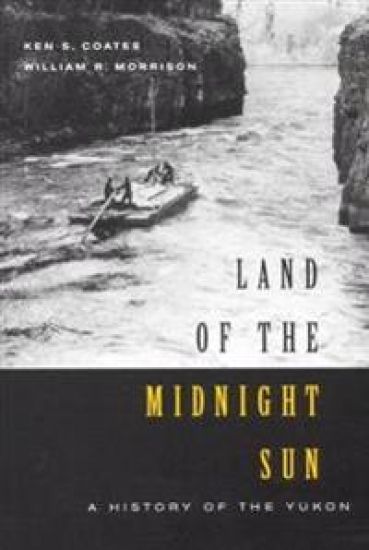
While the Klondike Gold Rush is one of the most widely known events in Canadian history, particularly outside Canada, the rest of the Yukon's long and diverse history attracts little attention. Important developments such as Herschel Island whaling, pre-1900 fur trading, the post-World War II resource boom, a lengthy struggle for responsible government, and the emergence of Aboriginal political protest remain poorly understood. Placing well-known historical episodes within the broader sweep of the past, Land of the Midnight Sun gives particular emphasis to the role of First Nations people and the lengthy struggle of Yukoners to find their place within Confederation. This broader story incorporates the introduction of mammoth dredges that scoured the Klondike creeks, the impressive Elsa-Keno Hill silver mines, the impact of residential schools on Aboriginal children, the devastation caused by the sinking of the Princess Sophia, the Yukon's remarkable contributions to the national World War I effort, and the sweeping transformations associated with the American occupation during World War II. Completely revised with a new epilogue, the bestselling Land of the Midnight Sun was first published in 1988 and became the standard source for understanding the history of the Yukon. Ken Coates and William Morrison have published ten books together, including Strange Things Done: A History of Murder in the Yukon and the forthcoming Trailmarkers: A History of Landmark Aboriginal Rights Cases in Canada. Land of the Midnight Sun was their first collaboration.
In The Marshall Decision and Native Rights Ken Coates explains the cross-cultural, legal, and political implications of the recent Supreme Court decision on the Donald Marshall case. He describes the events, personalities, and conflicts that brought the Maritimes to the brink of a major confrontation between Mi'kmaq and the non-Mi'kmaq fishers in the fall of 1999, detailing the bungling by federal departments and the lack of police preparedness. He shows how political, business, and Mi'kmaq leaders in the Maritimes handled the volatile situation, urging non-violence and speaking out against racism, in contrast to the way federal and regional leaders have responded in other parts of the country. Legal victories such as Marshall, argues Coates, are a double-edged sword that provide greater legal clarity but expand the gap between indigenous and non-indigenous peoples in Canada. Coates recounts the history of Mi'kmaq-white contact in the region and considers the impact of native rights on natural resources, showing that the costs will be borne mainly by rural Canadians. By placing the local and regional reaction to the Marshall decision in the broader historical, national, and international context of indigenous political and legal rights The Marshall Decision and Native Rights shows how little Canada has learned from three decades of First Nations legal conflicts and how far the country is from meaningful reconciliation.
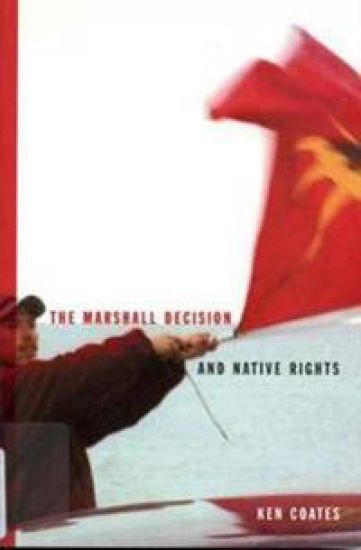
In The Marshall Decision and Native Rights Ken Coates explains the cross-cultural, legal, and political implications of the recent Supreme Court decision on the Donald Marshall case. He describes the events, personalities, and conflicts that brought the Maritimes to the brink of a major confrontation between Mi'kmaq and the non-Mi'kmaq fishers in the fall of 1999, detailing the bungling by federal departments and the lack of police preparedness. He shows how political, business, and Mi'kmaq leaders in the Maritimes handled the volatile situation, urging non-violence and speaking out against racism, in contrast to the way federal and regional leaders have responded in other parts of the country. Legal victories such as Marshall, argues Coates, are a double-edged sword that provide greater legal clarity but expand the gap between indigenous and non-indigenous peoples in Canada. Coates recounts the history of Mi'kmaq-white contact in the region and considers the impact of native rights on natural resources, showing that the costs will be borne mainly by rural Canadians. By placing the local and regional reaction to the Marshall decision in the broader historical, national, and international context of indigenous political and legal rights The Marshall Decision and Native Rights shows how little Canada has learned from three decades of First Nations legal conflicts and how far the country is from meaningful reconciliation.
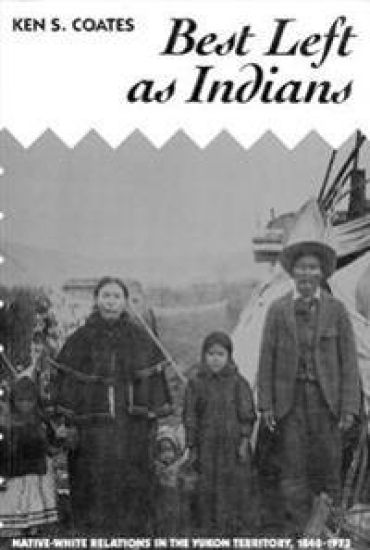
The indigenous population, Coates stresses, has not been passive in the face of expansion by whites. He argues that Native people have played a major role in shaping the history of the region and determining the relationship with the immigrant population. They recognized the conflict between the material and technological advantages of an imposed economic order and the desire to maintain a harvesting existence. While they readily accepted technological innovations, they resisted the imposition of an industrial, urban environment. Contemporary land claims show their long-standing attachment to the land and demonstrate a continued, assertive response to non-Native intervention.
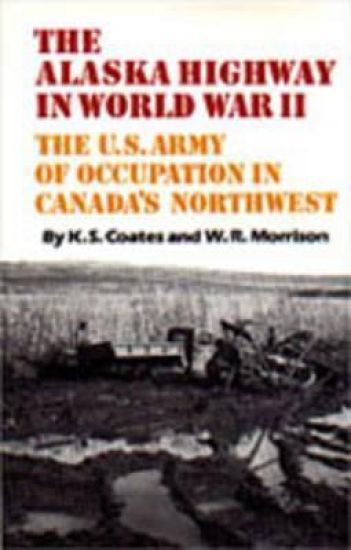
The Alaska Highway in World War II
Ken Coates; Robert W. Morrison
University of Toronto Press
1992
sidottu
After the Japanese attack on Pearl Harbor a general fear of invasion swept North America, and particularly the West Coast; it seemed essential that immedtiate steps be taken to defend the Far Northwest. With the approval of the Canadian government, Washington drew up plans for the future Alaska Highway to connect Edmonton, Alberta, with Fairbanks, Alaska, and for a pipeline to connect the oil fields at Norman Wells, Northwest Territories, with the Pacific Coast. As a result, between 1942 and 1946, forty thousand American military and civilian personnel invaded the Canadian Northwest. Where there had been few roads or none, a pioneer road more thant 1500 miles long was built in less than a year. A rough road was built from Normal Wells to Whitehorse, Yukon ( a distance of nearly 600 miles), and the Canol Pipeline was built along its length. Navigation facilities along the Mackenzie River were improved. Pipelines were laid from Whitehorse northwest 600 miles to Fairbanks; southest 300 miles to Watson Lake, near the British Columbia line; and southwest 100 miles to the Pacific Ocean at Skagway, Alaska. The Haines Lateral, almost 150 miles long, connected the Alaska Highway to salt water at Haines, Alaska. Existing airfields were upgraded and new ones built on the Northwest Staging Route. Ancilary facilities, such as a telephone network, were constructed. The Northwest was totally unprepared for this friendly invasion. The AlaskaHighway ran through a semiwilderness where many inhabitants pursued a nomadic, harvesting way of lie. More thanb 5,000 trucks arrived where there had been hardly that many pepoel. Edmonton, with 95,000 people, became "the young Chicago of the North." Whitehorse, an obscure village of fewer than 800 people, was to become northern Canada's largest community and the territorial capital. Many other small towns and settlements were overwhelmed by the tens of thousands in the American "army of occupation." This lively history of a great episode in American civil and military engineering is based largely on interviews with veteran and local residents, as well as research in Canadian archives and those of the U. S. Corps of Engineers.. The authors address such related topics as how and why the projects were planned and built; the impacts of the newcomers on the environment, the wildlife, and the Native people; social and sexual relations between the Americans and local people; law enforcementl and racism. The anecdotes of the participants provide humour and insights on the events of fifty years ago.
Selected Writings on the State and the Transition to Socialism
N. Bukharin; Richard B. Day; Stephen F. Cohen; Ken Coates
M.E. Sharpe
1982
sidottu
Underlying current controversies about environmental regulation are shared concerns, divided interests and different ways of thinking about the earth and our proper relationship to it. This book brings together writings on nature and environment that illuminate thought and action in this realm.