Kirjojen hintavertailu – 12 903 737 kirjaa ja 27 kauppaa

Kirjailija

Ken Frieden

Kirjat ja teokset yhdessä paikassa: 6 kirjaa, julkaisuja vuosilta 1997–2021, suosituimpiin kuuluu Jewish Dreams. Vertaile teosten hintoja ja tarkista saatavuus suomalaisista kirjakaupoista.

6 kirjaa

Kirjojen julkaisuvuodet: 1997–2021.

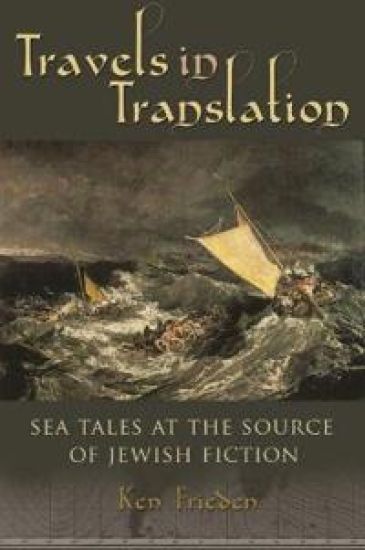
Travels in Translation

Travels in Translation

Ken Frieden

Syracuse University Press
2016
nidottu
For centuries before its ""rebirth"" as a spoken language, Hebrew writing was like a magical ship in a bottle that gradually changed design but never voyaged out into the world. Isolated, the ancient Hebrew ship was torpid because the language of the Bible was inadequate to represent modern life in Europe. Early modern speakers of Yiddish and German gave Hebrew the breath of life when they translated dialogues, descriptions, and thought processes from their vernaculars into Hebrew. By narrating tales of pilgrimage and adventure, Jews pulled the ship out of the bottle and sent modern Hebrew into the world. In Travels in Translation, Frieden analyzes this emergence of modern Hebrew literature after 1780, a time when Jews were moving beyond their conventional Torah- and Zion-centered worldview. Enlightened authors diverged from pilgrimage narrative traditions and appropriated travel narratives to America, the Pacific, and the Arctic. The effort to translate sea travel stories from European languages—with their nautical terms, wide horizons, and exotic occurrences—made particular demands on Hebrew writers. They had to overcome their tendency to introduce biblical phrases at every turn in order to develop a new, vivid, descriptive language. As Frieden explains through deft linguistic analysis, by 1818, a radically new travel literature in Hebrew had arisen. Authors such as Moses Mendelsohn-Frankfurt and Mendel Lefin published books that charted a new literary path through the world and in European history. Taking a fresh look at the origins of modern Jewish literature, Frieden launches a new approach to literary studies, one that lies at the intersection of translation studies and travel writing.

Travels in Translation

Travels in Translation

Ken Frieden

Syracuse University Press
2016
sidottu
For centuries before its ""rebirth"" as a spoken language, Hebrew writing was like a magical ship in a bottle that gradually changed design but never voyaged out into the world. Isolated, the ancient Hebrew ship was torpid because the language of the Bible was inadequate to represent modern life in Europe. Early modern speakers of Yiddish and German gave Hebrew the breath of life when they translated dialogues, descriptions, and thought processes from their vernaculars into Hebrew. By narrating tales of pilgrimage and adventure, Jews pulled the ship out of the bottle and sent modern Hebrew into the world. In Travels in Translation, Frieden analyzes this emergence of modern Hebrew literature after 1780, a time when Jews were moving beyond their conventional Torah- and Zion-centered worldview. Enlightened authors diverged from pilgrimage narrative traditions and appropriated travel narratives to America, the Pacific, and the Arctic. The effort to translate sea travel stories from European languages—with their nautical terms, wide horizons, and exotic occurrences—made particular demands on Hebrew writers. They had to overcome their tendency to introduce biblical phrases at every turn in order to develop a new, vivid, descriptive language. As Frieden explains through deft linguistic analysis, by 1818, a radically new travel literature in Hebrew had arisen. Authors such as Moses Mendelsohn-Frankfurt and Mendel Lefin published books that charted a new literary path through the world and in European history. Taking a fresh look at the origins of modern Jewish literature, Frieden launches a new approach to literary studies, one that lies at the intersection of translation studies and travel writing.

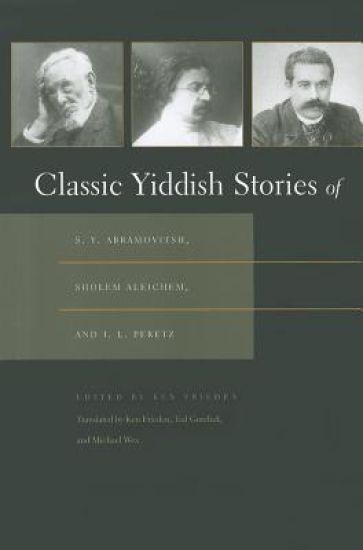
Classic Yiddish Stories of S. Y. Abramovitsh, Sholem Aleichem, and I. L. Peretz
Two early works by S. Y. Abramovitsh introduce the reader to Abramovitsh’s alter ego Mendele the Book Peddler. Mendele narrates both The Little Man and Fishke the Lame. In different voices, he also presents a diverse cast of characters including Isaac Abraham as tailor’s apprentice, choirboy, and corrupt businessman. Reb Alter tells of his matchmaking mishap and Fishke relates his travels through the Ukraine with a caravan of beggars. Sholem Aleichem’s Tevye reemerges from new translations of ""Hodel"" and ""Chava"" in all of his comic splendor. Notes enable students to follow Tevye’s uneven steps through Bible quotations. Four of Sholem Aleichem’s other eloquent monologists come back to haunt us in scintillating translations. The selections from Peretz include his finest stories about the hasidim, such as ""Kabbalists,"" ""Teachings of the Hasidim,"" and the ironic tale ""The Rebbe’s Pipe."" A fresh rendering of Peretz’s masterpiece ""Between Two Mountains"" represents the meeting of an inspirational rebbe and an awe-inspiring rabbi. Following the translations are three biographical essays about these giants of modern Yiddish literature.
Classic Yiddish Stories of S. Y. Abramovitsh, Sholem Aleichem, and I. L. Peretz

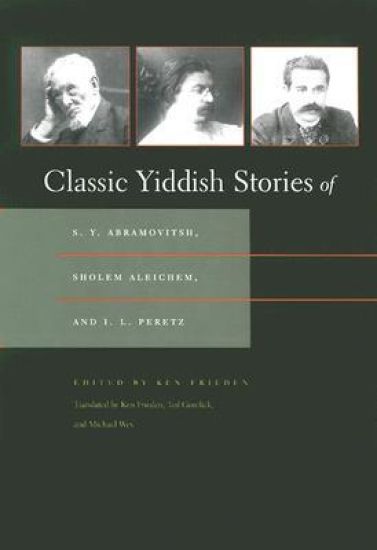
Classic Yiddish Stories of S. Y. Abramovitsh, Sholem Aleichem, and I. L. Peretz

Ken Frieden

Syracuse University Press
2004
sidottu

Halvin toimitettuna 22,90 €

Two novellas by S. Y. Abramovitsh open this anthology, the first comprehensive overview of works by the three classic Yiddish authors. They describe Jewish life in Eastern Europe during the nineteenth century and introduce the reader to Abramovitsh's alter ago, Mendele the Book Peddler. Here he presents a diverse cast of characters including Isaac Abraham as tailor's apprentice, choirboy, and corrupt businessman, and Fishke traveling through the Ukraine with a caravan of beggars. Sholem Aleichem reintroduces us to Tevye the Dairyman's beloved daughters Hodel and Chava, known to everyone familiar with the musical or film fiddler on the Roof. Tevye is a gregarious storyteller who describes the pleasures of raising independent-minded daughters. We catch glimpses of inspirational rebbes and awe-inspiring rabbis. These translations breathe new life into the unforgettable worlds of Yiddish literature.