Kirjojen hintavertailu – 12 903 725 kirjaa ja 27 kauppaa

Kirjailija

Kenneth I. Maton

Kirjat ja teokset yhdessä paikassa: 5 kirjaa, julkaisuja vuosilta 1992–2016, suosituimpiin kuuluu Influencing Social Policy. Vertaile teosten hintoja ja tarkista saatavuus suomalaisista kirjakaupoista.

Nimi esiintyy myös muodoissa: Kenneth I Maton

5 kirjaa

Kirjojen julkaisuvuodet: 1992–2016.

Influencing Social Policy

Influencing Social Policy

Kenneth I. Maton

Oxford University Press Inc
2016
nidottu
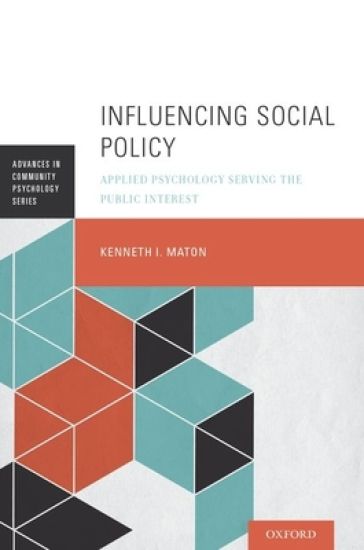
Influencing Social Policy synthesizes current knowledge about how psychologists influence social policy to serve the public interest. The volume builds upon interviews with 79 applied psychologists about their experiences in the policy domain, with special focus on the work of applied developmental psychologists, applied social psychologists, and community psychologists. Additional foundations of the volume include a review of social science scholarship across a wide range of disciplines, and author Kenneth Maton's 30 years of teaching on the topic, including frequent interactions with Washington, DC, policy experts. Together, these sources provide in-depth information about how applied psychologists influence social policy, the factors that contribute to their success, the challenges they face, and the approaches used to address those challenges. The policy influences described span all three branches of government: legislative, executive, and judicial. The policy content areas are diverse, including the death penalty prohibition for adolescents, early childhood education, gay marriage, gender discrimination in the workplace, health and mental health care reform, homelessness, home visiting programs, sexually abused child witness treatment, status offender diversion from the juvenile justice system, substance abuse prevention, and many others. Influencing Social Policy is a must-have resource for graduate students and professionals in a wide variety of disciplines with interests in influencing social policy, including psychology, education, public health, social work, policy studies, anthropology, and sociology.

Overcoming the Odds

Overcoming the Odds

Freeman A. Hrabowski; Kenneth I. Maton; Monica Greene; Geoffrey L. Greif

Oxford University Press Inc
2001
sidottu
When Beating the Odds: Raising Academically Successful African American Males appeared in 1998, it was hailed as "a crucial book" (Baltimore Sun) and "undoubtedly one of the most important tools the African American parent can possess" (Kweisi Mfume, President NAACP). Now, in response to enormous demand, the authors turn their attention to African American young women. Statistics indicate that African American females, as a group, fare poorly in the United States. Many live in single-parent households-either as the single-parent mother or as the daughter. Many face severe economic hurdles. Yet despite these obstacles, some are performing at exceptional levels academically. Based on interviews with many of these successful young women and their families, Overcoming the Odds provides a wealth of information about how and why they have succeeded-what motivates them, how their backgrounds and family relationships have shaped them, even how it feels to be a high academic achiever. They also discuss the challenges of moving into African American womanhood, from maintaining self-esteem to making the right choices about their professional and personal lives. Most important, the book offers specific and inspiring examples of the practices, attitudes, and parenting strategies that have enabled these women to persevere and triumph. For parents, educators, policy makers, and indeed all those concerned about the education of young African American women, Overcoming the Odds is an invaluable guidebook on creating the conditions that lead to academic-and lifelong-success.
Beating the Odds

Beating the Odds

Freeman A. Hrabowski; Kenneth I. Maton; Geoffrey L. Greif

Oxford University Press Inc
1998
sidottu
Current statistics indicate that a young African-American man is more likely to be incarcerated or killed than to graduate from college. Yet, despite many obstacles, some are beating the odds against them and achieving at society's highest standard of success. How do they avoid such pitfalls, and what can African-American parents do to help their sons succeed? Based on extensive research and interviews with successful young African-American males and their parents, Beating the Odds emphasizes the unique combinations of supportive and challenging parenting practices that parents have adopted to help their sons cope and achieve in both the African-American community and mainstream white society.
Religion and Prevention in Mental Health

Religion and Prevention in Mental Health

Robert E Hess; Kenneth I Maton; Kenneth Pargament

Routledge Member of the Taylor and Francis Group
1992
sidottu
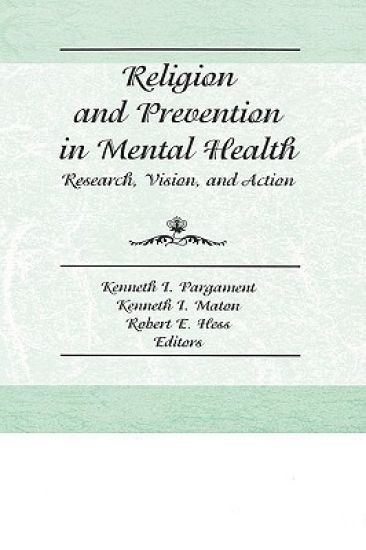
Here is the first book which highlights the unique resource of religion in the field of prevention. Until now, religious systems have been a largely undertapped resource of talent, energy, care, and physical and financial assets. Religion and Prevention in Mental Health is a significant new volume that lays a general foundation for preventive work in the religious area. It presents a number of reasons for examining religion as a source for aiding prevention and well-being. The authors dispute the popular notion of religion as damaging to mental health, as well as the idea that religious affiliation is entirely predictive of better mental health. Instead they focus on the framework for living that religions provide which assists believers in anticipating, avoiding, or modifying problems before they develop. For the human service professional willing to build a collaborative relationship with religious systems, this vital book depicts the richness and diversity of religion and shows the interface of religion, well-being, and prevention. Important issues such as the impact of religion on American society and the ethos of mental health and prevention, the historical and contemporary role of the African-American church as an empowering agent and mediating structure for black citizens, the critical roles of theology in determining the attitude of religious systems toward prevention and well-being, the importance of community and personal narratives, and the limitations of religious settings due to their survival concerns and methods to increase their potential to heal are all discussed thoroughly. Through a better understanding of religious settings, programs, and processes, human service professionals can more effectively utilize religion and reach a neglected portion of the population in need of help. In addition, religious leaders, mental health professionals including counselors, social workers, program developers, evaluators, and administrators, and psychologists, sociologists, and anthropologists will benefit from the comprehensive material provided in this timely book.
Religion and Prevention in Mental Health

Religion and Prevention in Mental Health

Robert E Hess; Kenneth I Maton; Kenneth Pargament

Routledge Member of the Taylor and Francis Group
1992
nidottu
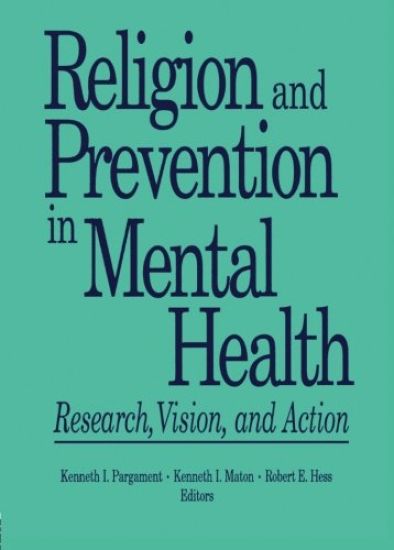
Here is the first book which highlights the unique resource of religion in the field of prevention. Until now, religious systems have been a largely undertapped resource of talent, energy, care, and physical and financial assets. Religion and Prevention in Mental Health is a significant new volume that lays a general foundation for preventive work in the religious area. It presents a number of reasons for examining religion as a source for aiding prevention and well-being. The authors dispute the popular notion of religion as damaging to mental health, as well as the idea that religious affiliation is entirely predictive of better mental health. Instead they focus on the framework for living that religions provide which assists believers in anticipating, avoiding, or modifying problems before they develop. For the human service professional willing to build a collaborative relationship with religious systems, this vital book depicts the richness and diversity of religion and shows the interface of religion, well-being, and prevention. Important issues such as the impact of religion on American society and the ethos of mental health and prevention, the historical and contemporary role of the African-American church as an empowering agent and mediating structure for black citizens, the critical roles of theology in determining the attitude of religious systems toward prevention and well-being, the importance of community and personal narratives, and the limitations of religious settings due to their survival concerns and methods to increase their potential to heal are all discussed thoroughly. Through a better understanding of religious settings, programs, and processes, human service professionals can more effectively utilize religion and reach a neglected portion of the population in need of help. In addition, religious leaders, mental health professionals including counselors, social workers, program developers, evaluators, and administrators, and psychologists, sociologists, and anthropologists will benefit from the comprehensive material provided in this timely book.