

Kirjailija
Kenneth J. Saltman
Kirjat ja teokset yhdessä paikassa: 26 kirjaa, julkaisuja vuosilta 2000–2026, suosituimpiin kuuluu AI Schools and the New Child Labor. Vertaile teosten hintoja ja tarkista saatavuus suomalaisista kirjakaupoista.
26 kirjaa
Kirjojen julkaisuvuodet: 2000–2026.

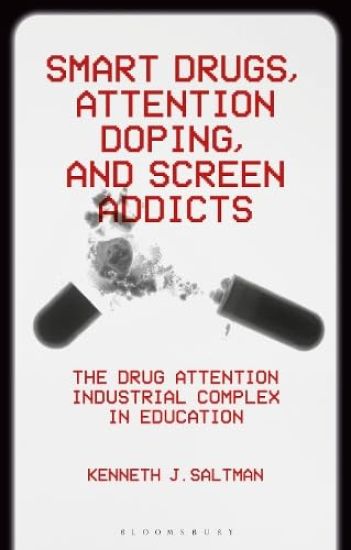
Smart Drugs, Attention Doping, and Screen Addicts
Kenneth J. Saltman
BLOOMSBURY PUBLISHING PLC
2025
nidottu
With this book, Keneth J. Saltman argues that drugs are at the center of the most significant transformations of schooling. Children are increasingly being drugged to compete on standardized tests, to increase their attention levels in school, and are being diagnosed with ADHD at exponentially increasing rates. Saltman describes the material stakes in what he calls the education drugs attention complex, namely: educational profiteering through the mutually supportive sales of drugs and testing products; drugs and digital screen technologies; drugs and trauma/resilience programs; and drugs and the school to prison pipeline. He shows how each of these examples are part of a vast interlocking drug and attention industry in which pharma and tech companies are commercializing and producing youth problems for profit and are targeting the most vulnerable young people. The book covers the prevalence of screen addiction, the misuse of hormone therapies for transgenders youth, anxiety and trauma medication, the connection between race and drugs, and in the final chapter offers critical, democratic, and practical solutions for educators and policy makers to tackle these issues.
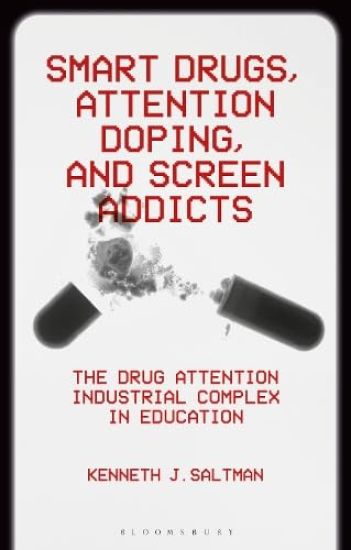
Smart Drugs, Attention Doping, and Screen Addicts
Kenneth J. Saltman
BLOOMSBURY PUBLISHING PLC
2025
sidottu
With this book, Keneth J. Saltman argues that drugs are at the center of the most significant transformations of schooling. Children are increasingly being drugged to compete on standardized tests, to increase their attention levels in school, and are being diagnosed with ADHD at exponentially increasing rates. Saltman describes the material stakes in what he calls the education drugs attention complex, namely: educational profiteering through the mutually supportive sales of drugs and testing products; drugs and digital screen technologies; drugs and trauma/resilience programs; and drugs and the school to prison pipeline. He shows how each of these examples are part of a vast interlocking drug and attention industry in which pharma and tech companies are commercializing and producing youth problems for profit and are targeting the most vulnerable young people. The book covers the prevalence of screen addiction, the misuse of hormone therapies for transgenders youth, anxiety and trauma medication, the connection between race and drugs, and in the final chapter offers critical, democratic, and practical solutions for educators and policy makers to tackle these issues.
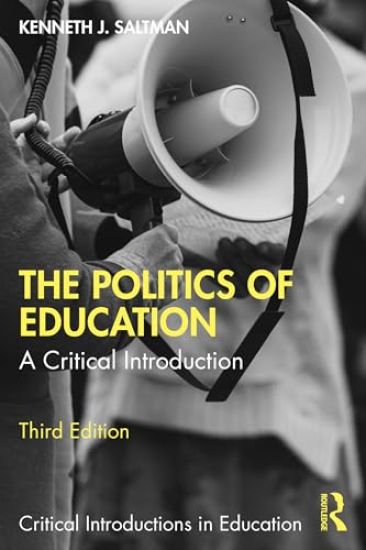
The Politics of Education provides an introduction to both the political dimensions of schooling and the politics of recent educational reform debates. The book offers undergraduates and starting graduate students in education an understanding of numerous dimensions of the contested field of education, addressing questions of political economy, class, cultural politics, race, and gender. Noted scholar Kenneth J. Saltman introduces contemporary educational debates and seriously considers views across the political spectrum from the vantage point of critical education, emphasizing schooling for broader social equality and justice. With three completely new chapters and updates to existing content, additional updates to the third edition include discussions of technology and digital privatization, the dangers of AI, resilience and social emotional learning, authoritarian populism, the expansion of educational censorship and teacher gags, trans politics, new expressions of colonial and imperial education, the rise of misinformation, climate change, and sustainability. With opportunities for readers to engage in deeper discussion through Questions for Further Discussion and a Glossary of key terms, The Politics of Education remains a much-needed, accessible primer for Education Policy and Politics courses, providing the critical tools needed to make sense of the current politics of education.
The Politics of Education provides an introduction to both the political dimensions of schooling and the politics of recent educational reform debates. The book offers undergraduates and starting graduate students in education an understanding of numerous dimensions of the contested field of education, addressing questions of political economy, class, cultural politics, race, and gender. Noted scholar Kenneth J. Saltman introduces contemporary educational debates and seriously considers views across the political spectrum from the vantage point of critical education, emphasizing schooling for broader social equality and justice. With three completely new chapters and updates to existing content, additional updates to the third edition include discussions of technology and digital privatization, the dangers of AI, resilience and social emotional learning, authoritarian populism, the expansion of educational censorship and teacher gags, trans politics, new expressions of colonial and imperial education, the rise of misinformation, climate change, and sustainability. With opportunities for readers to engage in deeper discussion through Questions for Further Discussion and a Glossary of key terms, The Politics of Education remains a much-needed, accessible primer for Education Policy and Politics courses, providing the critical tools needed to make sense of the current politics of education.
Kenneth J. Saltman is a defining voice within Education, and for 25 years he has worked to uncover the ways in which public education has been impacted by corporatization and neoliberalism, and to demonstrate what educators and citizens can do to reclaim the democratic purpose of schooling. His work is unique in the way that it bridges a number of traditions, theoretical perspectives, and ranges in scope across the discipline, while at the same time translating crucial concepts in an accessible writing style. In this timely collection, Saltman introduces 11 of his most influential writings across his career with new contextual information for each piece. The volume is framed by a new introduction and conclusion by the author, which re-examine the scope of his work, discuss the larger development of the field over time, and considers what is still to be done. This important work will be crucial to researchers and graduate students in Education courses, particularly within Educational Foundations, Sociology of Education, and Education Policy Studies. The book’s interdisciplinary nature means that it will also be highly beneficial for those studying or researching within Sociology, Communications, and Politics.
Kenneth J. Saltman is a defining voice within Education, and for 25 years he has worked to uncover the ways in which public education has been impacted by corporatization and neoliberalism, and to demonstrate what educators and citizens can do to reclaim the democratic purpose of schooling. His work is unique in the way that it bridges a number of traditions, theoretical perspectives, and ranges in scope across the discipline, while at the same time translating crucial concepts in an accessible writing style. In this timely collection, Saltman introduces 11 of his most influential writings across his career with new contextual information for each piece. The volume is framed by a new introduction and conclusion by the author, which re-examine the scope of his work, discuss the larger development of the field over time, and considers what is still to be done. This important work will be crucial to researchers and graduate students in Education courses, particularly within Educational Foundations, Sociology of Education, and Education Policy Studies. The book’s interdisciplinary nature means that it will also be highly beneficial for those studying or researching within Sociology, Communications, and Politics.
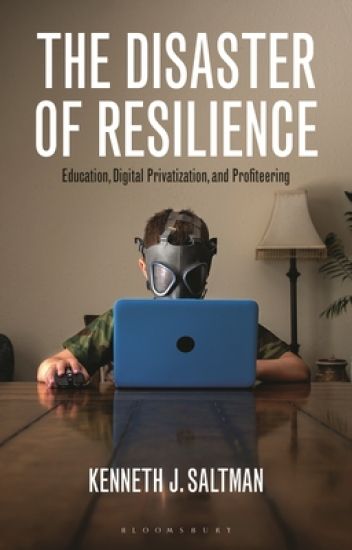
The past decade has seen a vast expansion of resilience pedagogies, policies, and products in public education, from the Every Student Succeeds Act to social and emotional learning to grit. Educational apps, avatars, and games as well as behaviorist techniques, meditation programs, and biometric devices claim to teach resilience to adverse social conditions while new cyber schools, education brokers, global democracy promotion companies, and dropout recovery firms promise schools resilience to disaster and disruption. The Disaster of Resilience shows how resilience discourse is interwoven with the new digital directions of educational privatization. Saltman argues that resilience has provided the justification for new educational profiteering, creating a climate which individualizes collective responsibilities, depoliticizes and dehistoricizes knowledge and curriculum, and falsely grounds its politics in a mashup of pseudoscience and human capital theory. He argues that we must replace resilience discourse with pedagogies and curriculum that allow students not only to endure the intolerable conditions they find themselves in, but to see beyond those conditions and to act collectively on the social, economic, and racial injustices that created them.
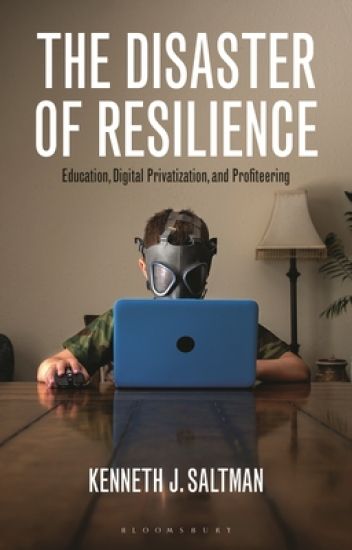
The past decade has seen a vast expansion of resilience pedagogies, policies, and products in public education, from the Every Student Succeeds Act to social and emotional learning to grit. Educational apps, avatars, and games as well as behaviorist techniques, meditation programs, and biometric devices claim to teach resilience to adverse social conditions while new cyber schools, education brokers, global democracy promotion companies, and dropout recovery firms promise schools resilience to disaster and disruption. The Disaster of Resilience shows how resilience discourse is interwoven with the new digital directions of educational privatization. Saltman argues that resilience has provided the justification for new educational profiteering, creating a climate which individualizes collective responsibilities, depoliticizes and dehistoricizes knowledge and curriculum, and falsely grounds its politics in a mashup of pseudoscience and human capital theory. He argues that we must replace resilience discourse with pedagogies and curriculum that allow students not only to endure the intolerable conditions they find themselves in, but to see beyond those conditions and to act collectively on the social, economic, and racial injustices that created them.

An investigation of the role of educational privatization and technology in the crises of truth and agency. Today, conspiracy theories run rampant, attacks on facts have become commonplace, and systemic inequities are on the rise as individual and collective agency unravels. The Alienation of Fact explains the educational, technological, and ideological preconditions for these contemporary crises of truth and agency and explores the contradictions and competing visions for the future of education that lie at the center of the problem. Schools are increasingly reimagined as businesses, and high-stakes standardized testing and curricula, for-profit charter schools, and the rise of educational AI put capital and technology at the center of education. Yet even as our society demands measure, data, and facts, politicians and news outlets regularly make unfounded assertions. How should we make sense of the contradictions between the demand for radical data-driven empiricism and the flight from evidence, argument, or theoretical justification? In this critical investigation of the new digital directions of educational privatization--AI education, adaptive learning technology, biometrics, the quantification of play and social emotional learning--and the politics of the body, Saltman shows how the false certainty of bodies and numbers replaces deliberative and thoughtful agency in a time of increasing precarity. A distinctive contribution to scholarship on public school privatization and educational technology, politics, policy, pedagogy, and theory, The Alienation of Fact is a spirited call for democratic education that values creating a society of "thinking people" over capitalistic gains.
The Swindle of Innovative Educational Finance
Kenneth J. Saltman
University of Minnesota Press
2018
pokkari
How “innovative” finance schemes skim public wealth while hijacking public governanceCharter school expansion. Vouchers. Scholarship tax credit programs. The Swindle of Innovative Educational Finance offers a new social theory to explain why these and other privatization policies and programs win support despite being unsupported by empirical evidence. Kenneth J. Saltman details how, under the guise of innovation, cost savings, and corporate social responsibility, new and massive neoliberal educational privatization schemes have been widely adopted in the United States. From a trillion-dollar charter school bubble to the Chan Zuckerberg Initiative to celebrities branding private schools, Saltman ultimately connects such schemes to the country’s current crisis of truth and offers advice for resistance. Forerunners is a thought-in-process series of breakthrough digital works. Written between fresh ideas and finished books, Forerunners draws on scholarly work initiated in notable blogs, social media, conference plenaries, journal articles, and the synergy of academic exchange. This is gray literature publishing: where intense thinking, change, and speculation take place in scholarship.
The Politics of Education provides an introduction to both the political dimensions of schooling and the politics of recent educational reform debates. The book offers undergraduates and starting graduate students in education an understanding of numerous dimensions of the contested field of education, addressing questions of political economy, class, cultural politics, race, and gender. Noted scholar Kenneth Saltman introduces contemporary educational debates and seriously considers views across the political spectrum from the vantage point of critical education, emphasizing schooling for broader social equality and justice. Updates to this second edition work through contemporary reform debates that include topics such as the reauthorization of ESEA, race and diversity, standardized testing and common core, and classroom technology. With opportunities for readers to engage in deeper discussion through Questions for Further Discussion and a Glossary of key terms, The Politics of Education remains a much-needed, accessible primer, providing the critical tools needed to make sense of the current politics of education.
The Politics of Education provides an introduction to both the political dimensions of schooling and the politics of recent educational reform debates. The book offers undergraduates and starting graduate students in education an understanding of numerous dimensions of the contested field of education, addressing questions of political economy, class, cultural politics, race, and gender. Noted scholar Kenneth Saltman introduces contemporary educational debates and seriously considers views across the political spectrum from the vantage point of critical education, emphasizing schooling for broader social equality and justice. Updates to this second edition work through contemporary reform debates that include topics such as the reauthorization of ESEA, race and diversity, standardized testing and common core, and classroom technology. With opportunities for readers to engage in deeper discussion through Questions for Further Discussion and a Glossary of key terms, The Politics of Education remains a much-needed, accessible primer, providing the critical tools needed to make sense of the current politics of education.

Toward a New Common School Movement
Noah De Lissovoy; Alexander J Means; Kenneth J. Saltman
Paradigm
2015
nidottu
Toward a New Common School Movement is a bold and urgent call to action. The authors argue that corporate school reform in the United States represents a failed project subverted by profiteering, corruption, and educational inequalities. Toward a New Common School Movement suggests that educational privatization and austerity are not simply bad policies but represent a broader redistribution of control over social life-that is, the enclosure of the global commons. This condition requires far more than a liberal defense of public schooling. It requires recovering elements of the radical progressive educational tradition while generating a new language of the common suitable to the unique challenges of the global era. Toward a New Common School Movement traces the history of struggles over public schooling in the United States and provides a set of ethical principles for enacting the commons in educational policy, finance, labor, curriculum, and pedagogy. Ultimately, it argues for global educational struggles in common for a just and sustainable future beyond the crises of neoliberalism and predatory capitalism.

Neoliberalism, Education, and Terrorism
Jeffrey R. Di Leo; Henry A. Giroux; Sophia A McClennen; Kenneth J. Saltman
Paradigm
2014
nidottu
Neoliberalism, Education, Terrorism: Contemporary Dialogues is a collaborative effort among four established public intellectuals who deeply care about the future of education in America and who are concerned about the dangerous effects of neoliberalism on American society and culture. It aims to provide a clear, concise, and thought-provoking account of the problems facing education in America under the dual shadows of neoliberalism and terrorism. Through collaborative and individual essays, the authors provide a provocative account that will be of interest to anyone who concerning with the opportunities and dangers facing the future of education at this critical moment in history.

Toward a New Common School Movement
Noah De Lissovoy; Alexander J Means; Kenneth J. Saltman
Paradigm
2014
sidottu
Toward a New Common School Movement is a bold and urgent call to action. The authors argue that corporate school reform in the United States represents a failed project subverted by profiteering, corruption, and educational inequalities. Toward a New Common School Movement suggests that educational privatization and austerity are not simply bad policies but represent a broader redistribution of control over social life-that is, the enclosure of the global commons. This condition requires far more than a liberal defense of public schooling. It requires recovering elements of the radical progressive educational tradition while generating a new language of the common suitable to the unique challenges of the global era. Toward a New Common School Movement traces the history of struggles over public schooling in the United States and provides a set of ethical principles for enacting the commons in educational policy, finance, labor, curriculum, and pedagogy. Ultimately, it argues for global educational struggles in common for a just and sustainable future beyond the crises of neoliberalism and predatory capitalism.
Neoliberalism, Education, and Terrorism
Jeffrey R. Di Leo; Henry A. Giroux; Sophia A McClennen; Kenneth J. Saltman
Paradigm
2013
sidottu
Neoliberalism, Education, Terrorism: Contemporary Dialogues is a collaborative effort among four established public intellectuals who deeply care about the future of education in America and who are concerned about the dangerous effects of neoliberalism on American society and culture. It aims to provide a clear, concise, and thought-provoking account of the problems facing education in America under the dual shadows of neoliberalism and terrorism. Through collaborative and individual essays, the authors provide a provocative account that will be of interest to anyone who concerning with the opportunities and dangers facing the future of education at this critical moment in history.
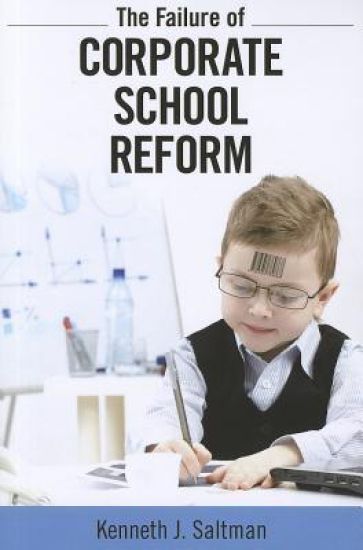
Corporate school reforms, especially privatization, union busting, and high-stakes testing have been hailed as the last best hope for public education. Yet, as Kenneth Saltman powerfully argues in this new book, corporate school reforms have decisively failed to deliver on what their proponents have promised for two decades: higher test scores and lower costs. As Saltman illustrates, the failures of corporate school reform are far greater and more destructive than they seem. Left unchecked, corporate school reform fails to challenge and in fact worsens the most pressing problems facing public schooling, including radical funding inequalities, racial segregation, and anti-intellectualism. But it is not too late for change. Against both corporate school reformers and its liberal critics, this book argues for the expansion of democratic pedagogies and a new common school movement that will lead to broader social renewal.
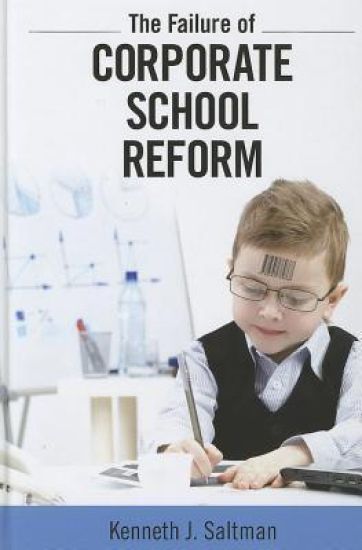
Corporate school reforms, especially privatization, union busting, and high-stakes testing have been hailed as the last best hope for public education. Yet, as Kenneth Saltman powerfully argues in this new book, corporate school reforms have decisively failed to deliver on what their proponents have promised for two decades: higher test scores and lower costs. As Saltman illustrates, the failures of corporate school reform are far greater and more destructive than they seem. Left unchecked, corporate school reform fails to challenge and in fact worsens the most pressing problems facing public schooling, including radical funding inequalities, racial segregation, and anti-intellectualism. But it is not too late for change. Against both corporate school reformers and its liberal critics, this book argues for the expansion of democratic pedagogies and a new common school movement that will lead to broader social renewal.