Kirjojen hintavertailu – 12 859 828 kirjaa ja 27 kauppaa

Kirjailija

Kenneth Katzman

Kirjat ja teokset yhdessä paikassa: 29 kirjaa, julkaisuja vuosilta 2004–2021, suosituimpiin kuuluu Terrorism. Vertaile teosten hintoja ja tarkista saatavuus suomalaisista kirjakaupoista.

29 kirjaa

Kirjojen julkaisuvuodet: 2004–2021.

Terrorism

Terrorism

Kenneth Katzman

Nova Science Publishers Inc
2009
nidottu
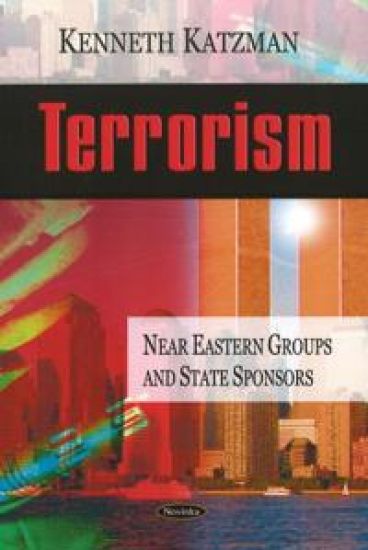
This book is an analysis of Near Eastern terrorist groups and countries on the. U. S. "terrorism list," a list of countries that the Secretary of Commerce and Secretary of State have determined provide repeated support for international terrorism. This book adopts the same definition of terrorism as that used by the State Department in its annual reports the definition contained in Title 22 U. S. C. Section 2656f(d). According to this section, "terrorism" means "premeditated politically motivated violence perpetrated against non combatant targets by sub national groups or clandestine agents, usually intended to influence an audience." Five out of the seven states currently on the terrorism list are located in the Near East region Iran, Iraq Syria, Libya, and Sudan. (The other two are Cuba and North Korea, which will not be covered in this book). The composition of the list has not changed since Sudan was added in 1993. The groups analysed in this book include, but are not limited to, those designated as "Foreign Terrorist Organisations" (FTOs), pursuant to the Anti Terrorism and Effective Death Penalty Act of 1996 (P. L. 104 132). The last section of the book discusses significant themes in U. S. unilateral and multilateral efforts to combat terrorism in or from the region. The State Department's annual report on international terrorism, entitled Patterns of Global Terrorism: 2000; is a significant source for this book; other sources include press reports and conversations with U. S. counter terrorism officials, experts, investigative journalists, and foreign diplomats. Although the September 11 attacks have placed Near Eastern terrorist groups at the centre of U. S. anti terrorism policy, Near Eastern terrorist groups and their state sponsors have been a focus of U. S. counter-terrorism policies for several decades. Since the 1970s, many of the most high profile acts of terrorism against American citizens and targets have been conducted by these groups, sometimes with the encouragement or at the instigation of their state sponsors. However, no single terrorist attack either in or outside the Near East region compares in scale to the September 11 attacks on the World Trade Center and Pentagon, which killed a total of over 3,000 persons. Senior U. S. officials have attributed this attack to the Al Qaeda network, whose leaders enjoyed sanctuary in Afghanistan from 1996 until their defeat at the hands of the U. S. military and its Afghan partners in late 2001. According to Patterns of Global Terrorism: 2000 (available on the U. S. Department of State's web site at http://www.state.gov/s/et/rls/pgtipt/2000/]; hereafter cited as Patterns 2000), world-wide terrorism related casualties increased to 405 in 2000 from 233 in 1999, but the number of attacks increased only slightly, from 392 in 1999 to 423 in 2000. Of these 2000 totals, only 16 of the 423 attacks and 19 of the 405 casualties occurred in the Middle East, although Patterns 2000 covered only three months of the Palestinian uprising that began in late September 2000. Since 2001 began, there have been dozens of terrorism related Israeli casualties resulting from Palestinian suicide bomb attacks, some of them in retaliation for Israeli actions against suspected Palestinian militants. Thirty one of the attacks and 12 of the deaths during 2000 occurred in Eurasia (Central Asia, the Caucasus, and. Russia). The terrorist groups analyzed often differ in their motivations, objectives, ideologies, and levels of activity. The Islamist groups remain generally the most active, stating as their main objective the overthrow of secular, pro Western governments, the derailment of the Arab Israeli peace process, the expulsion of U. S. forces from the region, or the end of what they consider unjust occupation of Muslim lands. Some groups, such as the Kurdistan Workers' Party (PKK), fight for cultural and political rights or the formation of separate ethnically based states. Table 1 below shows the 20 Near Eastern groups currently designated by the State Department as FTOs. The designations were mostly made when the FTO list was inaugurated in October 1997 and revised in October 1999 and October 2001, A group can be added to the list at any time; Al Qaeda (the bin Laden network) was added on August 2 1, 1998, the Islamic Movement of Uzbekistan was designated on September 25, 2000, and two Pakistani groups Lashkar e Tayyiba and Jaish-e-Mohammad were added to the FTO list on December 26, 2001.

Iraq

Iraq

Kenneth Katzman

Nova Science Publishers Inc
2009
pokkari
Operation Iraqi Freedom overthrew Saddam Hussein's regime, but much of Iraq remains violent because of Sunni Arab resentment and a related insurgency, compounded by Sunni-Shiite sectarian violence that, in the judgment of many, constitutes a 'civil war'.
Afghanistan

Afghanistan

Kenneth Katzman

Nova Science Publishers Inc
2008
nidottu
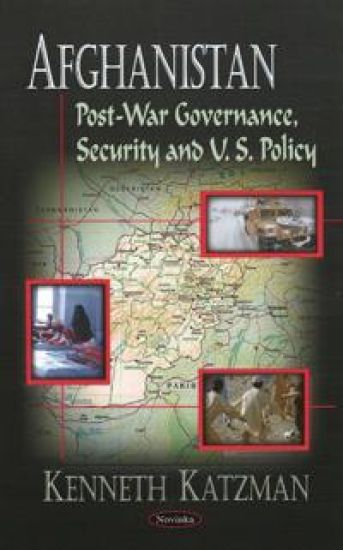
U. S. and outside assessments of the effort to stabilise Afghanistan are mixed and subject to debate; the Administration notes progress on reconstruction, governance and security in many areas of Afghanistan, particularly the U. S.-led eastern sector of Afghanistan. However, a November 2007 Bush Administration review of U. S. efforts in Afghanistan reportedly concluded that overall progress was inadequate. This mirrors recent outside studies that contain relatively pessimistic assessments, emphasising a growing sense of insecurity in areas previously considered secure, increased numbers of suicide attacks, and increasing aggregate poppy cultivation, as well as increasing divisions within the NATO alliance about the relative share of combat among the nations contributing to the peacekeeping mission. Both the official U. S. as well as outside assessments are increasingly pointing to Pakistan as failing -- either through lack of attention or eliberatestrategy -- to prevent Taliban commanders from operating from Pakistan. To try to gain momentum against the insurgency, the United States is considering new initiatives including adding U. S. troops to the still combat-intense south, possibly assuming U. S. command of the southern sector, and increasing direct U. S. action against Taliban concentrations inside Pakistan. Politically, the Afghan government remains reasonably stable. The post-Taliban transition was completed with the convening of a parliament in December 2005; a new constitution was adopted in January 2004, successful presidential elections were held on October 9, 2004, and parliamentary elections took place on September 18, 2005. The parliament has become an arena for factions that have fought each other for nearly three decades to debate and peacefully resolve differences, as well as a centre of political pressure on President Hamid Karzai. Major regional strongmen have been marginalised. Afghan citizens are enjoying personal freedoms forbidden by the Taliban, and women are participating in economic and political life. Presidential elections are to be held in the fall of 2009, with parliamentary and provincial elections to follow one year later. To help stabilise Afghanistan, the United States and partner countries are deploying a 47,000 troop NATO-led International Security Assistance Force (ISAF) that now commands peacekeeping throughout Afghanistan, including the restive south. Of those, 19,000 of the 31,000 U. S. forces in Afghanistan are part of ISAF. The U. S. and partner forces also run regional enclaves to secure reconstruction (Provincial Reconstruction Teams, PRTs), and are building an Afghan National Army and National Police. The United States has given Afghanistan over $23 billion (appropriated, including FY2008 to date) since the fall of the Taliban, including funds to equip and train Afghan security forces.
Iran

Iran

Kenneth Katzman

Nova Science Publishers Inc
2008
nidottu
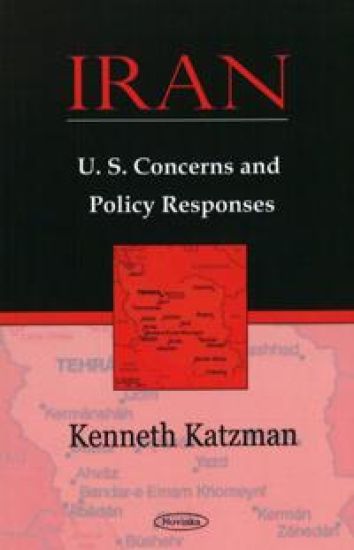
The Bush Administration has pursued several avenues to attempt to contain or end the potential threat posed by Iran, at times pursuing limited engagement, and at other times leaning toward pursuing efforts to change Iran's regime. Some experts believe a potential crisis is looming over Iran's nuclear program because the Bush Administration is sceptical that efforts by several European allies to prevent a nuclear breakout by Iran will succeed, although the Administration announced steps in March 2005 to support those talks. U. S. concerns have been heightened by the victory of Mahmoud Ahmadinejad, an admitted hardliner, in Iran's presidential election on June 24, 2005. Some advocate military action against Iran's nuclear infrastructure, but others believe that a combination of diplomatic and economic rewards and punishment are the only viable options on the nuclear issue. U. S. sanctions currently in effect ban or strictly limit U. S. trade, aid, and investment in Iran and penalise foreign firms that invest in Iran's energy sector, but unilateral U. S. sanctions do not appear to have materially slowed Iran's WMD programs to date. Other major U. S. concerns include Iran's policy in the Near East region, particularly Iran's material support to groups that use violence against the U. S.-led Middle East peace process, including Hizballah in Lebanon and the Palestinian groups Hamas and Palestinian Islamic Jihad. Some senior Al Qaeda activists are in Iran as well, although Iran claims they are "in custody" and will be tried. Iran did not obstruct the U. S. effort to oust Iraq's Saddam Hussein, a long-time Tehran adversary, at least partly in the expectation that pro-Iranian Shiite Islamic factions would come to power in Iraq in the aftermath. That result occurred as a product of 30 January 2005 elections there. Iran is also assisting pro-Iranian local leaders in Afghanistan, although that support does not appear to be materially hindering the stabilisation and development of Afghanistan. Iran's human rights practices and strict limits on democracy have been consistently criticised by official U. S. and U. N. reports, particularly for Iran's suppression of political dissidents and religious and ethnic minorities. New limits on personal freedoms could be imposed by Ahmadinejad, who has consistently advocated a return to many of the original principles of the Islamic revolution as set down by the late Ayatollah Ruhollah Khomeini. However, Iran does hold elections for some positions, including that of president, suggesting to some experts that there might be benefits to engaging Iranian officials. According to this view, new sanctions or military action could harden Iran's positions without necessarily easing the potential threat posed by Iran.
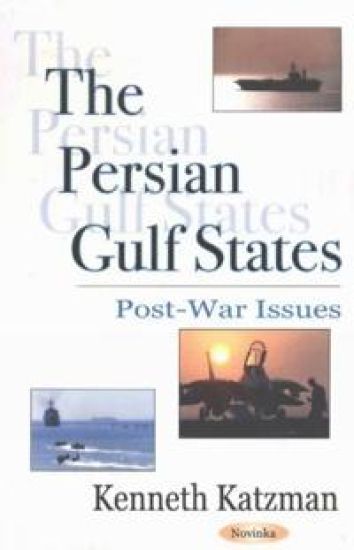
Persian Gulf States

Persian Gulf States

Kenneth Katzman

Nova Biomedical
2004
nidottu
The Bush Administration has said that the fall of Saddam Hussein's regime in April 2003 will ease the security challenges the Persian Gulf region faces. The US-led war has ended Iraq's ability to produce weapons of mass destruction (WMD) and virtually ended any Iraqi conventional military threat to the region. However, some of the Persian Gulf states (Saudi Arabia, Kuwait, Bahrain, Qatar, Oman, and the United Arab Emirates) fear that Iraq might no longer serve as a strategic counterweight to Iran and they fear that pro-Iranian Shiite Muslim groups might obtain a major share of power in post-war Iraq. Substantial administration concern remains about Iran's WMD programs, particularly what appear to be rapid advances in its nuclear program, and the potential for Iran to transfer that technology or materiel to the terrorist groups it supports. Over the longer term, with Iraq no longer a major power and the United States likely to sharply reduce its Gulf presence once Iraq is stabilised, the Gulf states might try to fashion a new security architecture for the Gulf that is based more on regional states and less on the United States. On the other hand, a reduction of the U. S. military presence in the Gulf might benefit the Gulf states by easing internal opposition to close co-operation with the United States. This new book presents the latest issues of the post war Persian Gulf states.