Kirjojen hintavertailu – 12 875 268 kirjaa ja 26 kauppaa

Kirjailija

Kenneth R. Westphal

Kirjat ja teokset yhdessä paikassa: 8 kirjaa, julkaisuja vuosilta 1996–2022, suosituimpiin kuuluu Hegel's Epistemology. Vertaile teosten hintoja ja tarkista saatavuus suomalaisista kirjakaupoista.

Nimi esiintyy myös muodoissa: Kenneth R Westphal

8 kirjaa

Kirjojen julkaisuvuodet: 1996–2022.

Kant’s Critical Epistemology

Kant’s Critical Epistemology

Kenneth R. Westphal

TAYLOR FRANCIS LTD
2022
nidottu
This book assesses and defends Kant’s Critical epistemology, and the rich yet neglected resources it provides for understanding and resolving fundamental issues regarding human experience, perceptual judgment, empirical knowledge and cognitive sciences. Kenneth Westphal first examines Kant’s methods and strategies for examining human sensory-perceptual experience, and then examines Kant’s central, proper, and subtle attention to judgment, and so to the humanly possible valid use of concepts and principles to judge particulars we confront. This provides a comprehensive account of Kant’s anti-Cartesianism, the integrity of his three principles of causal judgment, and Kant’s account of disciminatory perceptual-motor behaviour, including both sensory reafference and perceptual affordances. Westphal then defends the significance of Kant’s subtle and illuminating account of causal judgment for three main philosophical domains: history and philosophy of science, theory of action and human freedom, and philosophy of mind. Kant’s Critical Epistemology will appeal to researchers and advanced students interested in Kant and the relations of his thought to contemporary philosophical debates and to the sciences of the mind.
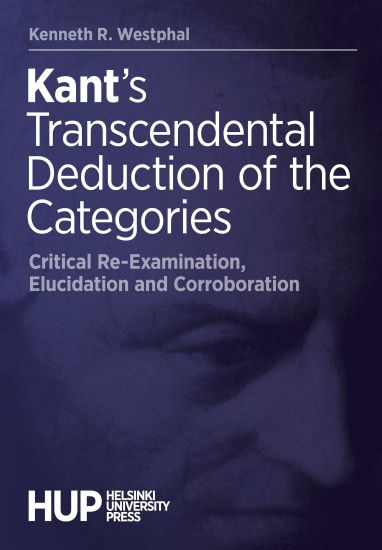
Kant's Transcendental Deduction of the Categories

Kant's Transcendental Deduction of the Categories

Kenneth R Westphal

Helsinki University Press
2021
pokkari
Immanuel Kant's 'Transcendental Deduction of the Categories' addresses issues centrally debated today in philosophy and in cognitive sciences, especially in epistemology, and in theory of perception. Kant's insights into these issues are clouded by pervasive misunderstandings of Kant's 'Deduction' and its actual aims, scope, and argument. The present edition with its fresh and accurate translation and concise commentary aims to serve these contemporary debates as well as continuing intensive and extensive scholarship on Kant's Critique of Pure Reason. Two surprising results are that 'Transcendental Deduction' is valid and sound, and it holds independently of Kant's transcendental idealism. This lucid volume is interesting and useful to students, yet sufficiently detailed to be informative to specialists.
Kant’s Critical Epistemology

Kant’s Critical Epistemology

Kenneth R. Westphal

Routledge
2020
sidottu
This book assesses and defends Kant’s Critical epistemology, and the rich yet neglected resources it provides for understanding and resolving fundamental issues regarding human experience, perceptual judgment, empirical knowledge and cognitive sciences. Kenneth Westphal first examines Kant’s methods and strategies for examining human sensory-perceptual experience, and then examines Kant’s central, proper, and subtle attention to judgment, and so to the humanly possible valid use of concepts and principles to judge particulars we confront. This provides a comprehensive account of Kant’s anti-Cartesianism, the integrity of his three principles of causal judgment, and Kant’s account of disciminatory perceptual-motor behaviour, including both sensory reafference and perceptual affordances. Westphal then defends the significance of Kant’s subtle and illuminating account of causal judgment for three main philosophical domains: history and philosophy of science, theory of action and human freedom, and philosophy of mind. Kant’s Critical Epistemology will appeal to researchers and advanced students interested in Kant and the relations of his thought to contemporary philosophical debates and to the sciences of the mind.
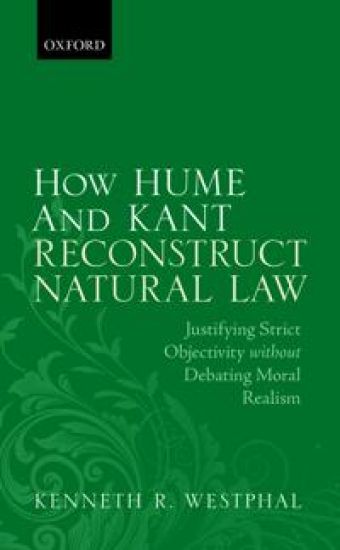
How Hume and Kant Reconstruct Natural Law

How Hume and Kant Reconstruct Natural Law

Kenneth R. Westphal

Clarendon Press
2016
sidottu
Kenneth R. Westphal presents an original interpretation of Hume's and Kant's moral philosophies, the differences between which are prominent in current philosophical accounts. Westphal argues that focussing on these differences, however, occludes a decisive, shared achievement: a distinctive constructivist method to identify basic moral principles and to justify their strict objectivity, without invoking moral realism nor moral anti-realism or irrealism. Their constructivism is based on Hume's key insight that 'though the laws of justice are artificial, they are not arbitrary'. Arbitrariness in basic moral principles is avoided by starting with fundamental problems of social coördination which concern outward behaviour and physiological needs; basic principles of justice are artificial because solving those problems does not require appeal to moral realism (nor to moral anti-realism). Instead, moral cognitivism is preserved by identifying sufficient justifying reasons, which can be addressed to all parties, for the minimum sufficient legitimate principles and institutions required to provide and protect basic forms of social coördination (including verbal behaviour). Hume first develops this kind of constructivism for basic property rights and for government. Kant greatly refines Hume's construction of justice within his 'metaphysical principles of justice', whilst preserving the core model of Hume's innovative constructivism. Hume's and Kant's constructivism avoids the conventionalist and relativist tendencies latent if not explicit in contemporary forms of moral constructivism.
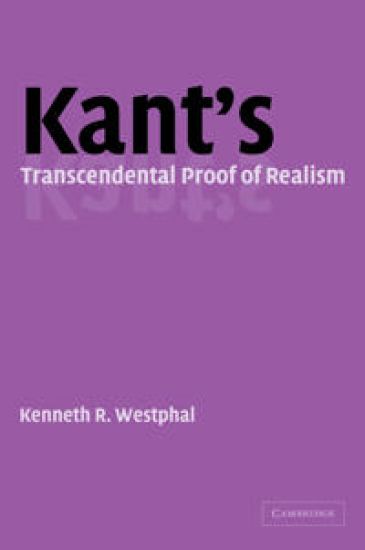
Kant's Transcendental Proof of Realism

Kant's Transcendental Proof of Realism

Kenneth R. Westphal

Cambridge University Press
2009
pokkari
This book is the first detailed study of Kant's method of 'transcendental reflection' and its use in the Critique of Pure Reason to identify our basic human cognitive capacities, and to justify Kant's transcendental proofs of the necessary a priori conditions for the possibility of self-conscious human experience. Kenneth Westphal, in a closely argued internal critique of Kant's analysis, shows that if we take Kant's project seriously in its own terms, the result is not transcendental idealism but (unqualified) realism regarding physical objects. Westphal attends to neglected topics - Kant's analyses of the transcendental affinity of the sensory manifold, the 'lifelessness of matter', fallibilism, the semantics of cognitive reference, four externalist aspects of Kant's views, and the importance of Kant's Metaphysical Foundations for the Critique of Pure Reason - that illuminate Kant's enterprise in new and valuable ways. His book will appeal to all who are interested in Kant's theoretical philosophy.
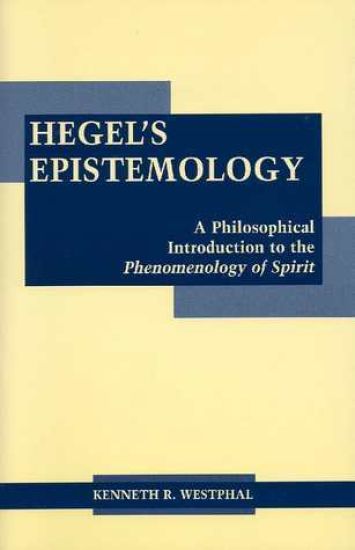
Hegel's Epistemology

Hegel's Epistemology

Kenneth R. Westphal

Hackett Publishing Co, Inc
2003
pokkari
Provides a succinct philosophical introduction to Hegel's Phenomenology of Spirit for non-specialists and students, focusing on Hegel's unique and insightful theory of knowledge and its relations to 20th-century epistemology.
Hegel's Epistemology

Hegel's Epistemology

Kenneth R. Westphal

Hackett Pub Co Inc
2003
sidottu
Provides a succinct philosophical introduction to Hegel's PHENOMENOLOGY OF SPIRIT for non-specialists and students, focusing on Hegel's unique and insightful theory of knowledge and its relations to 20th-century epistemology.
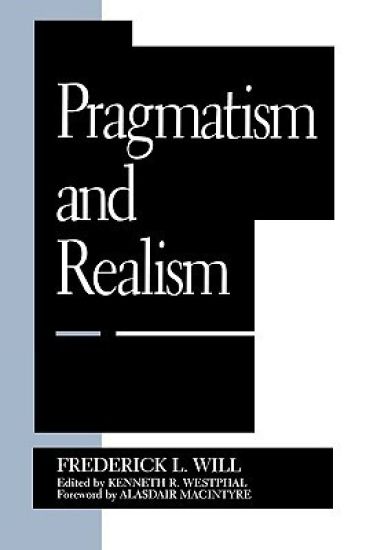
Pragmatism and Realism

Pragmatism and Realism

Frederick L. Will; Kenneth R. Westphal; Alasdair MacIntyre

Rowman Littlefield
1996
nidottu
'I have no doubt at all, that if philosophy is to prosper in the coming decades, it will have to treat with great seriousness that splendid seriousness that splendid body of philosophical writing of which the essays in this volume constitute one major part'. from the Foreword by Alasdair MacIntyre When historians of philosophy turn to the work of distinguished philosopher Frederick L. Will, Pragmatism and Realism will be an important part of the discussion. In this collection of nine essays, Will demonstrates that a social account of human knowledge is consistent with, and ultimately requires, realism. A timely contribution to the current debate, the book culminates in a naturalistic account of the generation, assessment, and revision of cognitive, moral and social norms. It is written clearly enough for undergraduates, and includes a critical introduction by the editor discussing the bearing of Will's views on current debates among analytic epistemologists, philosophers of science, and moral theorists.