Kirjojen hintavertailu – 12 903 724 kirjaa ja 27 kauppaa

Kirjailija

Kenneth W. Merrell

Kirjat ja teokset yhdessä paikassa: 7 kirjaa, julkaisuja vuosilta 1997–2022, suosituimpiin kuuluu Helping Students Overcome Depression and Anxiety, Second Edition. Vertaile teosten hintoja ja tarkista saatavuus suomalaisista kirjakaupoista.

7 kirjaa

Kirjojen julkaisuvuodet: 1997–2022.

School Psychology for the 21st Century, Third Edition

School Psychology for the 21st Century, Third Edition

Kenneth W. Merrell; Ruth A. Ervin; Gretchen Gimpel Peacock; Tyler L. Renshaw

Guilford Publications
2022
sidottu
Now in a revised and updated third edition reflecting a decade of changes in the field, this leading text prepares new practitioners to support all students' academic, behavioral, and social–emotional success. The multiple roles and functions of the school psychologist are described and illustrated with vivid vignettes. Readers gain vital skills for planning and implementing evidence-based prevention and intervention efforts and collaborating to facilitate systems change. Guided by a problem-solving perspective, the book provides tools for effective, culturally responsive practice in today's diverse schools. End-of-chapter discussion questions and activities enhance learning. New to This Edition *Incorporates key advances in evidence-based assessment, intervention, and multi-tiered systems of support. *Increased attention to supporting the growing numbers of culturally and linguistically diverse students in schools. *Addresses changes in school psychology training programs and professional standards. *New emphasis on implementation science.
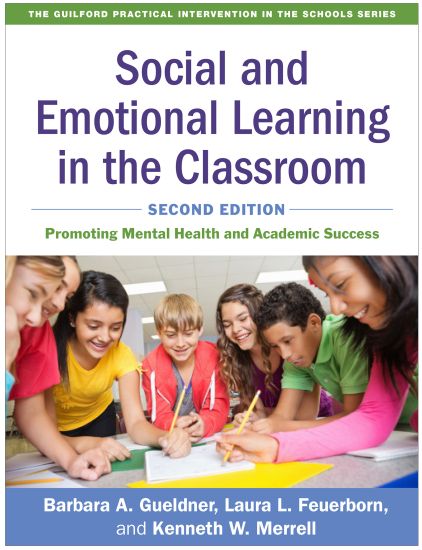
Social and Emotional Learning in the Classroom, Second Edition

Social and Emotional Learning in the Classroom, Second Edition

Kenneth W. Merrell; Barbara A. Gueldner; Laura L. Feuerborn

Guilford Press
2020
nidottu
This trusted resource--now in a thoroughly updated second edition reflecting the tremendous growth of the field--provides a best-practice guide to planning and implementing social and emotional learning (SEL) in K-12 classrooms and schools. The authors present a roadmap to help practitioners choose exemplary programs and strategies, integrate SEL with academics and mental health interventions, create culturally affirming programming for diverse students, use assessment to guide data-based decision making, and support educator SEL. In a convenient large-size format, the volume includes illustrative vignettes and 24 reproducible worksheets and other practical tools. Purchasers get access to a Web page where they can download and print the reproducible materials. New to This Edition *Chapter on educators’ social and emotional competence and teacher wellness. *Expanded coverage of implementation and systems issues, strategies for weaving SEL into the school day, applying SEL within a multi-tiered system of support, and professional development. *Numerous new and revised worksheets--now downloadable--including new educator reflection activities in each chapter. *Timely topics and themes infused throughout--such as culturally responsive and trauma-informed practices, teacher–family–community partnerships, and relationships as a foundation to SEL success--plus updated SEL resources. This book is in The Guilford Practical Intervention in the Schools Series, edited by Sandra M. Chafouleas.
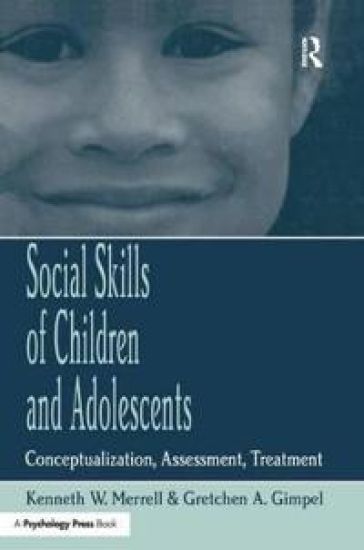
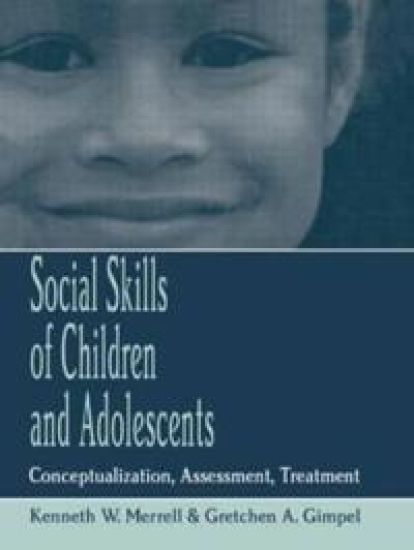
Social Skills of Children and Adolescents

Social Skills of Children and Adolescents

Kenneth W. Merrell; Gretchen Gimpel

Psychology Press Ltd
2016
nidottu
This scholarly yet highly readable and practical text systematically covers the importance, development, assessment, and treatment of social skills of children and adolescents. Combining scientific rigor with a highly approachable and readable style of writing to create a practical and unique book, this volume provides a comprehensive overview of the increasingly important topic of child and adolescent social skills. A wide variety of tables, figures, and practical step-by-step guides enhance the material presented, making it particularly useful for practitioners while offering an extensive array of recent research and models of interest to researchers. The authors present a solid foundation of scientific knowledge written in a manner accessible to nonscientists and having ample practical implications and examples for educational and clinical practice. The book is divided into two parts--the first features a foundation for conceptualizing and assessing child and adolescent social skills, whereas the second focuses on the arena of intervention. An up-to-date and unique addition to the literature, this volume will be of interest to professionals who work with or study children across several disciplines including school and clinical child psychology, special education, counseling, and social work. Although many books and other professional materials on the social competence of children and adolescents are presently available, the knowledge regarding these social skills is expanding rapidly, and there is a tremendous need to keep it current. This book helps meet this need by not only synthesizing a great deal of recent work in the field, but also by providing new information and evidence that has not yet been published. It also bridges an important gap that sometimes exists between research and practice. For instance, some books on child and adolescent social skills are clearly written for the academician or researcher, and may have little apparent application for the clinician or practitioner. Other materials are written as practical assessment or intervention guides for the clinician/practitioner, yet sometimes lack supporting evidence and rationale. This book is aimed at both arenas.
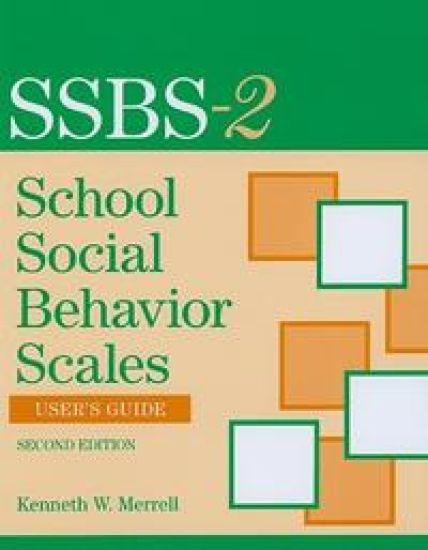
School Social Behavior Scales  User's Guide

School Social Behavior Scales User's Guide

Kenneth W. Merrell

Brookes Publishing Co
2008
nidottu
Catching 'red flag' behaviors early is the key to helping children and adolescents before social-emotional difficulties become major roadblocks to academic success and personal adjustment. Now there are two easy, reliable tools that give K-12 education professionals the complete picture of a child's social-emotional strengths and risk behaviors in school (SSBS-2) and at home and in the community (HCSBS). Used in tandem, these two tools are the perfect way to: identify children with problem behaviors; target classroom interventions and develop IEPs; measure the effectiveness of interventions over time; remove barriers to learning and help children reach their goals; and, bring families into the process to provide the best support for children. Teachers or other school personnel complete SSBS-2, a simple 2-page rating scale that looks at both Social Competence and Antisocial Behavior. Specific items on both positive and negative behaviors give users accurate results and provide direction for intervention and support in school. To ensure that screening doesn't stop with the school day, follow up with HCSBS - set up like SSBS-2 and completed by a parent or other person who knows the child well - to evaluate the child's behavior at home and in the community. Together, these easy-to-use tools provide the most complete information about a child's behavior, help families see where their children need the most support, and improve outcomes by extending behavior screening and intervention beyond the classroom.
School Social Behavior Scales  Rating Scales

School Social Behavior Scales Rating Scales

Kenneth W. Merrell

Brookes Publishing Co
2008
lehtivihko, moniste
Catching 'red flag' behaviors early is the key to helping children and adolescents before social-emotional difficulties become major roadblocks to academic success and personal adjustment. Now there are two easy, reliable tools that give K-12 education professionals the complete picture of a child's social-emotional strengths and risk behaviors in school (SSBS-2) and at home and in the community (HCSBS). Used in tandem, these two tools are the perfect way to: identify children with problem behaviors; target classroom interventions and develop IEPs; measure the effectiveness of interventions over time; remove barriers to learning and help children reach their goals; and, bring families into the process to provide the best support for children. Teachers or other school personnel complete SSBS-2, a simple 2-page rating scale that looks at both Social Competence and Antisocial Behavior. Specific items on both positive and negative behaviors give users accurate results and provide direction for intervention and support in school. To ensure that screening doesn't stop with the school day, follow up with HCSBS - set up like SSBS-2 and completed by a parent or other person who knows the child well - to evaluate the child's behavior at home and in the community. Together, these easy-to-use tools provide the most complete information about a child's behavior, help families see where their children need the most support, and improve outcomes by extending behavior screening and intervention beyond the classroom.
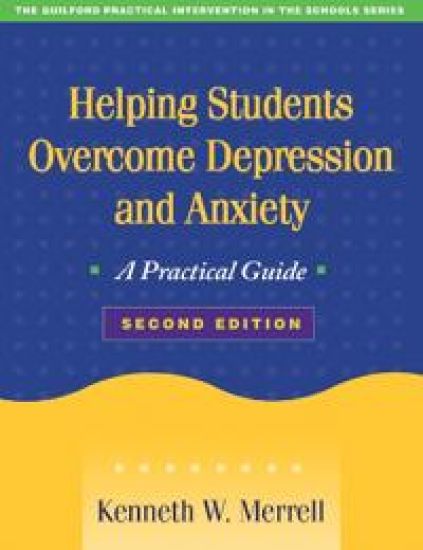
Helping Students Overcome Depression and Anxiety, Second Edition
Now in a revised and expanded second edition, this bestselling guide provides expert information and clear-cut strategies for assessing and treating internalizing problems in school settings. More than 40 specific psychoeducational and psychosocial intervention techniques are detailed, with a focus on approaches that are evidence based, broadly applicable, and easy to implement. Including 26 ready-to-use worksheets, in a large-size format with permission to photocopy, the second edition has been updated throughout to ensure its currency and clinical utility. Coverage of psychiatric medications has been extensively revised with the latest developments and findings. A new chapter addresses prevention-oriented social and emotional learning curricula for the classroom. This book is in The Guilford Practical Intervention in the Schools Series, edited by T. Chris Riley-Tillman.
Social Skills of Children and Adolescents

Social Skills of Children and Adolescents

Kenneth W. Merrell; Gretchen Gimpel

Psychology Press
1997
sidottu
This scholarly yet highly readable and practical text systematically covers the importance, development, assessment, and treatment of social skills of children and adolescents. Combining scientific rigor with a highly approachable and readable style of writing to create a practical and unique book, this volume provides a comprehensive overview of the increasingly important topic of child and adolescent social skills. A wide variety of tables, figures, and practical step-by-step guides enhance the material presented, making it particularly useful for practitioners while offering an extensive array of recent research and models of interest to researchers. The authors present a solid foundation of scientific knowledge written in a manner accessible to nonscientists and having ample practical implications and examples for educational and clinical practice. The book is divided into two parts--the first features a foundation for conceptualizing and assessing child and adolescent social skills, whereas the second focuses on the arena of intervention. An up-to-date and unique addition to the literature, this volume will be of interest to professionals who work with or study children across several disciplines including school and clinical child psychology, special education, counseling, and social work. Although many books and other professional materials on the social competence of children and adolescents are presently available, the knowledge regarding these social skills is expanding rapidly, and there is a tremendous need to keep it current. This book helps meet this need by not only synthesizing a great deal of recent work in the field, but also by providing new information and evidence that has not yet been published. It also bridges an important gap that sometimes exists between research and practice. For instance, some books on child and adolescent social skills are clearly written for the academician or researcher, and may have little apparent application for the clinician or practitioner. Other materials are written as practical assessment or intervention guides for the clinician/practitioner, yet sometimes lack supporting evidence and rationale. This book is aimed at both arenas.