Kirjojen hintavertailu – 12 903 725 kirjaa ja 27 kauppaa

Kirjailija

Kent L Yinger

Kirjat ja teokset yhdessä paikassa: 7 kirjaa, julkaisuja vuosilta 1999–2022, suosituimpiin kuuluu The Pharisees. Vertaile teosten hintoja ja tarkista saatavuus suomalaisista kirjakaupoista.

Nimi esiintyy myös muodoissa: Kent L. Yinger

7 kirjaa

Kirjojen julkaisuvuodet: 1999–2022.

The Pharisees

The Pharisees

Kent L Yinger; Craig a Evans

Cascade Books
2022
sidottu
A struggle is currently underway to figure out one of the central groups in the gospel story . . . the Pharisees. Were they ""hypocrites or heroes""? Or as one recent writer put it, maybe they were just ""good guys with bad press."" Scholars of Judaism and of the NT have been painstakingly correcting, even rehabilitating, the image of the first-century Pharisees, but this seems not yet to have affected most readers of Scripture. Here at last is a book that lays out for the non-specialist the evidence for the origin and true nature of the Pharisees . . . and challenges them to re-read the gospel stories with real Pharisees in mind rather than caricatures.
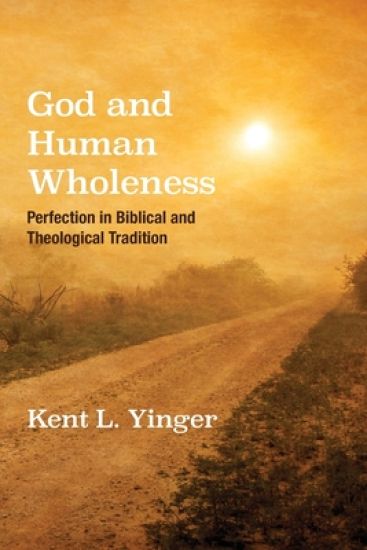
God and Human Wholeness

God and Human Wholeness

Kent L Yinger

Cascade Books
2019
pokkari
The language of perfection crops up regularly in the Bible, from Noah (""a just man and perfect in his generations,"" KJV) to Jesus (""be perfect, therefore, as your heavenly father is perfect,"" NRSV). Is flawless behavior what God expects, the only standard of righteousness that can satisfy him? Jewish tradition has long questioned this Christian assumption. Since Sanders and the New Perspective on Paul, it has come under increasing challenge from many directions. In Reclaiming Human Wholeness, Kent Yinger provides an in-depth examination of what the Bible intends with this perfection-wholeness language and of its impact on theology and spiritual life. Rather than calling to an unreachable perfection, the God of the Bible desires our flourishing and wholeness.
God and Human Wholeness

God and Human Wholeness

Kent L Yinger

Cascade Books
2019
sidottu
The language of perfection crops up regularly in the Bible, from Noah (""a just man and perfect in his generations,"" KJV) to Jesus (""be perfect, therefore, as your heavenly father is perfect,"" NRSV). Is flawless behavior what God expects, the only standard of righteousness that can satisfy him? Jewish tradition has long questioned this Christian assumption. Since Sanders and the New Perspective on Paul, it has come under increasing challenge from many directions. In Reclaiming Human Wholeness, Kent Yinger provides an in-depth examination of what the Bible intends with this perfection-wholeness language and of its impact on theology and spiritual life. Rather than calling to an unreachable perfection, the God of the Bible desires our flourishing and wholeness.
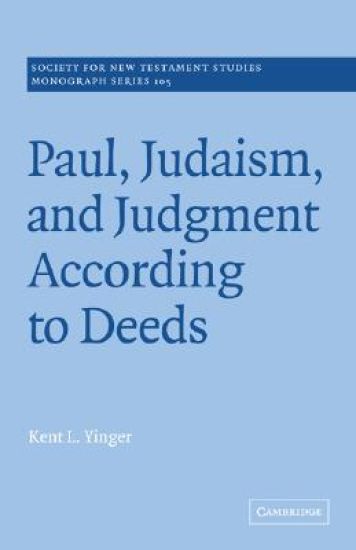
Paul, Judaism, and Judgment According to Deeds

Paul, Judaism, and Judgment According to Deeds

Kent L. Yinger

Cambridge University Press
2007
pokkari
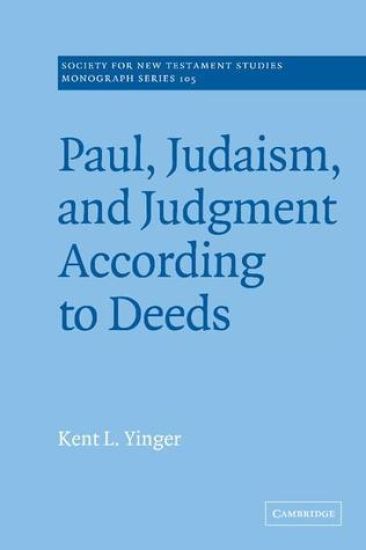
Why does 'judgment according to deeds' produce no discernible theological tension for Paul, the apostle of justification by faith? For students of his writings, paradox, incoherence, or eschatological tension come more readily to mind. Paul felt no such theological tension because there was none - neither within his own soteriology, nor in that of the Judaism from which he learned to speak of 'judgment according to deeds'. For both, salvation is wholly by God's grace and the saved will be repaid (i.e. saved or condemned) in accordance with what they have done. Thus, Paul can promise eternal life to those who 'do good', while threatening wrath upon the disobedient (Rom 2:6-11), and without undermining justification by faith. This thorough 1999 examination of second temple and pauline texts interacts with discussions of 'covenantal nomism', justification, and the 'new perspective' on Paul to explore the Jewishness of the apostle's theology.
Paul, Judaism, and Judgment According to Deeds

Paul, Judaism, and Judgment According to Deeds

Kent L. Yinger

Cambridge University Press
1999
sidottu
Why does 'judgment according to deeds' produce no discernible theological tension for Paul, the apostle of justification by faith? For students of his writings, paradox, incoherence, or eschatological tension come more readily to mind. Paul felt no such theological tension because there was none - neither within his own soteriology, nor in that of the Judaism from which he learned to speak of 'judgment according to deeds'. For both, salvation is wholly by God's grace and the saved will be repaid (i.e. saved or condemned) in accordance with what they have done. Thus, Paul can promise eternal life to those who 'do good', while threatening wrath upon the disobedient (Rom 2:6-11), and without undermining justification by faith. This thorough 1999 examination of second temple and pauline texts interacts with discussions of 'covenantal nomism', justification, and the 'new perspective' on Paul to explore the Jewishness of the apostle's theology.