Kirjojen hintavertailu – 12 859 827 kirjaa ja 27 kauppaa

Kirjailija

Kent V. Flannery

Kirjat ja teokset yhdessä paikassa: 8 kirjaa, julkaisuja vuosilta 1969–2024, suosituimpiin kuuluu The Flocks of the Wamani. Vertaile teosten hintoja ja tarkista saatavuus suomalaisista kirjakaupoista.

Nimi esiintyy myös muodoissa: Kent V Flannery

8 kirjaa

Kirjojen julkaisuvuodet: 1969–2024.

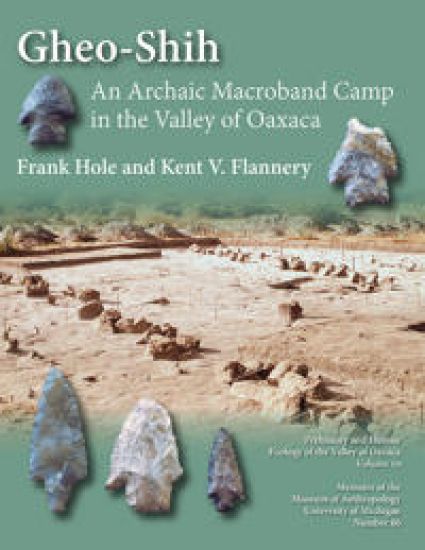
Gheo-Shih

Gheo-Shih

Frank Hole; Kent V. Flannery

THE UNIVERSITY OF MICHIGAN PRESS
2024
nidottu
Gheo-Shih, an Archaic site in the Valley of Oaxaca, was a 1.5-hectare open-air macroband camp near the Mitla River. It was repeatedly occupied in the summer rainy season during the period (cal.) 7500–4000 BC, possibly by 25–50 people. At other times of the year the local population dispersed in smaller, family-sized groups, occupying microband camps in caves and rockshelters. The available macrofossil and palynological data suggest that between 5000 and 4000 BC, the inhabitants were cultivating maize, squash, gourds, and (possibly) runner beans, while continuing to collect wild plants and hunt deer, rabbit, and mud turtle. This site report describes the discovery of Gheo-Shih and the subsequent research carried out there: a systematic surface pickup, a series of test pits, targeted excavations, and analysis of the materials recovered.
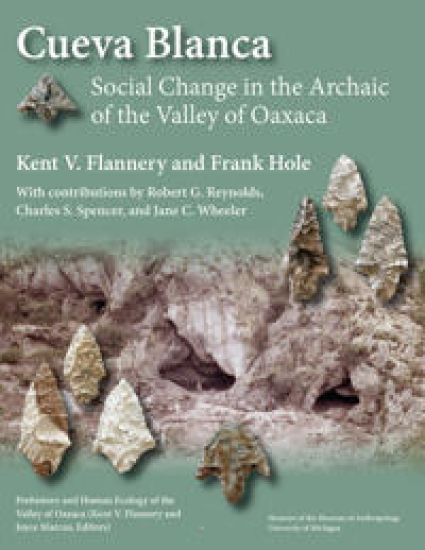
Cueva Blanca

Cueva Blanca

Kent V. Flannery; Frank Hole

The University of Michigan Press
2019
nidottu
Cueva Blanca lies in a volcanic tuff cliff some 4 km northwest of Mitla, Oaxaca, Mexico. It is one of a series of Archaic sites excavated by Kent Flannery and Frank Hole as part of a project on the prehistory and human ecology of the Valley of Oaxaca. The oldest stratigraphic level in Cueva Blanca yielded Late Pleistocene fauna, including some species no longer present in southern Mexico. The second oldest level, Zone E, produced Early Archaic material with calibrated dates as old as 11,000–10,000 BC . Zones D and C provided a rich Late Archaic assemblage whose closest ties are with the Abejas phase of Puebla’s Tehuacán Valley (fourth millennium BC). Spatial analyses undertaken on the Archaic living floors include (1) the drawing of density contours for tools and animal bones; (2) a search for Archaic tool kits using rank-order and cluster analysis; and (3) an attempt to define Binfordian “drop zones” using an approach drawn from computer vision.
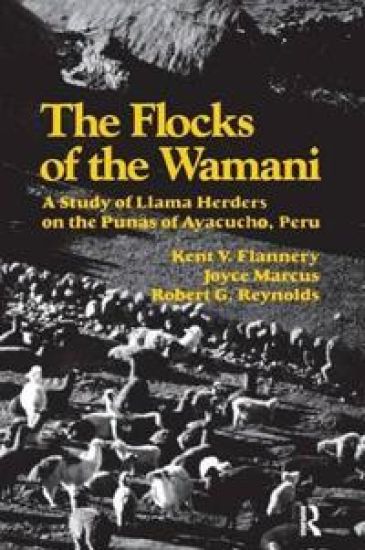
The Flocks of the Wamani

The Flocks of the Wamani

Kent V Flannery; Joyce Marcus; Robert G Reynolds

Routledge
2017
sidottu
In this volume, the authors present an original ethnographic study of five llama herding communities in Ayacucho, Peru. Data on herd dynamics are subjected to computer modeling in an effort to evaluate the roles of biology, symbolic and ritual behavior, ecological adaptation, and practical reason. The book contains the most detailed study of the waytakuy llama marking ceremony yet available. The role of this ceremony in preventing herds from going to extinction is evaluated against anthropological and sociobiological theory. This is an interdisciplinary book will appeal to professional archaeologists, prehistorians, cultural anthropologists, Andeanists, theoretical biologists, evolutionary biologists, and zoologists interested in animal domestication.
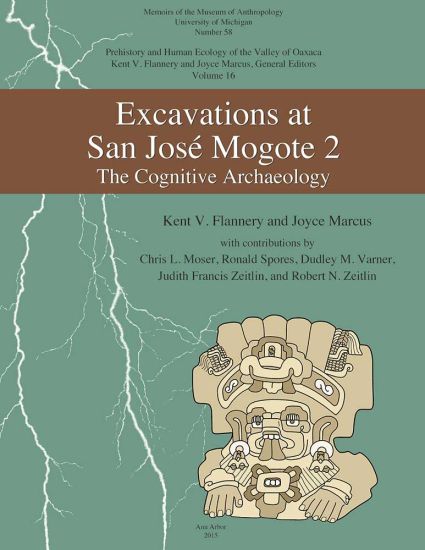
Excavations at San José Mogote 2

Excavations at San José Mogote 2

Kent V. Flannery; Joyce Marcus

University of Michigan, Museum of Anthropology, Publications Department
2015
nidottu
San José Mogote is a 60-70 ha Formative site in the northern Valley of Oaxaca, Mexico, which was occupied for a thousand years before the city of Monte Albán was founded. Filling 432 pages and utilizing more than 400 photographs and line drawings, this book describes in detail more than 35 public buildings, including men’s houses, one-room temples, a performance platform, two-room state temples, a ballcourt, and two types of palaces.
The Flocks of the Wamani

The Flocks of the Wamani

Kent V Flannery; Joyce Marcus; Robert G Reynolds

Left Coast Press Inc
2008
nidottu
In this volume, the authors present an original ethnographic study of five llama herding communities in Ayacucho, Peru. Data on herd dynamics are subjected to computer modeling in an effort to evaluate the roles of biology, symbolic and ritual behavior, ecological adaptation, and practical reason. The book contains the most detailed study of the waytakuy llama marking ceremony yet available. The role of this ceremony in preventing herds from going to extinction is evaluated against anthropological and sociobiological theory. This is an interdisciplinary book will appeal to professional archaeologists, prehistorians, cultural anthropologists, Andeanists, theoretical biologists, evolutionary biologists, and zoologists interested in animal domestication.
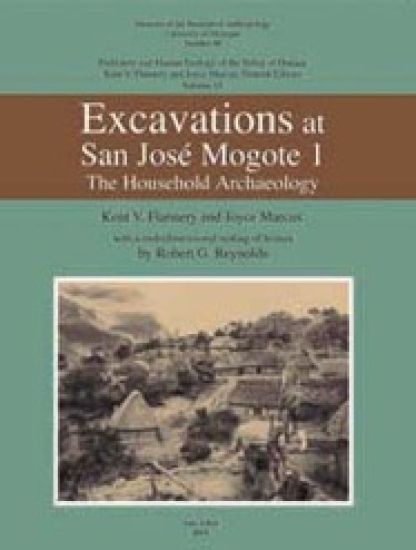
Excavation at San José Mogote 1

Excavation at San José Mogote 1

Kent V. Flannery; Joyce Marcus

The University of Michigan Press
2005
nidottu
San José Mogote, an early village and chiefly center in Mexico’s Oaxaca Valley, was excavated over a fifteen-year period. This volume reports in detail on every Early and Middle Formative house recovered, including a complete inventory of artifacts, features, plants, animal bones, and craft raw materials by house, with extensive piece-plotting of items on house floors and dooryards.
Early Formative Pottery of the Valley of Oaxaca

Early Formative Pottery of the Valley of Oaxaca

Kent V. Flannery; Joyce Marcus

The University of Michigan Press
1994
nidottu
Using more than 300 illustrations, the authors present an encyclopedic analysis of the many types of pottery found in the Oaxaca Valley in the Early Formative period. From details of sherd profiles and tempers to discussions of the growth of various villages, this volume is an exhaustively thorough treatment of the topic and represents decades of archaeological fieldwork in the region.
Prehistory and Human Ecology of the Deh Luran Plain

Prehistory and Human Ecology of the Deh Luran Plain

Frank Hole; Kent V. Flannery; James A. Neely

U of M Museum Anthro Archaeology
1969
nidottu
In the early 1960s, archaeologists Frank Hole, Kent V. Flannery, and James A. Neely surveyed the prehistoric mounds in Deh Luran and then excavated at two sites: Ali Kosh and Tepe Sabz. The researchers found evidence that the sites dated to between 7500 and 3500 BC, during which time the residents domesticated plants and animals. This volume, published in 1969, was the first in the Museum’s Memoir series—designed for data-rich, heavily illustrated archaeological monographs.