Kirjojen hintavertailu – 12 903 725 kirjaa ja 27 kauppaa
Kirjailija
Keri Vacanti Brondo
Kirjat ja teokset yhdessä paikassa: 7 kirjaa, julkaisuja vuosilta 2017–2026, suosituimpiin kuuluu Culture, Nature, and Environmental Sustainability. Vertaile teosten hintoja ja tarkista saatavuus suomalaisista kirjakaupoista.
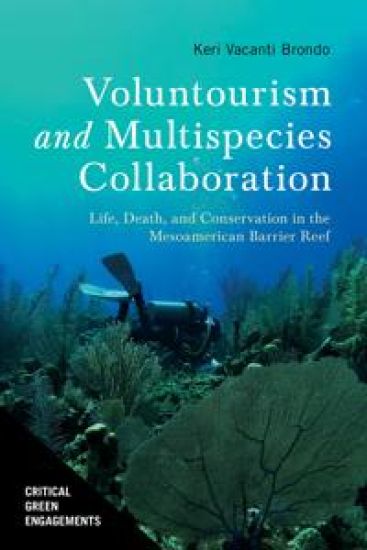
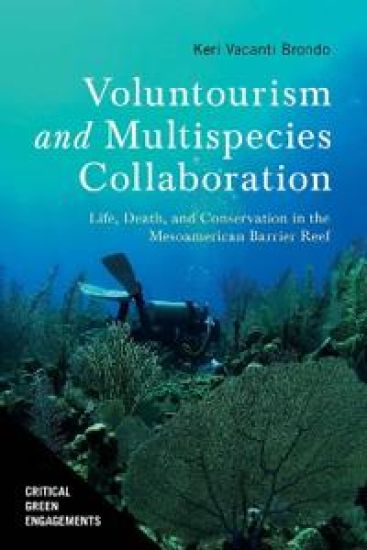
Voluntourism and Multispecies Collaboration is a lively ethnographic exploration of the world of conservation voluntourism and its engagement with marine and terrestrial biodiversity on the Honduran Bay Island of Utila, located in the ecologically critical Mesoamerican Barrier Reef. In this highly readable text, anthropologist Keri Vacanti Brondo provides a pioneering theoretical framework that conceptualizes conservation voluntourism as a green industry. Brondo argues that the volunteer tourism industry is the product of coloniality and capitalism that works to produce and sustain an economy of affect while generating inequalities and dispossession. Employing a decolonizing methodology based on landscape assemblage theory, Brondo offers “thinking-like-a-mangrove” to attend to alternative worldings in Utila beyond the hegemonic tourist spectacle–dominated world attached to the volunteer tourism industry. Readers journey through the mangroves and waters alongside voluntourists, iguanas, whale sharks, turtles, lionfish, and islanders to build valuable research experience in environmental management while engaging in affective labor and multispecies relations of care. Conservation organizations benefit from the financial capital and labor associated with conservation tourism, an industry boosted by social media. This critical work asks us to consider the impacts of this new alternative tourism market, one that relies on the exchange of “affect” with other species. How are human socialities made through interactions with other species? What lives and dies in Utila’s affect economy? Why are some species killable? Who gets to decide?
Anthropological Theory for the Twenty-First Century presents a critical approach to the study of anthropological theory for the next generation of aspiring anthropologists. Through a carefully curated selection of readings, this collection reflects the diversity of scholars who have long contributed to the development of anthropological theory, incorporating writings by scholars of color, non-Western scholars, and others whose contributions have historically been under-acknowledged. The volume puts writings from established canonical thinkers, such as Marx, Boas, and Foucault, into productive conversations with Du Bois, Ortiz, Medicine, Trouillot, Said, and many others. The editors also engage in critical conversations surrounding the "canon" itself, including its colonial history and decolonial potential. Updating the canon with late twentieth-century and early twenty-first-century scholarship, this reader includes discussions of contemporary theories such as queer theory, decolonial theory, ontology, and anti-racism. Each section is framed by clear and concise editorial introductions that place the readings in context and conversation with each other, as well as questions and glossaries to guide reader comprehension. A dynamic companion website features additional resources, including links to videos, podcasts, articles, and more.
Anthropological Theory for the Twenty-First Century presents a critical approach to the study of anthropological theory for the next generation of aspiring anthropologists. Through a carefully curated selection of readings, this collection reflects the diversity of scholars who have long contributed to the development of anthropological theory, incorporating writings by scholars of color, non-Western scholars, and others whose contributions have historically been under-acknowledged. The volume puts writings from established canonical thinkers, such as Marx, Boas, and Foucault, into productive conversations with Du Bois, Ortiz, Medicine, Trouillot, Said, and many others. The editors also engage in critical conversations surrounding the "canon" itself, including its colonial history and decolonial potential. Updating the canon with late twentieth-century and early twenty-first-century scholarship, this reader includes discussions of contemporary theories such as queer theory, decolonial theory, ontology, and anti-racism. Each section is framed by clear and concise editorial introductions that place the readings in context and conversation with each other, as well as questions and glossaries to guide reader comprehension. A dynamic companion website features additional resources, including links to videos, podcasts, articles, and more.
Voluntourism and Multispecies Collaboration is a lively ethnographic exploration of the world of conservation voluntourism and its engagement with marine and terrestrial biodiversity on the Honduran Bay Island of Utila, located in the ecologically critical Mesoamerican Barrier Reef. In this highly readable text, anthropologist Keri Vacanti Brondo provides a pioneering theoretical framework that conceptualizes conservation voluntourism as a green industry. Brondo argues that the volunteer tourism industry is the product of coloniality and capitalism that works to produce and sustain an economy of affect while generating inequalities and dispossession. Employing a decolonizing methodology based on landscape assemblage theory, Brondo offers "thinking-like-a-mangrove" to attend to alternative worldings in Utila beyond the hegemonic tourist spectacle-dominated world attached to the volunteer tourism industry. Readers journey through the mangroves and waters alongside voluntourists, iguanas, whale sharks, turtles, lionfish, and islanders to build valuable research experience in environmental management while engaging in affective labor and multispecies relations of care. Conservation organizations benefit from the financial capital and labor associated with conservation tourism, an industry boosted by social media. This critical work asks us to consider the impacts of this new alternative tourism market, one that relies on the exchange of "affect" with other species. How are human socialities made through interactions with other species? What lives and dies in Utila's affect economy? Why are some species killable? Who gets to decide?
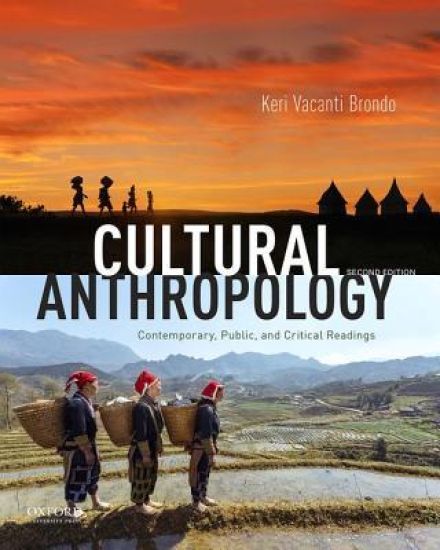
Cultural Anthropology: Contemporary, Public, and Critical Readings, Second Edition, helps students think anthropologically by introducing core concepts through engaging case studies. These timely readings will generate discussion among students regarding the value of an anthropological perspective in the modern world. While the selections represent a range of geographic and cultural areas, the book includes many U. S.-based fieldwork examples so that students are inspired to think anthropologically "in their own backyards." Several case studies offer examples of anthropology in action, and special features throughout the text profile anthropological application through news stories ("In the News") and interviews ("Anthropology in Practice").
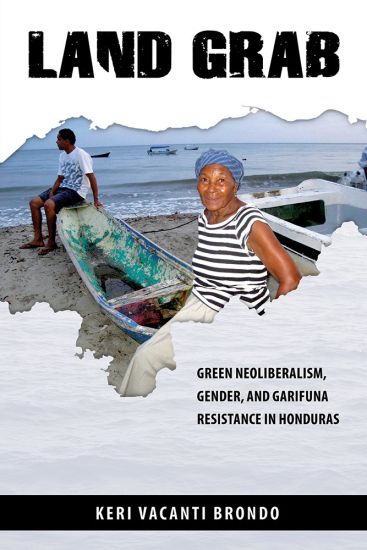
Land Grab is a rich ethnographic account of the relationship between identity politics, neoliberal development policy, and rights to resource management in Garifuna communities on the north coast of Honduras, before and after the 2009 coup d’état. The Garifuna are a people of African and Amerindian descent who were exiled to Honduras from the British colony of St. Vincent in 1797 and have long suffered from racial and cultural marginalization. Employing approaches from feminist political ecology, critical race studies, and ethnic studies, Keri Vacanti Brondo illuminates three contemporary development paradoxes in Honduras: the recognition of the rights of indigenous people at the same time as Garifuna are being displaced in the name of development; the privileging of foreign research tourists in projects that promote ecotourism but result in restricting Garifuna from traditional livelihoods; and the contradictions in Garifuna land-rights claims based on native status when mestizos are reserving rights to resources as natives themselves. Brondo’s book asks a larger question: can “freedom,” understood as well-being, be achieved under the structures of neoliberalism? Grounding this question in the context of Garifuna relationships to territorial control and self-determination, the author explores the “reregulation” of Garifuna land; “neoliberal conservation” strategies like ecotourism, research tourism, and “voluntourism;” the significant issue of who controls access to property and natural resources; and the rights of women, who have been harshly impacted by “development.” In her conclusion, Brondo points to hopeful signs in the emergence of transnational indigenous, environmental, and feminist organizations.