Kirjojen hintavertailu – 12 859 828 kirjaa ja 27 kauppaa

Kirjailija

Kevin Bales

Kirjat ja teokset yhdessä paikassa: 10 kirjaa, julkaisuja vuosilta 2005–2025, suosituimpiin kuuluu The Slave Next Door. Vertaile teosten hintoja ja tarkista saatavuus suomalaisista kirjakaupoista.

10 kirjaa

Kirjojen julkaisuvuodet: 2005–2025.

The Slave Next Door

The Slave Next Door

Kevin Bales; Ron Soodalter

University of California Press
2010
pokkari
In this riveting book, authors and authorities on modern day slavery Kevin Bales and Ron Soodalter expose the disturbing phenomenon of human trafficking and slavery that exists now in the United States. In "The Slave Next Door" we find that slaves are all around us, hidden in plain sight: the dishwasher in the kitchen of the neighborhood restaurant, the kids on the corner selling cheap trinkets, and the man sweeping the floor of the local department store. In these pages we also meet some unexpected slaveholders, such as a 27-year old middle-class Texas housewife who is currently serving a life sentence for offences including slavery. Weaving together a wealth of voices - from slaves, slaveholders, and traffickers as well as from experts, counselors, law enforcement officers, rescue and support groups, and others - this book is also a call to action, telling what we, as private citizens, can do to finally bring an end to this horrific crime.
Friends of God and Slaves of Men

Friends of God and Slaves of Men

Kevin Bales; Michael Rota

Cambridge University Press
2025
sidottu
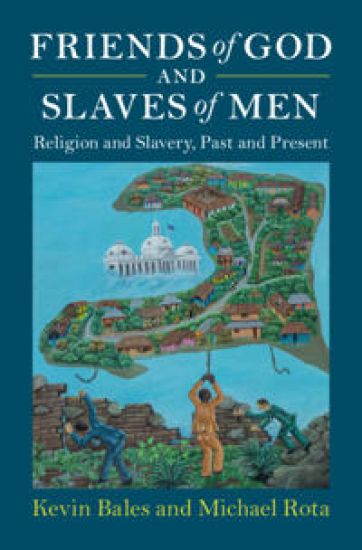
Religion and slavery have been connected since the beginning of human history, but their tangled relationship has rarely been dissected and truly understood. This groundbreaking book illuminates how religion has intersected with the institution of slavery, both as a force for its perpetuation and as a catalyst for its abolition. Spanning antiquity to the present day, this book offers a comprehensive overview of how Christianity, Islam, Judaism, Hinduism, Buddhism, and other faiths have variously justified, moderated, restricted, or opposed slavery. Experts Kevin Bales and Michael Rota integrate historical, philosophical, theological, and social scientific perspectives to offer fresh interdisciplinary insights into this crucial social justice issue. Engaging contemporary challenges, it covers ISIS's religious justifications for enslavement and the role of the caste system in modern bondage. Finally, it highlights faith-based antislavery activism today and asks how religious communities can amplify their efforts to combat the enduring scourge of slavery worldwide.
Blood and Earth

Blood and Earth

Kevin Bales

Spiegel Grau
2016
sidottu
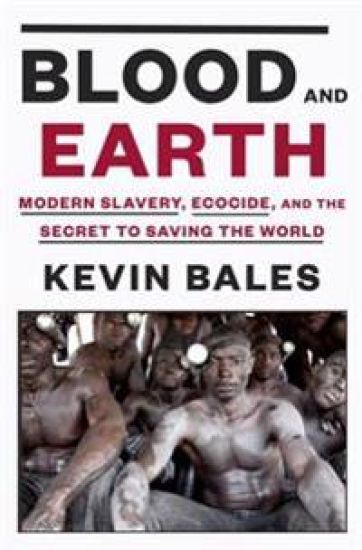
For readers of such crusading works of nonfiction as Katherine Boo's Beyond the Beautiful Forevers and Tracy Kidder's Mountains Beyond Mountains comes a powerful and captivating examination of two entwined global crises: environmental destruction and human trafficking--and an inspiring, bold plan for how we can solve them. A leading expert on modern-day slavery, Kevin Bales has traveled to some of the world's most dangerous places documenting and battling human trafficking. In the course of his reporting, Bales began to notice a pattern emerging: Where slavery existed, so did massive, unchecked environmental destruction. But why? Bales set off to find the answer in a fascinating and moving journey that took him into the lives of modern-day slaves and along a supply chain that leads directly to the cellphones in our pockets. What he discovered is that even as it destroys individuals, families, and communities, new forms of slavery that proliferate in the world's lawless zones also pose a grave threat to the environment. Simply put, modern-day slavery is destroying the planet. The product of seven years of travel and research, Blood and Earth brings us dramatic stories from the world's most beautiful and tragic places, the environmental and human-rights hotspots where this crisis is concentrated. But it also tells the stories of some of the most common products we all consume--from computers to shrimp to jewelry--whose origins are found in these same places. Blood and Earth calls on us to recognize the grievous harm we have done to one another, put an end to it, and recommit to repairing the world. This is a clear-eyed and inspiring book that suggests how we can begin the work of healing humanity and the planet we share. Praise for Blood and Earth "A heart-wrenching narrative . . . Weaving together interviews, history, and statistics, the author shines a light on how the poverty, chaos, wars, and government corruption create the perfect storm where slavery flourishes and environmental destruction follows. . . . A clear-eyed account of man's inhumanity to man and Earth. Read it to get informed, and then take action."--Kirkus Reviews (starred review) " An] expos of the global economy's 'deadly dance' between slavery and environmental disaster . . . Based on extensive travels through eastern Congo's mineral mines, Bangladeshi fisheries, Ghanian gold mines, and Brazilian forests, Bales reveals the appalling truth in graphic detail. . . . Readers will be deeply disturbed to learn how the links connecting slavery, environmental issues, and modern convenience are forged."--Publishers Weekly "This well-researched and vivid book studies the connection between slavery and environmental destruction, and what it will take to end both."--Shelf Awareness (starred review) "This is a remarkable book, demonstrating once more the deep links between the ongoing degradation of the planet and the ongoing degradation of its most vulnerable people. It's a bracing reminder that a mentality that allows throwaway people also allows a throwaway earth."--Bill McKibben, author of Eaarth: Making a Life on a Tough New Planet

Disposable People

Disposable People

Kevin Bales

University of California Press
2012
pokkari
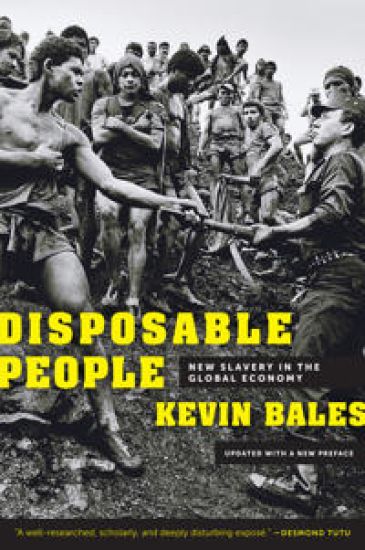
Slavery is illegal throughout the world, yet more than twenty-seven million people are still trapped in one of history's oldest social institutions. Kevin Bales' disturbing story of slavery today reaches from brick kilns in Pakistan and brothels in Thailand to the offices of multinational corporations. His investigation of conditions in Mauritania, Brazil, Thailand, Pakistan, and India reveals the tragic emergence of a "new slavery", one intricately linked to the global economy. The new slaves are not a long-term investment as was true with older forms of slavery, explains Bales. Instead, they are cheap, require little care, and are disposable. Three interrelated factors have helped create the new slavery. The enormous population explosion over the past three decades has flooded the world's labor markets with millions of impoverished, desperate people. The revolution of economic globalization and modernized agriculture has dispossessed poor farmers, making them and their families ready targets for enslavement. And rapid economic change in developing countries has bred corruption and violence, destroying social rules that might once have protected the most vulnerable individuals. Bales' vivid case studies present actual slaves, slaveholders, and public officials in well-drawn historical, geographical, and cultural contexts. He observes the complex economic relationships of modern slavery and is aware that liberation is a bitter victory for a child prostitute or a bondaged miner if the result is starvation. Bales offers suggestions for combating the new slavery and provides examples of very positive results from organizations such as Anti-Slavery International, the Pastoral Land Commission in Brazil, and the Human Rights Commission in Pakistan. He also calls for researchers to follow the flow of raw materials and products from slave to marketplace in order to effectively target campaigns of "naming and shaming" corporations linked to slavery. "Disposable People" is the first book to point the way to abolishing slavery in today's global economy. All of the author's royalties from this book go to fund anti-slavery projects around the world.
Modern Slavery

Modern Slavery

Kevin Bales; Zoe Trodd; Alex Kent Williamson

Oneworld Publications
2011
nidottu
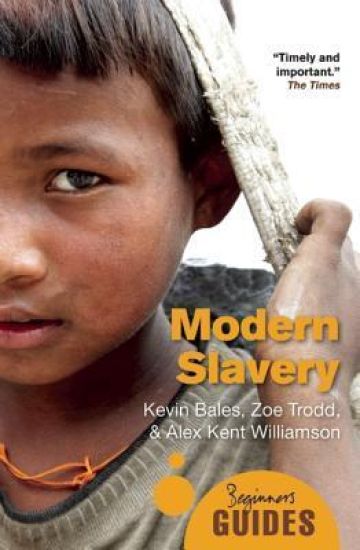
Written by the world's leading experts and campaigners, Modern Slavery: A Beginner's Guide blends original research with shocking first-hand accounts from slaves themselves around the world to reveal the truth behind one of the worst humanitarian crises facing us today. Only a handful of slaves are reached and freed each year, but the authors offer hope for the future with a global blueprint that proposes to end slavery in our lifetime All royalties will go to Free the Slaves.
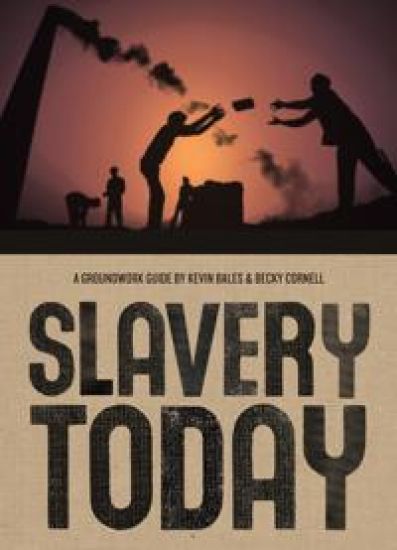
Slavery Today

Slavery Today

Kevin Bales; Becky Cornell

Groundwood Books Ltd ,Canada
2008
pokkari
An introduction to slavery in the world today, in rich and developing nations alike. Clearly and concisely written for young adult readers. Twenty-seven million people — young and old, men and women — are locked in bondage worldwide. Slavery Today traces the products created by this inhuman system from the jungle and farm through the global markets and into our lives and homes. Co-authored by the world's leading experts on modern slavery, it unpacks the controversies over prostitution and the buying back of slaves while setting out solutions and demonstrating how readers can get involved in the global anti-slavery movement."[The Groundwork Guides] are excellent books, mandatory for school libraries and the increasing body of young people prepared to take ownership of the situations and problems previous generations have left them." — Globe and Mail
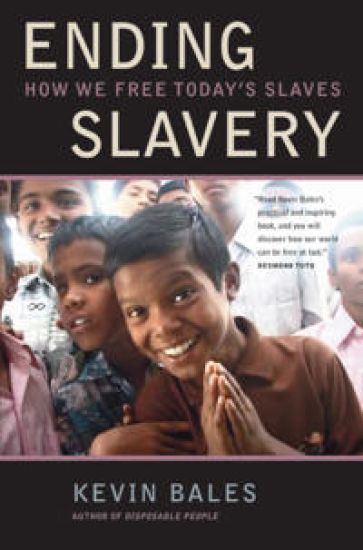
Ending Slavery

Ending Slavery

Kevin Bales

University of California Press
2007
pokkari
In his 1999 book, "Disposable People", Kevin Bales brought to light the shocking fact of modern slavery and described how, nearly two hundred years after the slave trade was abolished (legal slavery would have to wait another fifty years), global slavery stubbornly persists. In "Ending Slavery", Bales again grapples with the struggle to end this ancient evil and presents the ideas and insights that can finally lead to slavery's extinction. Recalling his own involvement in the antislavery movement, he recounts a personal journey in search of the solution and explains how governments and citizens can build a world without slavery.
Buying Freedom

Buying Freedom

Kevin Bales

Princeton University Press
2007
pokkari
If "slavery" is defined broadly to include bonded child labor and forced prostitution, there are upward of 25 million slaves in the world today. Individuals and groups are freeing some slaves by buying them from their enslavers. But slave redemption is as controversial today as it was in pre-Civil War America. In Buying Freedom, Kwame Anthony Appiah and Martin Bunzl bring together economists, anthropologists, historians, and philosophers for the first comprehensive examination of the practical and ethical implications of slave redemption. While recognizing the obvious virtue of the desire to buy the freedom of slaves, the contributors ask difficult and troubling questions: Does redeeming slaves actually increase the demand for--and so the number of--slaves? And what about cases where it is far from clear that redemption will improve the material condition, or increase the real freedom, of a slave? Buying Freedom includes essays by the editors and by Dean Karlan and Alan Krueger, Carol Ann Rogers and Kenneth Swinnerton, Arnab Basu and Nancy Chau, Stanley Engerman, Jonathan Conning and Michael Kevane, Jok Madut Jok, Ann McDougall, Lisa Cook, Margaret Kellow, John Stauffer, and Howard McGary.
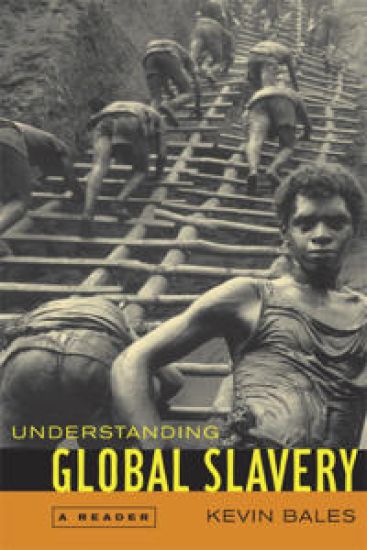
Understanding Global Slavery

Understanding Global Slavery

Kevin Bales

University of California Press
2005
pokkari
Although slavery is illegal throughout the world, we learned from Kevin Bales' highly praised expose, "Disposable People: New Slavery in the Global Economy", that more than twenty-seven million people - in countries from Pakistan to Thailand to the United States - are still trapped in bondage. With this new volume, Bales, the leading authority on modern slavery, looks beyond the specific instances of slavery described in his last book to explore broader themes about slavery's causes, its continuation, and how it might be ended. Written to raise awareness and deepen understanding, and touching again on individual lives around the world, this book tackles head-on one of the most urgent and difficult problems facing us today. Each of the chapters in "Understanding Global Slavery" explores a different facet of global slavery. Bales investigates slavery's historical roots to illuminate today's puzzles. He explores our basic ideas about what slavery is and how the phenomenon fits into our moral, political, and economic worlds. He seeks to explain how human trafficking brings people into our cities and how the demand for trafficked workers, servants, and prostitutes shapes modern slavery. And he asks how we can study and measure this mostly hidden crime. Throughout, Bales emphasizes that to end global slavery, we must first understand it. This book is a step in that direction.
New Slavery

New Slavery

Kevin Bales

ABC-CLIO
2005
sidottu
A shocking account of how slavery continues to afflict millions around the world today—from children in the carpet trade in Asia, to immigrants forced into prostitution in Europe, to domestic workers in the United States and other Western countries. New Slavery: A Reference Handbook is as scholarly as it is shocking—a gripping account of modern slavery, from Pakistan to Paris, Nepal to New York. From bonded laborers in India and prostitutes in Thailand to illegal domestic workers in Kuwait, Tokyo, and London, this book surveys the grim and violent world of contemporary forced labor, human trafficking, and slavery. More commonly associated with the horrors of 19th-century cotton plantations or Nazi concentration camps, slave labor remains alive and well. Despite antislavery laws in almost every country, slavery today is booming— fueled by poverty, war, organized crime, and globalization. This book is both a serious study and an essential guide for policy makers, human rights lawyers, labor activists, and all those concerned with the ongoing fight against this timeless evil.